


Singapore 12-inch Wafer Fab Countdown: World-Leading 99% Yield Meets Standards, AI Demand Ignites New Semiconductor Cycle in SGX
August 4th to 5th, the earnings conference for World Advanced Technology (VIS), a major foundry specializing in advanced processes, released a series of significant signals: its joint venture 12-inch wafer fab, VSMC, located in Singapore, has completed process introduction, producing its first batch of 40nm trial chips in early June with a test yield exceeding 99%. Mass production is scheduled for Q1 2027, and the ramp-up progress is faster than previously planned. Amid the intense global AI computing arms race and the scarcity of advanced packaging capacity, this new fab, fully supported by the TSMC ecosystem, is becoming the latest barometer for the health of the semiconductor industry in Singapore and a new reference point for investors monitoring the Singapore Exchange (SGX) to analyze the AI super cycle.
Full Capacity and Continued Price Increases: Mature Processes Achieve Independent Growth
During the earnings conference, the operational data disclosed by World Advanced management was quite impressive: capacity utilization rose quarter over quarter, exceeding 80% in Q1, approaching 90% in Q2, and conservatively estimated to remain around 90% in Q3, with further increases expected in Q4. Shipments and prices rose in tandem, with Q3 wafer shipments expected to grow by 1% to 3% month-over-month, and the average selling price (ASP) expected to increase by 2% to 4% month-over-month. More critically, the company explicitly stated that the price increase for contract manufacturing in 2027 will not be less than that of 2026, indicating that the price increase cycle for mature processes is continuing, and the supply-demand structure is continuously improving.
Interestingly, World Advanced is one of the few foundries actively expanding its 8-inch production line, and its 8-inch capacity remains fully utilized, even experiencing shortages. Analysts point out that while the industry focuses on advanced processes like 3nm and 2nm, the demand for specialty processes such as power management ICs, driver ICs, and automotive chips also benefits from AI terminal penetration and automotive electrification. Mature processes have achieved their own independent growth cycle, and the completion of the new fab in Singapore will complete a key piece of its global capacity map.
AI Revenue Doubles: The Leap from Single Digits to Double Digits
The most noteworthy data from this earnings conference was the surge in AI-related revenue proportion. Management revealed that the proportion of AI-related products in total revenue has increased from single-digit percentages in the first half of the year to double-digit percentages in the second half, with a full-year target exceeding 10%, nearly doubling the previous year's share. The company also expects both the absolute revenue and the revenue proportion of its AI business to increase further in 2027. This is corroborated by industry signals, such as TSMC's 3nm capacity being fully utilized until 2027 and Samsung's foundry capacity approaching full load in the second half of the year, indicating that AI demand is fully transmitted to the mature process segments along the computing power chain.
Globally, the demand for AI chips has expanded from cloud training to edge inference, and from general GPUs to customized ASIC acceleration. Major model companies like Anthropic have successively announced the formation of in-house chip teams, and MediaTek is also integrating Intel EMIB-T technology into AI ASIC packaging. The diversified competition in the foundry and testing segments is reshaping the industry landscape. Against this backdrop, VSMC, which has the technical backing of TSMC and whose capacity has been pre-booked by customers, has undeniable strategic value. In terms of product structure, power management chips are the area with the strongest growth momentum, and the future production focus of the new Singapore fab will also be in this segment. Furthermore, World Advanced is currently advancing process upgrades this year, with a slight expected contraction of about 4% in annual wafer shipments, which is a short-term retreat intended to gain long-term process competitiveness.
VSMC: The Singapore Speed from Ground Zero to 99% Yield in 22 Months VSMC is a Singaporean 12-inch wafer fabrication subsidiary jointly established by World Advanced and NXP. World Advanced holds a 60% stake, and NXP holds a 40% stake, with a total investment of approximately $6.7 billion, a noticeable reduction from the original plan of $7.8 billion, largely thanks to the equipment and technology support provided by TSMC. According to Chairman Fang Lue, VSMC took only 22 months to go from a barren site to producing the first batch of chips, with a trial production yield exceeding 99%, which is a remarkable milestone. Currently, VSMC has imported over 200 pieces of equipment and commenced trial production, with formal mass production scheduled for Q1 2027. Fang stated that the company is quite confident about the mass production timeline and the team is striving to achieve an earlier launch. As capacity is nearly fully booked by customers, there are continuous market rumors about VSMC planning a second fab, which Fang admitted the company is seriously considering, but there is no final decision at this stage. According to the plan, the maximum monthly capacity of this fab is 44,000 12-inch wafers, which is a reduction from the original plan of 55,000 due to product portfolio adjustments, and is expected to create approximately 1,600 jobs.
Silicon Interposer Placement: Singapore Enters CoWoS Advanced Packaging Map
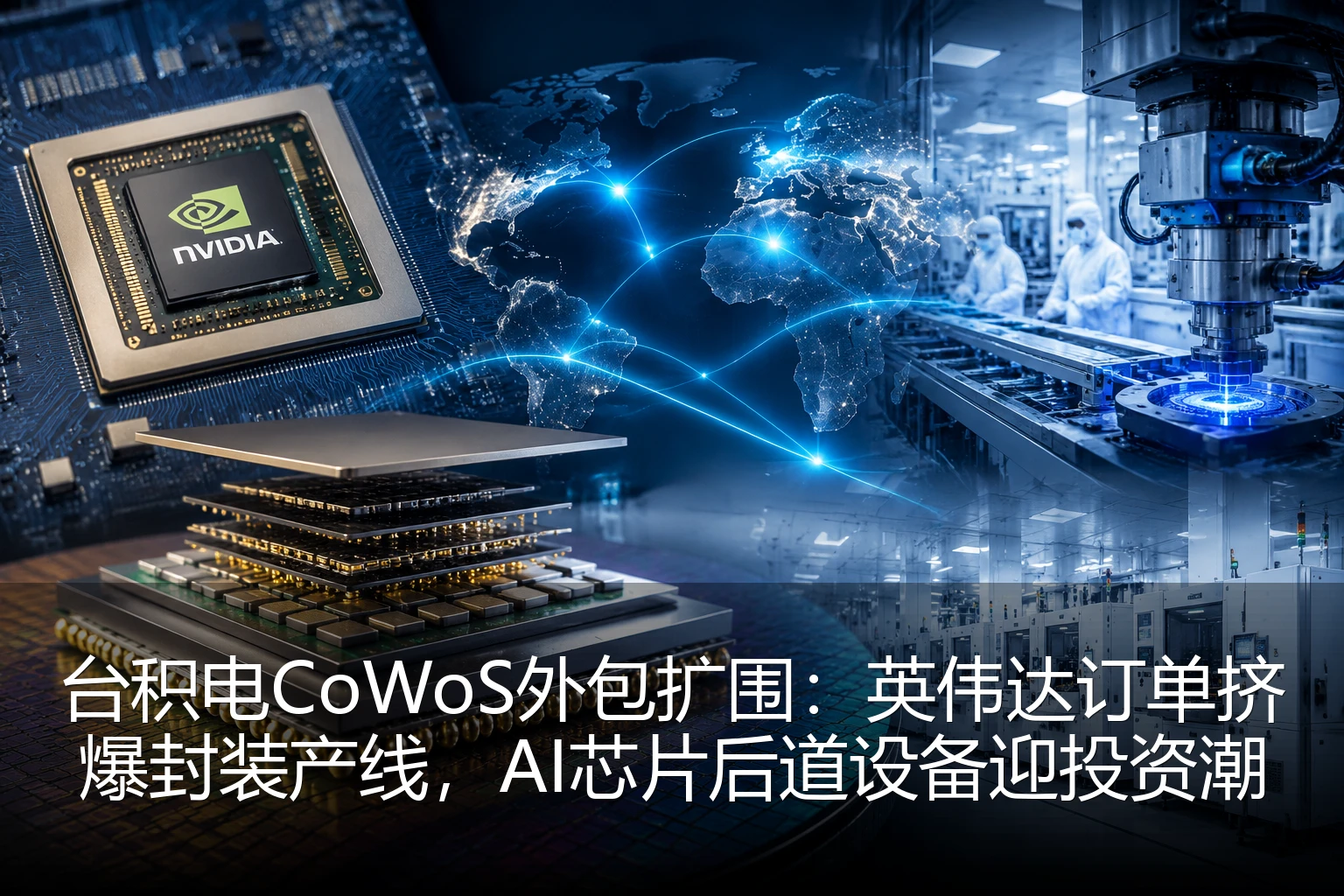
The most strategic aspect of VSMC lies in its differentiated product structure. To meet the explosive demand for AI advanced packaging, VSMC has added Silicon Interposer products in addition to logic foundry services, using mature processes from 30nm to 40nm, with related technology licensed from TSMC. Industry observers believe this layout is expected to enable World Advanced to enter the TSMC CoWoS advanced packaging supply chain, becoming a key component in the AI chip computing hub, and upgrading Singapore's role in the global AI hardware map from a consumer market to a manufacturing and testing center.
In fact, Singapore is accelerating its integration into the global AI semiconductor industry chain. Recently, UMC announced the delivery of the first batch of 12-inch silicon photonics mass-produced wafers to a Singaporean customer, officially unveiling its AI strategy. Singapore's manufacturing PMI rose to 51.4 in July, and the electronics industry PMI rose concurrently, mainly driven by semiconductor orders fueled by AI demand. From wafer fabrication and silicon photonics to advanced packaging, the Lion City is gradually building a complete AI hardware ecosystem loop, with increasingly significant localized synergistic effects across the upstream and downstream industries.
SGX Investor Perspective: How to Capture the AI Semiconductor Supercycle
For investors monitoring the Singapore Exchange (SGX), the acceleration of VSMC's mass production carries multiple signals. First, the depth and breadth of Singapore's semiconductor industry chain are continuously increasing, and localized orders in segments such as equipment, testing, and packaging are expected to benefit—SGX-listed semiconductor equipment and service providers like AEM Holdings and UMS Holdings have already validated the explosive power of AI orders in their previous financial reports. Second, after the implementation of Singapore's AI National Strategy 2.0, the government is continuously increasing support for semiconductor and AI infrastructure, providing both policy and financial backing for industry chain companies. Third, the global shortage of foundry capacity and the ongoing price hike cycle will further strengthen market expectations for the profitability of Singapore's manufacturing and technology sectors, and technology and industrial blue chips in the Straits Times Index are expected to undergo a revaluation. Of course, risks cannot be ignored: the sustainability of AI capital expenditure, the concentration of advanced packaging capacity, and geopolitical disruptions to the supply chain could all trigger sharp sector volatility. For the average investor, rather than chasing short-term stock prices, it is better to track high-frequency fundamental indicators such as capacity utilization, order visibility, and yield ramp-up to build a more robust allocation framework during the AI semiconductor supercycle. After all, the story of Singapore is only just beginning to turn a new page, from the lighting up of a single wafer fab to the prosperity of an entire industry chain.
Disclaimer: This content is for reference only and does not constitute investment advice. Investment involves risks, please proceed with caution.