


AI Chip Industry: The New Battlefield of Global Technology Competition
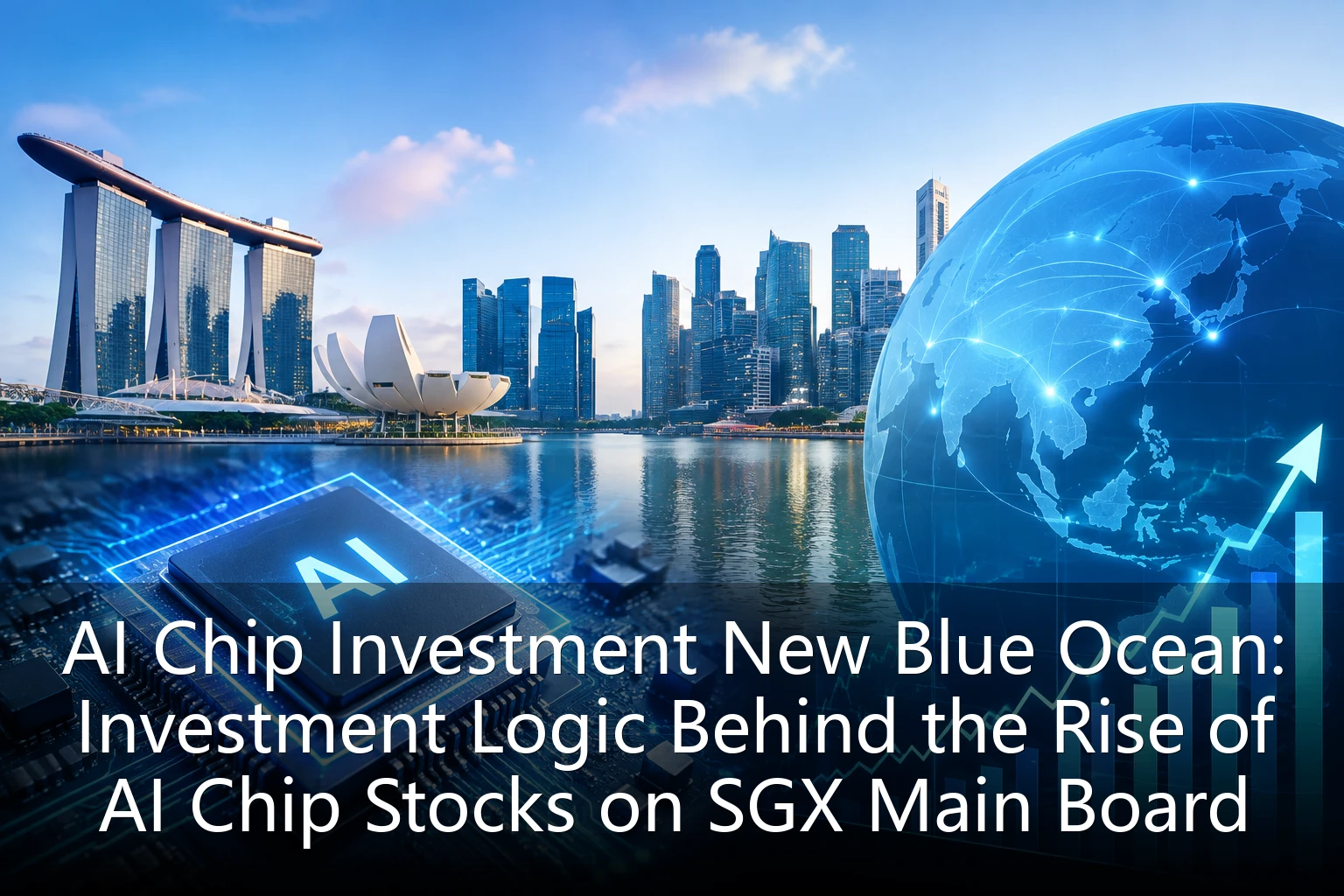
The rapid development of artificial intelligence technology is driving the global chip industry into a new growth cycle. As the "brain" of AI systems, AI chips have become a strategic high ground in technology competition among countries. According to the latest data from market research institutions, the global AI chip market size is expected to reach $150 billion by 2026, with a compound annual growth rate exceeding 25%. In this wave, Singapore, with its unique geographical location, policy support, and industrial ecosystem, is rapidly emerging as an important hub for Asia's AI chip industry.
Evolution of Global AI Chip Market Landscape
The current global AI chip market presents a competitive landscape of "one superpower and multiple strong players." American companies such as NVIDIA, AMD, and Intel occupy a dominant position in the high-end AI chip market by virtue of first-mover advantages and technological accumulation. However, Asian companies are rising rapidly, showing strong competitiveness especially in the field of dedicated AI chips and edge computing chips.
Notably, with the diversification of AI application scenarios, the demand for AI chips is also showing a differentiated trend. On one hand, the demand for high-performance AI chips in data centers and cloud computing continues to grow; on the other hand, the demand for low-power, high-efficiency AI chips in edge computing, IoT, and mobile devices is rapidly increasing. This diversified demand structure provides opportunities for differentiated competition for Singapore's AI chip companies.
Singapore: Asia's Hub for AI Chip Industry
Although Singapore has limited land area, it has developed into an important node in the global semiconductor industry by virtue of its strategic positioning and policy support. The Singapore government highly values the development of the semiconductor industry, listing it as one of the key areas for national economic transformation. The Singapore Economic Development Board (EDB) has long been committed to attracting global semiconductor companies to invest and set up factories in Singapore, forming a complete semiconductor industry chain ecosystem.
Advantages of Singapore's Semiconductor Industry Chain
Singapore has unique advantages in the semiconductor industry chain. First, Singapore has world-class semiconductor manufacturing capabilities, including leading global wafer fabs such as Intel, GlobalFoundries, and UMC. Second, Singapore also has a leading position in semiconductor packaging and testing, with companies like ASE Group operating advanced packaging facilities. In addition, Singapore has a complete semiconductor design ecosystem, attracting many chip design companies to establish R&D centers here.
Especially in the field of AI chips, Singapore is actively laying out. On one hand, the Singapore government supports AI chip R&D and application through the National AI Strategy; on the other hand, Singapore's universities and research institutions such as the National University of Singapore and Nanyang Technological University are at the forefront of AI chip research in Asia.
Analysis of Investment Value of AI Chip Stocks on SGX Main Board
With the rapid development of Singapore's AI chip industry, AI chip-related stocks on the Singapore Main Board (SGX) have also attracted significant investor attention. These companies cover various links in the AI chip industry chain such as design, manufacturing, and packaging testing, providing investors with diversified investment choices.
Analysis of Representative AI Chip Listed Companies
- UMS Holdings: As a leading semiconductor equipment supplier in Singapore, it focuses on providing advanced packaging and testing equipment, directly benefiting from the growth in AI chip packaging demand. The company's recent strong performance reflects the increased activity in the AI chip industry chain.
- AEM Holdings: Another semiconductor equipment supplier focusing on providing semiconductor back-end process testing equipment. With the explosive growth in AI chip testing demand, the company's performance has grown rapidly, showing strong growth potential.
- ASE Group: Although listed in Taiwan and Hong Kong, its advanced packaging business in Singapore makes it an important participant in Singapore's AI chip industry chain. The company is actively expanding production to meet AI chip packaging demand, with a full order book.
Core Logic for Investing in AI Chip Stocks
The core logic for investing in AI chip stocks on SGX Main Board is mainly based on the following points:
- Industry Cycle Upward: The global AI industry is in a period of rapid development, with continuous growth in demand for AI chips, driving the entire industry chain into an upward cycle.
- Accelerating Technology Iteration: AI chip technology iteration is fast, and the application of new technologies such as advanced packaging and Chiplets brings new investment opportunities.
- Sustained Policy Support: The Singapore government lists the semiconductor industry as a national strategic priority, providing policy support such as tax incentives and R&D subsidies, creating a favorable environment for industrial development.
- Obvious Regional Advantages: Singapore is located in the center of Asia, connecting rapidly growing AI application markets such as China, India, and Southeast Asia, with obvious regional advantages.
Risks and Challenges in AI Chip Investment
Although the investment prospects for Singapore's AI chip stocks are broad, investors also need to pay attention to the following risk factors:
Intensifying Industry Competition
As global AI chip market competition intensifies, companies face challenges such as rapid technological iteration, large R&D investment, and squeezed profit margins. Especially in the high-end AI chip market, Singaporean companies still have a certain gap compared with international giants.
Supply Chain Risks
The semiconductor industry is highly globalized, and geopolitical factors and trade frictions may affect the supply chain. As a highly open economy, Singapore is more vulnerable to changes in the external environment.
Uncertainty in Technology Roadmap
The technology roadmap for AI chips has not yet been fully finalized, and there is competition among different technology routes. Investors need to pay attention to technology development trends and avoid betting on the wrong technology routes.
Future Development Trends and Investment Recommendations
AI Chip Technology Development Trends
In the future, AI chips will show the following development trends: first, increasing specialization, developing dedicated chips for different AI application scenarios; second, improved energy efficiency, reducing power consumption while maintaining performance; third, increased integration, achieving higher integration through technologies such as Chiplets; fourth, enhanced edge computing capabilities, promoting the migration of AI from cloud to edge.
Development Direction of Singapore's AI Chip Industry
Singapore's AI chip industry will focus on the following development directions: first, strengthening AI chip design capabilities, especially in dedicated AI chips; second, improving advanced packaging technology to meet the demand for high-performance packaging of AI chips; third, deepening industry-academia-research cooperation to accelerate the industrialization of AI chip technology; fourth, expanding AI chip application scenarios, especially in advantageous fields such as smart cities and fintech.
Investment Strategy Recommendations
Based on the above analysis, the following recommendations are made for investing in AI chip stocks on SGX Main Board:
- Focus on Industry Chain Leaders: Prioritize companies with leading positions in various links of the AI chip industry chain such as design, manufacturing, and packaging testing.
- Seize Technology Iteration Opportunities: Pay attention to companies with advantages in new technology fields such as Chiplets and advanced packaging.
- Focus on Policy Beneficiaries: Choose companies that can receive policy support from the Singapore government, such as companies participating in the National AI Strategy.
- Diversify Investments to Reduce Risks: The AI chip industry chain is long, and risks can be diversified by investing in companies in different links.
- Focus on Long-term Holding: The AI chip industry is in a growth stage, suitable for long-term investment, focusing on long-term value rather than short-term fluctuations.
Conclusion
With the continuous development of artificial intelligence technology and the expansion of application scenarios, the AI chip industry will迎来 long-term growth opportunities. As an important hub for Asia's semiconductor industry, AI chip stocks on Singapore's main board have unique investment value. While seizing investment opportunities in the AI chip industry, investors also need to pay attention to risk factors such as industry competition and changes in technology routes. Through rational analysis and long-term layout, investors can share the dividends of AI chip industry development.
AI chip stocks on the Singapore Main Board not only represent the development direction of Singapore's semiconductor industry but also reflect important trends in the global technology industry. Against the background of increasingly fierce global AI competition, Singapore's AI chip stocks are expected to become an important choice for investors to layout in the AI industry, bringing long-term and stable returns.