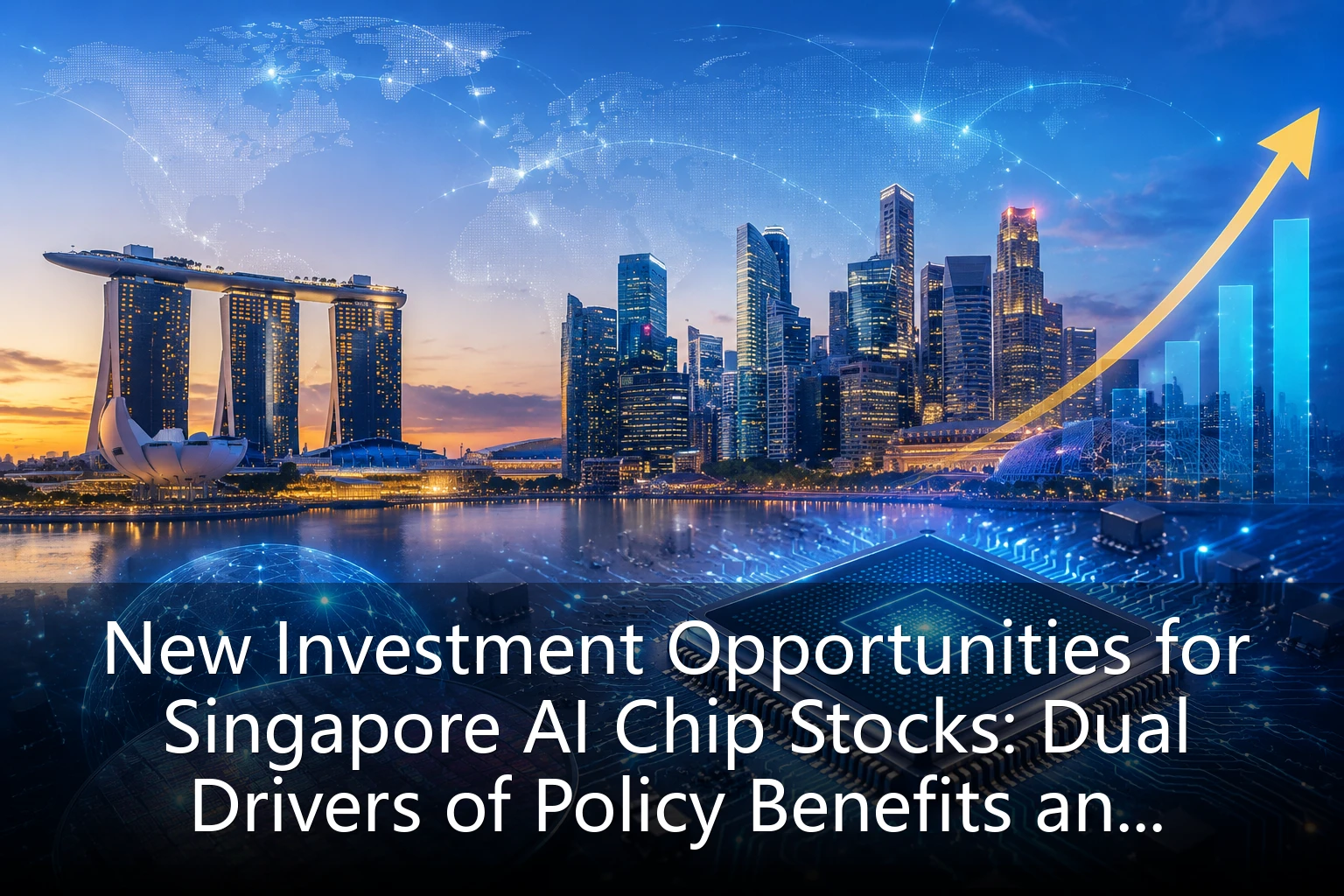



With the rapid development of global artificial intelligence technology, AI computing power demand has shown explosive growth, bringing unprecedented development opportunities to the semiconductor industry. As an important semiconductor manufacturing center in Asia, Singapore is experiencing a golden period of semiconductor industry development, leveraging its superior geographical location, complete infrastructure, and government policy support. This article will conduct an in-depth analysis of the new opportunities in Singapore's semiconductor industry chain amidst the explosion of AI computing power demand, and explore industrial upgrading paths and investment value.
Background of Global AI Computing Power Demand Explosion
In recent years, artificial intelligence technology has moved from laboratories to industrial applications, with demand for computing power in large models, autonomous driving, cloud computing and other fields showing exponential growth. According to industry data, the global AI chip market size is expected to grow from $80 billion in 2023 to $250 billion in 2026, with a compound annual growth rate exceeding 40%. This growth is mainly driven by three parts: data center AI training chips, edge computing AI inference chips, and specialized AI accelerators.
Against the backdrop of surging AI computing power demand, all links in the semiconductor industry chain face new development opportunities. From upstream chip design, midstream wafer manufacturing to downstream packaging and testing, every link is undergoing technological iteration and capacity expansion. Especially in key technology areas such as advanced processes, high-bandwidth memory (HBM), and advanced packaging, companies are increasing investment to meet AI computing power demand.
Current Status and Advantages of Singapore's Semiconductor Industry Chain
Singapore's semiconductor industry began in the 1970s. After more than half a century of development, it has formed a complete industry chain, covering chip design, wafer manufacturing, packaging and testing and other aspects. Currently, Singapore has become the world's third largest semiconductor manufacturing center, second only to mainland China and Taiwan, with more than 20 semiconductor manufacturing enterprises, including international giants such as Intel, GlobalFoundries, TSMC, and UMC.
Singapore's semiconductor industry has the following advantages:
- Strong Policy Support: The Singapore government lists the semiconductor industry as a national key development industry, supporting enterprise development through various means such as tax incentives and R&D subsidies. In 2023, the Singapore government launched the "Semiconductor Development Roadmap", planning to invest S$15 billion over the next five years to support the development of the semiconductor industry.
- Rich Talent Pool: Singapore has Asia's top engineering universities and research institutions, such as the National University of Singapore and Nanyang Technological University, providing a large number of high-quality talents for the semiconductor industry.
- Complete Infrastructure: Singapore has world-class semiconductor manufacturing facilities and supply chain systems that can meet the needs of advanced process production.
- Superior Geographical Location: Located in the core of Southeast Asia, Singapore is an important hub connecting Asia, Europe, and the Americas, facilitating global distribution of semiconductor products.
Driving Effect of AI Computing Power Demand on Singapore's Semiconductor Industry Chain
Upgrading of Wafer Manufacturing Sector
With the increasing demand for advanced processes in AI chips, Singapore's wafer manufacturing enterprises are actively expanding advanced capacity. Intel is investing $20 billion in building an advanced process wafer fab in Singapore, planning to mass-produce 3nm processes by 2025; GlobalFoundries has also announced a $4 billion expansion of its wafer fab in Singapore, focusing on production of 22nm and above mature processes.
These investments not only enhance Singapore's competitiveness in the advanced process sector but also drive the development of related industry chains. For example, Japanese electronic materials company Shin-Etsu Chemical has built a high-purity silicon material production base in Singapore, providing key raw materials for Singapore's wafer manufacturing enterprises.
Innovation in Packaging and Testing Sector
AI chips have higher requirements for packaging technology, driving technological innovation in Singapore's packaging and testing sector. STATS ChipPAC, as a leading packaging and testing enterprise in Singapore, is actively deploying advanced packaging technologies, including 2.5D packaging, 3D packaging, and silicon interposer technology, to meet the high-performance needs of AI chips.
In addition, Singapore enterprises are actively deploying Chiplet technology, achieving high performance and low cost of AI chips by packaging chips with different functions together. This technology route is becoming the mainstream development direction of AI chip packaging.
Development of Design Services and IP Cores
With the increasing complexity of AI chip design, Singapore's chip design service enterprises are facing development opportunities. These enterprises focus on AI chip design in specific fields, such as edge computing AI chips and data center AI accelerators, providing one-stop services from algorithm optimization to chip design for customers.
At the same time, Singapore's IP core suppliers are actively developing IP cores suitable for AI chips, such as neural processing units (NPUs) and high-bandwidth memory controllers, reducing the threshold of AI chip design and accelerating AI chip innovation.
Analysis of Investment Opportunities in Various Links of Singapore's Semiconductor Industry Chain
Wafer Manufacturing Equipment and Materials
With the expansion of Singapore's wafer manufacturing capacity, wafer manufacturing equipment and material suppliers will benefit. Singapore's local enterprises such as ASMI (ASML Singapore Branch), Breker Technology, etc. have competitive advantages in the field of wafer manufacturing equipment; in the materials field, Singapore's electronic chemical enterprises such as Sumitomo Chemical Singapore Branch, Shin-Etsu Chemical Singapore Branch, etc. will also face development opportunities.
Advanced Packaging and Testing
Advanced packaging and testing is an important link in the AI chip industry chain. Singapore enterprises such as STATS ChipPAC and UTAC have leading advantages in this field. With the increasing requirements of AI chips for packaging technology, these enterprises are expected to gain more market share and achieve rapid performance growth.
Semiconductor Equipment and Services
Semiconductor equipment and services are important foundations supporting the development of the semiconductor industry. Singapore enterprises such as UMS Holdings and AEM have competitive advantages in the field of semiconductor testing equipment. With the increase in AI chip testing demand, these enterprises are expected to achieve rapid performance growth.
Chip Design and IP Cores
With the increasing complexity of AI chip design, chip design and IP core suppliers will face development opportunities. Singapore enterprises such as Nuvoton and VeriSilicon have competitive advantages in AI chip design in specific fields and are expected to occupy a place in the AI chip design market.
Risk Factors and Investment Recommendations
Although Singapore's semiconductor industry chain is facing development opportunities amidst the explosion of AI computing power demand, it also faces some risk factors:
- Technological Iteration Risk: Semiconductor technology is updated and replaced quickly, and enterprises need to continuously invest in R&D to maintain technological leadership.
- Geopolitical Risk: The global semiconductor industry chain faces the pressure of geopolitical restructuring, and enterprises need to cope with possible supply chain interruption risks.
- Intensified Market Competition: With the increase in AI computing power demand, global semiconductor market competition is intensifying, and enterprises need to continuously improve their competitiveness.
- Talent Shortage Risk: The semiconductor industry has strong demand for high-end talents, and talent shortage may restrict industrial development.
Based on the above analysis, we make the following recommendations to investors:
- Focus on Leading Enterprises: Invest in leading enterprises in Singapore's semiconductor industry chain, such as STATS ChipPAC and UMS Holdings, which have strong technical strength and market share.
- Grasp Sub-sector Opportunities: Focus on sub-sectors driven by AI computing power demand, such as advanced packaging, Chiplet technology, AI chip design, etc., which have great growth potential.
- Long-term Investment Perspective: The semiconductor industry has a long development cycle, and investors should adopt a long-term investment perspective, focusing on the long-term development potential of enterprises.
- Diversify Investment Risks: Different links in the semiconductor industry chain have different risk characteristics, and investors should diversify investments to reduce risks in a single link.
Conclusion: Future Outlook of Singapore's Semiconductor Industry
With the continuous growth of global AI computing power demand, Singapore's semiconductor industry chain will face unprecedented development opportunities. With its complete industry chain, superior geographical location, and government policy support, Singapore is expected to become an important node in the global AI computing power supply chain.
In the future, Singapore's semiconductor industry will develop in the following directions:
- Technology Upgrading: Singapore enterprises will continue to increase R&D investment in fields such as advanced processes and advanced packaging to enhance technological competitiveness.
- Industry Chain Integration: Through mergers and acquisitions, achieve the integration of upstream and downstream of the industry chain to enhance overall competitiveness.
- International Layout: Singapore enterprises will strengthen international layout, expand global markets, and enhance international competitiveness.
- Green Development: With the increasing global emphasis on sustainable development, Singapore's semiconductor industry will pay more attention to green manufacturing and energy conservation.
In conclusion, Singapore's semiconductor industry chain is facing new development opportunities amidst the explosion of AI computing power demand. Investors should pay close attention to the development dynamics of Singapore's semiconductor industry and seize investment opportunities. At the same time, enterprises should also strengthen technological innovation and industry chain integration to cope with increasingly fierce market competition and achieve sustainable development.