


New AI Chip Stock Landscape in Singapore: Investment Opportunities Under Policy Bonuses and Technological Breakthroughs
In 2026, the global artificial intelligence industry continues to develop at a high speed. As the core of computing infrastructure, AI chips are experiencing explosive market demand. As an important hub for Asia's semiconductor industry, Singapore's main board AI chip stocks are facing unprecedented development opportunities. This article will deeply analyze the investment value and future trends of Singapore's AI chip stocks from multiple dimensions such as policy environment, technological innovation, and market performance.
Policy Bonuses: Dual Driving Force of National Strategy and Industrial Upgrade
In recent years, the Singaporean government has continuously increased policy support for the AI and semiconductor industries. In early 2026, Singapore released "AI National Strategy 2.0", clearly positioning AI technology as the core engine of national economic development, with plans to invest over S$10 billion in AI technology research and development and industrial application in the next five years. This strategy not only provides sufficient financial support for AI chip companies but also reduces operational costs through various forms such as tax incentives and R&D subsidies.
Meanwhile, Singapore's Economic Development Board (EDB) launched the "Semiconductor Industry Master Plan 2026-2030", focusing on supporting high-value-added segments such as advanced packaging, testing, and design. This plan explicitly states that by 2030, Singapore will become a globally leading AI chip R&D and manufacturing center, attracting more international semiconductor giants to establish regional headquarters or R&D centers in Singapore.
The continuous release of policy benefits has created a favorable development environment for Singapore's AI chip companies. According to data from the Singapore Semiconductor Industry Association (SSIA), in the first half of 2026, government funding for AI chip-related companies in Singapore increased by 35% year-on-year, indicating a significant increase in policy support.
Technological Innovation: Full Industry Chain Layout from Edge Computing to Data Centers
Singapore's AI chip industry has achieved significant breakthroughs in technological innovation, forming a full industry chain layout from edge computing to data centers. In the edge computing field, Singaporean companies focus on low-power, high-performance dedicated AI chips to meet the needs of scenarios such as IoT and smart terminals. For example, Enphee, a local Singaporean AI chip company, has launched edge AI chips that lead the industry in energy efficiency ratio, which have been widely used in smart cities, industrial automation, and other fields.
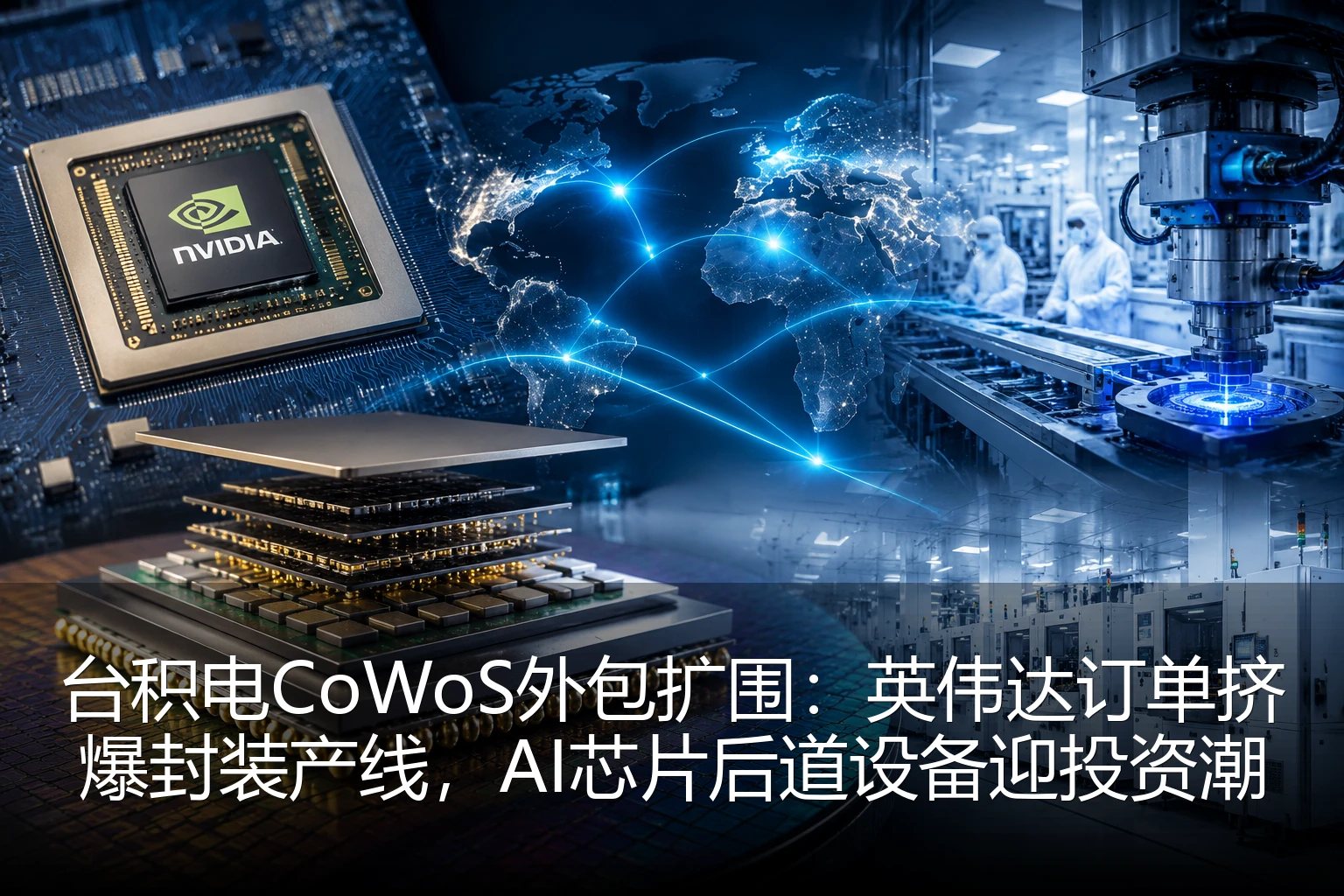
In the data center field, Singaporean companies focus on high-performance computing chips and advanced packaging technologies. As Singapore's leading semiconductor packaging and testing company, STATS ChipPAC has made important breakthroughs in AI chip packaging, with its CoWoS (Chip on Wafer on Substrate) technology reaching international advanced levels. As international AI chip giants such as NVIDIA expand their packaging and testing capacity in Singapore, STATS ChipPAC's order volume continues to grow, with revenue increasing by 42% year-on-year in the first half of 2026.
Notably, Singapore has also made innovative breakthroughs in the field of AI chip-specific materials. UMC's Singapore factory has successfully mass-produced silicon photon wafers, a technology that will significantly improve the optical interconnection performance of AI chips, providing key technical support for next-generation high-performance AI chips. According to industry analysts, silicon photonics technology is expected to become a standard configuration for high-end AI chips within the next three years, further consolidating Singapore's leading advantage in this field.
Market Performance: SGX Main Board AI Chip Stocks Show Strong Growth
Since 2026, AI chip stocks on the Singapore Exchange (SGX) main board have performed impressively, with overall gains outperforming the market. According to SGX data, the AI chip index has risen by 35% since the beginning of the year, significantly higher than the 12% increase in the Straits Times Index (STI). This performance reflects market optimism about the prospects of Singapore's AI chip industry.
In terms of individual stock performance, STATS ChipPAC has been particularly outstanding, with its stock price rising by 58% since the beginning of the year, mainly benefiting from the continuous growth in demand for AI chip packaging. The company's Q2 2026 financial report showed a 120% year-on-year increase in net profit, reaching a historic high. The company's management stated that demand for AI chip packaging will continue to maintain strong growth momentum in the next two years.
Another company worth noting is UMS Holdings. As Singapore's leading semiconductor equipment supplier, the company holds a significant market share in the AI chip packaging equipment field. In Q2 2026, the company's revenue increased by 45% year-on-year, with net profit doubling, far exceeding market expectations. Analysts believe that as AI chip packaging technology continues to upgrade, UMS Holdings, as an equipment supplier, will benefit from this trend in the long term.
In addition, local Singaporean AI chip design companies such as Enphee have also attracted market attention. As the first fabless AI chip company to list on the main board in Singapore, Enphee focuses on the edge AI chip field, with its products being widely used in scenarios such as smart homes and industrial IoT. Since its IPO in 2025, the company's stock price has steadily risen, with a gain of 28% since 2026.
Investment Opportunities: Value Mining Across Industry Chain Links
The vigorous development of Singapore's AI chip industry chain provides investors with abundant investment opportunities. From the perspective of the industry chain, companies in different segments each have their investment value:
- Chip Design Segment: AI chip design companies focusing on specific application scenarios have high growth potential. These companies are typically small in scale but have high technical barriers and obvious product differentiation, enabling them to obtain higher valuation premiums.
- Packaging and Testing Segment: As performance requirements for AI chips continue to increase, the importance of advanced packaging technology is becoming increasingly prominent. Singapore has a technical advantage in the advanced packaging field, and related companies such as STATS ChipPAC are expected to continue benefiting from the growth in demand for AI chip packaging.
- Equipment and Materials Segment: AI chip manufacturing has special requirements for equipment and materials. Related suppliers such as UMS Holdings have stable customer resources and high technical barriers, making their investment value relatively stable.
- Wafer Manufacturing Segment: Although Singapore's local wafer manufacturing capacity is limited, the capacity expansion of international semiconductor giants in Singapore brings opportunities for related supporting companies.
From an investment strategy perspective, investors can choose different types of targets according to their own risk preferences. For investors with higher risk tolerance, they can focus on small, high-growth AI chip design companies; for conservative investors, they can focus on packaging and testing equipment and materials companies with stable cash flows.
Risks and Challenges: Investment Considerations That Cannot Be Ignored
Although the prospects for Singapore's AI chip stocks are broad, investors should still pay attention to the following risk factors:
- Technological Iteration Risk: AI chip technology is updating and iterating extremely fast. If companies cannot continue to innovate, they may face the risk of falling behind technologically.
- Intensifying Market Competition: As global semiconductor giants increase their investment in AI chips, market competition will become increasingly fierce, and Singaporean companies may face greater competitive pressure.
- Geopolitical Risk: The semiconductor industry is highly globalized, and geopolitical factors may disrupt the supply chain, affecting normal business operations.
- Valuation Risk: Current valuations of Singapore's AI chip stocks are already at high levels. If performance growth does not meet expectations, they may face correction pressure.
While paying attention to investment opportunities in Singapore's AI chip stocks, investors should also fully understand the above risks and make proper asset allocation and risk control.
Future Outlook: Singapore's Role in the New Asian Semiconductor Landscape
Looking ahead, Singapore's position in the global AI chip industry will further improve. With the continuous growth of global AI computing power demand, Singapore is expected to become an important hub for Asia's semiconductor industry, leveraging its policy advantages, technological accumulation, and industrial ecosystem.
In the long term, Singapore's AI chip industry will show the following development trends:
- Enhanced Industry Chain Synergy: Cooperation among companies in design, manufacturing, and packaging/testing segments will become closer, forming industrial cluster effects.
- Continuous Expansion of Application Scenarios: AI chips will be widely used in more fields such as smart cities, autonomous driving, and healthcare, with market demand continuing to expand.
- Accelerated Technological Innovation: Breakthroughs in cutting-edge fields such as quantum computing and neuromorphic computing will bring new growth points for the AI chip industry.
- Deepened International Cooperation: Singapore will continue to deepen cooperation with global semiconductor giants, attract more international resources, and enhance industrial competitiveness.
For investors, Singapore's AI chip stocks represent important investment targets that reflect the future development direction of the semiconductor industry. While seizing investment opportunities, investors should also closely follow industry dynamics and technological development trends to make rational investment decisions.
In conclusion, under the dual driving force of policy bonuses and technological breakthroughs, Singapore's AI chip stocks are facing historic development opportunities. Investors can build diversified investment portfolios by deeply understanding the characteristics and investment value of each segment of the industry chain, sharing the dividends of Singapore's semiconductor industry development.