



Singapore REITs Sector Rebounds: Commercial Real Estate Trusts Regain Market Favor
Keywords: Singapore REITs, commercial real estate trusts, interest rate expectations, dividend yield, CapitaLand Integrated Commercial Trust, Mapletree Commercial Trust, tourism recovery, asset allocation
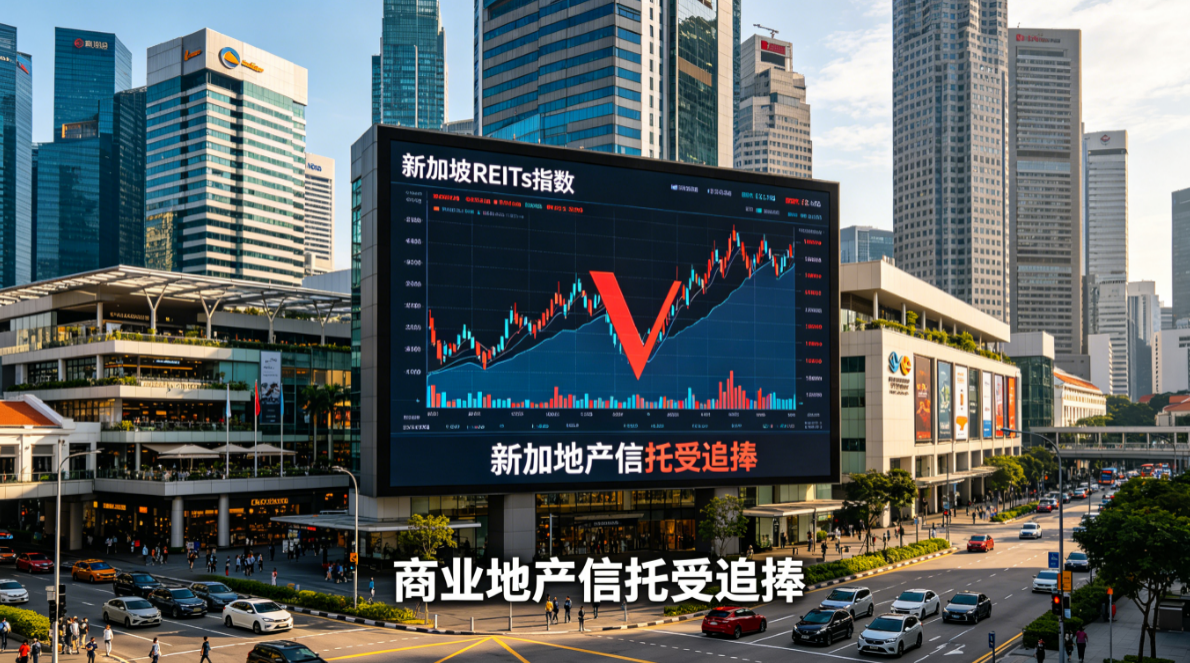
Recently, the Singapore REITs sector has shown a clear recovery trend, with commercial real estate trusts performing particularly prominently. As global interest rate expectations gradually stabilize, market preference for high-dividend, stable cash flow assets has warmed up again, and Singapore REITs have once again become the focus of investor attention. Representative targets such as CapitaLand Integrated Commercial Trust and Mapletree Commercial Trust have recently gained 3% to 5%, indicating that funds are flowing back into this traditional defensive asset sector.
1. Interest Rate Expectations Stabilize, REITs Valuation Repair
The core investment logic of REITs always revolves around the interest rate environment. Since their distribution income mainly relies on stable cash flow, and market valuation is highly sensitive to interest rates, when financing costs rise, REITs often face valuation pressure; conversely, once the market forms clearer and more stable expectations for interest rate trends, REITs are prone to a recovery rally.
This rebound of Singapore REITs occurs precisely against this background. As inflationary pressures ease, the market's judgment that major economies' rate hike cycles are ending strengthens, and long-term interest rate volatility tends to converge. This means the uncertainty of future refinancing costs for REITs decreases, alleviating investor concerns about distribution stability. For commercial real estate trusts that rely on financing expansion and asset operations, this environmental improvement is particularly critical.
In addition, Singapore's local financial system is sound, REITs generally have high asset quality, and transparency and governance are among the best in Asian markets, further enhancing international funds' recognition of their allocation value. For investors pursuing defensiveness and yield, the attractiveness of Singapore REITs is rising again.
2. Commercial Real Estate Trusts Shine, Market Sentiment Warms
In this recovery, commercial real estate-related REITs have become the leading force. Large targets such as CapitaLand Integrated Commercial Trust and Mapletree Commercial Trust have been active, reflecting recovering confidence in retail and integrated commercial property prospects. Compared to single-type assets, integrated commercial projects generally have stronger anti-cycle capabilities, maintaining earnings resilience through diverse tenant structures, prime locations, and stable customer traffic.
Commercial real estate trusts are sought after by funds mainly due to the following advantages:
First, rental income is relatively predictable.
High-quality commercial assets often have longer lease cycles, making rental income relatively stable and conducive to forming continuous distribution capacity.
Second, benefit from consumption and tourism recovery.
As regional economic activity gradually recovers, mall footfall, dining consumption, and tourism-driven retail demand are expected to rise, thereby improving occupancy rates and rental bargaining power.
Third, prominent dividend attributes.
In an environment of increased stock market volatility and enhanced expectations of bond yield decline, the stable cash distribution provided by REITs is strongly attractive to medium- to long-term funds.
From a fund flow perspective, the market has recently favored assets with "high certainty and stable cash flow." Commercial real estate trusts, with both defensive and yield characteristics, have become beneficiary sectors in rotation markets.
3. Tourism Recovery Adds New Momentum to Commercial Real Estate
As an international tourism and business hub, Singapore's commercial real estate performance is highly correlated with tourism. In recent years, as cross-border travel gradually recovers, international tourist numbers continue to rise, boosting consumption vitality in core business districts, transport hubs, and integrated complexes. This is a concrete fundamental positive for mall-type REITs.
The impact of tourism recovery is not limited to increased footfall but is also reflected in several aspects: first, improvement in retail tenant sales helps enhance their lease renewal capability; second, the scope for rental adjustments expands, allowing high-quality assets to negotiate more favorable terms during renewals; third, increased footfall will improve the operational performance of non-retail formats such as dining, entertainment, and experiential consumption, thereby enhancing overall portfolio rental stability.
Especially for commercial properties located in prime areas connected to MRT stations, office districts, and tourist attractions, the marginal effect of traffic recovery is more pronounced. With further recovery in holiday consumption, conventions, and regional tourism, the operational performance of related REITs is expected to continue improving.
4. Defensive Attributes Stand Out, But Structural Risks Must Be Noted
Although Singapore REITs currently have strong appeal, investors cannot ignore structural risks. First, if global interest rates rise significantly again, REITs' financing costs and valuations may still come under pressure; second, there is also differentiation within commercial real estate – significant differences in rental performance, occupancy rates, and capital appreciation between high-quality and ordinary assets; third, retail consumption recovery is not instantaneous – if macroeconomic growth slows, tenant expansion willingness and consumer confidence may still be affected.
Therefore, when allocating Singapore REITs, more attention should be paid to asset quality, tenant structure, debt maturity, interest coverage ratio, and the operational capabilities of the management team. For commercial real estate trusts, assets in core business districts, integrated complexes, and areas with convenient transportation have stronger long-term competitiveness, while projects overly dependent on a single tenant or concentrated lease terms require more prudent evaluation.
From an asset allocation perspective, Singapore REITs are suitable for inclusion in conservative portfolios to balance equity volatility and obtain ongoing distribution income. However, investors should also dynamically adjust positions based on interest rate cycles, exchange rate changes, and industry cyclicality to avoid over-concentration.
5. From Short-Term Rebound to Long-Term Allocation Value
This round of Singapore REITs rebound is not only the result of improved market sentiment but also reflects investors' repricing of high-quality cash-flow assets. For many long-term funds, REITs are not just "high-dividend tools" but composite investment targets connecting macro environment, asset operations, and income distribution. Especially in periods of high uncertainty, stable, transparent, and dividend-predictable assets are often more favored.
In the future, if the interest rate environment remains stable and the tourism and consumption recovery trend continues, Singapore commercial real estate trusts still have further upside potential. Leading assets such as CapitaLand Integrated Commercial Trust and Mapletree Commercial Trust may continue to gain market attention due to their brand advantages, asset portfolio quality, and operational capabilities. However, investors need to recognize that the rise of REITs will not operate independently of the macro cycle; their performance will still be closely tied to interest rates, inflation, and consumption recovery pace.
Conclusion
Overall, the rebound of Singapore REITs sector reflects the market's renewed preference for interest rate stability, cash-flow assets, and defensive allocation. Driven by commercial real estate trusts, sector sentiment has clearly warmed, while tourism recovery provides tangible support for future occupancy and rental growth. For investors seeking steady returns, Singapore REITs still have high allocation value. However, while seizing opportunities, investors should also fully consider risk factors such as interest rate changes, asset quality, and operational differentiation. In the future, as the macro environment further clarifies, Singapore REITs are expected to continue playing an important role in global asset allocation.