


Navigating Future Waves: An In-depth Analysis of the Investment Logic and Risk Control in Singapore Mainboard AI Chip Stocks
Amidst the current global technological revolution, Artificial Intelligence (AI) is no longer a science fiction concept but a driving force profoundly reshaping industrial structures. The advanced chips—the "nervous system" supporting AI operations—are undoubtedly the core material carrier of this transformation. For investors focusing on the Asian market, Singapore, as a regional financial and technological hub, presents a highly potential investment area with its AI chip-related companies listed on the Singapore Exchange (SGX).
This article aims to go beyond simple stock price fluctuations to deeply analyze the underlying logic of AI chip stocks on the Singapore Exchange, how their operational mechanisms are influenced by the global technology cycle, which key factors determine the value of these companies, and to provide a systematic investment framework to help professional investors effectively "navigate the future waves."
I. Conceptual Analysis: The Composition and Operating Mechanism of AI Chip Stocks
To understand AI chip stocks, one must first deconstruct the concepts of "AI" and "chip." AI, in a broad sense, refers to computational systems that mimic human intelligence; while a chip is the physical medium that realizes these computations. AI chips are not a single product; they constitute a complex ecosystem.
1. What is the AI Chip Ecosystem?
The industry chain of AI chips is a typical system of "soft and hard integration with multi-stage collaboration." It usually includes the following stages:
- Design Stage (Front-end): R&D of high-performance AI accelerators (such as GPUs, TPUs, ASICs). This determines the chip's "intelligence."
- Manufacturing Stage (Mid-stream): Wafer fabrication, which requires extremely complex semiconductor manufacturing processes (such as cutting-edge lithography technology). This determines the chip's "manufacturing capability."
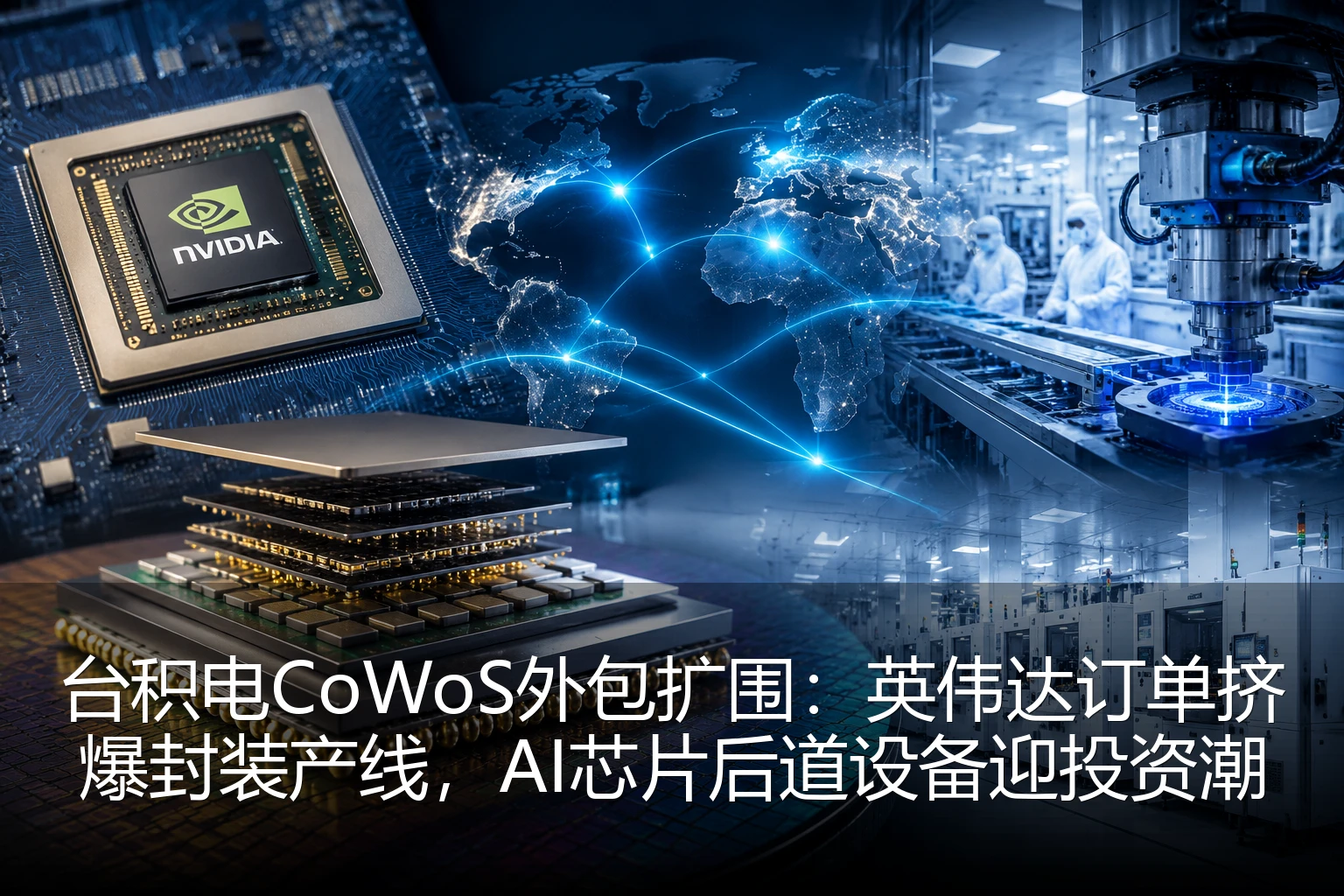
- Packaging and Testing Stage (Back-end): The packaging and testing of chips to ensure they are reliably brought to market. This determines the chip's "reliability."
- Application Stage (End-user): The final integration of AI chips into cloud servers, autonomous vehicles, and edge computing devices.
Listed companies on the Singapore Exchange are often concentrated in one or two of these stages, for example, focusing on design (such as EDA tools or specific algorithm IPs) or concentrating on high-value-added packaging and testing services.
2. Operating Mechanism: From Technological Iteration to Market Pricing
The value growth of AI chips is not linear but driven exponentially by the dual forces of "Moore's Law + algorithmic advancement." Its operating mechanism can be summarized as: Technological Breakthrough $\rightarrow$ Surging Demand $\rightarrow$ Capacity Bottleneck $\rightarrow$ Price Increase $\rightarrow$ Market Valuation Reshaping.
When a nation or region achieves a breakthrough in AI design capabilities (such as ASIC design capabilities), the market quickly assigns a high premium. This premium is not just the pricing of existing products but also a "forward-looking valuation" of future technology roadmaps. If a certain segment (such as advanced packaging technology) becomes a globally scarce resource, companies mastering that segment, even if small in scale, will be given a "scarcity premium" by the market.
II. Factor Analysis: The "Three Pillars" Determining the Rise and Fall of AI Chip Stocks
Investing in AI chip stocks cannot rely solely on the attractive revenue figures in a company's financial statements. The true drivers come from macroeconomic technological and geopolitical factors. We have summarized the "Three Pillars" influencing their stock prices and industry logic: technological progress, geopolitical landscape, and global supply chain resilience.
1. The "Inherent Driving Force" of Technological Progress
This is the most fundamental driver. The rate of development of AI technology itself, such as the continuous increase in parameters of Large Language Models (LLMs), leads to a geometric increase in computing power demand. This directly drives up the demand for more powerful and lower-power chips. Investors must closely monitor:
- The continuation of Moore's Law: Any improvement in technical metrics, whether through process node miniaturization or architectural innovation (such as neuromorphic computing), signifies an iteration and upgrade of existing products, bringing new growth points to all participants in the industry chain.
- The efficiency revolution of algorithms: Algorithmic advancements can greatly enhance the efficiency of existing hardware (the trend of "software-defined hardware"), which changes market expectations for hardware performance.
2. The "External Restraint" of Geopolitics
The semiconductor industry is a classic national strategic resource. The intensifying technological competition between China and the United States subjects the global supply chain to unprecedented geopolitical risks. This has a dual impact:
Opportunity: Policy-oriented support (such as the strategic focus of the Singapore government on high-tech industries) can provide local enterprises with policy dividends and market access guarantees, forming a "security card."
Risk: Trade restrictions and technology export controls can lead to order volatility for corporate clients (such as large technology companies), creating "supply chain anxiety." This requires investors to pay attention to the company's "supply chain resilience," meaning the geographical diversification of its customers and suppliers.
3. The Capital's "Mood Amplifier"
In the tech stock sector, market sentiment (the "Narrative") is often one of the strongest drivers of short-term stock prices. When the market is enthusiastic about the "AI narrative," capital rapidly flows into the sector, even before the fundamentals are fully realized. Conversely, when the macroeconomy enters a recession, risk appetite decreases, and "AI concept stocks" may be sold off, creating the risk of a "concept bubble."
III. Investment Strategy and Risk Control: How to Invest in AI Chip Stocks Professionally?
Faced with the high growth and high volatility of the AI chip sector, the traditional value investment framework needs an upgrade. We propose an investment model based on "Technology Drive + Structured Allocation."
1. Fine-Grained Deconstruction of Investment Logic (From "Concept" to "Sector")
Avoid buying all AI-related stocks with a "one-size-fits-all" approach. Investors should segment the industry chain and select links with high barriers to entry:
- Upstream (Design/IP): Focus on companies possessing unique, difficult-to-replicate intellectual property (IP). The moat for these companies lies in "patent barriers."
- Midstream (Manufacturing/Advanced Packaging): Focus on companies that master specific advanced processes (such as heterogeneous integration or Chiplet technology). The moat for these companies lies in "technological barriers" and "equipment barriers."
- Downstream (Application/Solutions): Focus on companies that can rapidly transform complex chips into concrete business solutions. The moat for these companies lies in "commercialization speed" and "customer stickiness."
2. Risk Control—Preventing "Concept Traps"
The biggest trap in AI concept stocks is the "over-priced technological faith." The response strategy must be defensive:
- Monitor Moats, Not Short-Term Performance: Pay attention to whether the ratio of R&D Spend to revenue is continuously increasing, as this indicates the company is continuously building technological barriers.
- Focus on Customer Binding: Understand who the company's main customers are, and whether those customers are top-tier tech giants. Stable customer demand is the best performance guarantee.
- Dynamic Valuation Anchoring: Avoid using static Price-to-Earnings (PE) ratios. Dynamic assessment should be conducted by combining PEG (Price-to-Earnings Growth Ratio) and industry sentiment indices. If PEG far exceeds 1, bubble risk must be guarded against.
3. Tactical Layout Combined with Macro Cycles
AI chip investment cycles differ from traditional cyclical stocks (such as highly cyclical energy or materials stocks); they are closer to a "technology boom cycle."- Uptrend/Boom Phase: Concentrated allocation to capture excess returns resulting from valuation reshaping.
- Technical Bottleneck/Inventory Clearance Phase (Correction Phase): Bottom-fishing investments focusing on "hidden champions" with solid technological barriers and stable cash flows for re-purchasing.