


New Landscape of Singapore's AI Chip Stocks: Investment Opportunities Amid Geopolitical and Technological Innovation
In 2026, the global artificial intelligence industry has entered a period of accelerated development, with AI chips emerging as core hardware support whose strategic importance is increasingly prominent. As a major financial center in Asia and a hub for the semiconductor industry, Singapore's listed companies on its main board are facing unprecedented development opportunities in AI chip stocks. This article will deeply analyze the investment logic and future prospects of Singapore's AI chip stocks from multiple dimensions, including industry landscape, technological breakthroughs, geopolitical impacts, and investment value.
I. Current Status and Development Advantages of Singapore's AI Chip Industry
As an important participant in the global semiconductor industry, Singapore has accelerated its layout in the AI chip field in recent years. According to data from the Singapore Economic Development Board (EDB), Singapore's semiconductor industry accounts for about 10% of the global market share, with the proportion of AI-related chips continuously increasing. AI chip companies on Singapore's main board are mainly concentrated in three major segments: design, packaging and testing, and equipment manufacturing, forming a relatively complete industrial chain.
Singapore has multiple advantages in developing its AI chip industry: First, its geographical location is advantageous, connecting major electronic manufacturing bases in Asia; Second, the government provides strong policy support, offering comprehensive assistance such as tax incentives and R&D subsidies; Third, it has a high-quality talent pool and a well-established intellectual property protection system; Finally, as an international financial center, Singapore provides convenient financing channels for technology companies.
Since 2026, Singapore's main board AI chip stocks have performed impressively, with an average increase exceeding the broader market index during the same period. Research reports from multiple well-known investment banks indicate that as global AI application scenarios continue to expand, Singapore's AI chip companies are expected to share in the industry's growth dividends and become a focus for investors.
II. The New Asian Semiconductor Landscape Reshaped by Geopolitics
In recent years, the global semiconductor industry chain has undergone profound changes, with geopolitical factors increasingly influencing industrial layout. The United States' restrictions on China's semiconductor technology have prompted Asian countries to accelerate the localization of their semiconductor industry chains. As a relatively neutral regional center, Singapore has benefited significantly from this process.
In 2026, the United States further expanded export controls on China's advanced process chips while strengthening technological cooperation with allies. Singapore has become an important node for the transfer of American semiconductor technology to Asia. The Singapore government has actively seized this opportunity by launching the "Semiconductor Strategy 2026" plan to attract international semiconductor giants to invest in local factories, particularly in advanced packaging and testing sectors.
Geopolitical changes have also brought development opportunities for Singapore's native AI chip companies. Some international clients have begun to increase their procurement from Singaporean companies to diversify supply chain risks. Meanwhile, Singaporean companies are actively exploring emerging markets in Southeast Asia, the Middle East, and other regions to reduce dependence on a single market and enhance risk resilience.
III. Singapore's AI Chip Stocks Driven by Technological Breakthroughs and Innovation
Technological innovation is the core competitiveness of AI chip companies. AI chip companies on Singapore's main board have achieved breakthroughs in multiple technological fields in recent years, laying a solid foundation for long-term growth.
In the chip design sector, Singaporean companies focus on edge AI chips and specialized AI accelerators, avoiding direct competition with international giants like NVIDIA and AMD, and seeking differentiated development paths. For example, a Singaporean design company's low-power edge AI chip has been widely adopted in fields such as IoT and smart security, with its product energy efficiency ratio exceeding the industry average by over 30%.
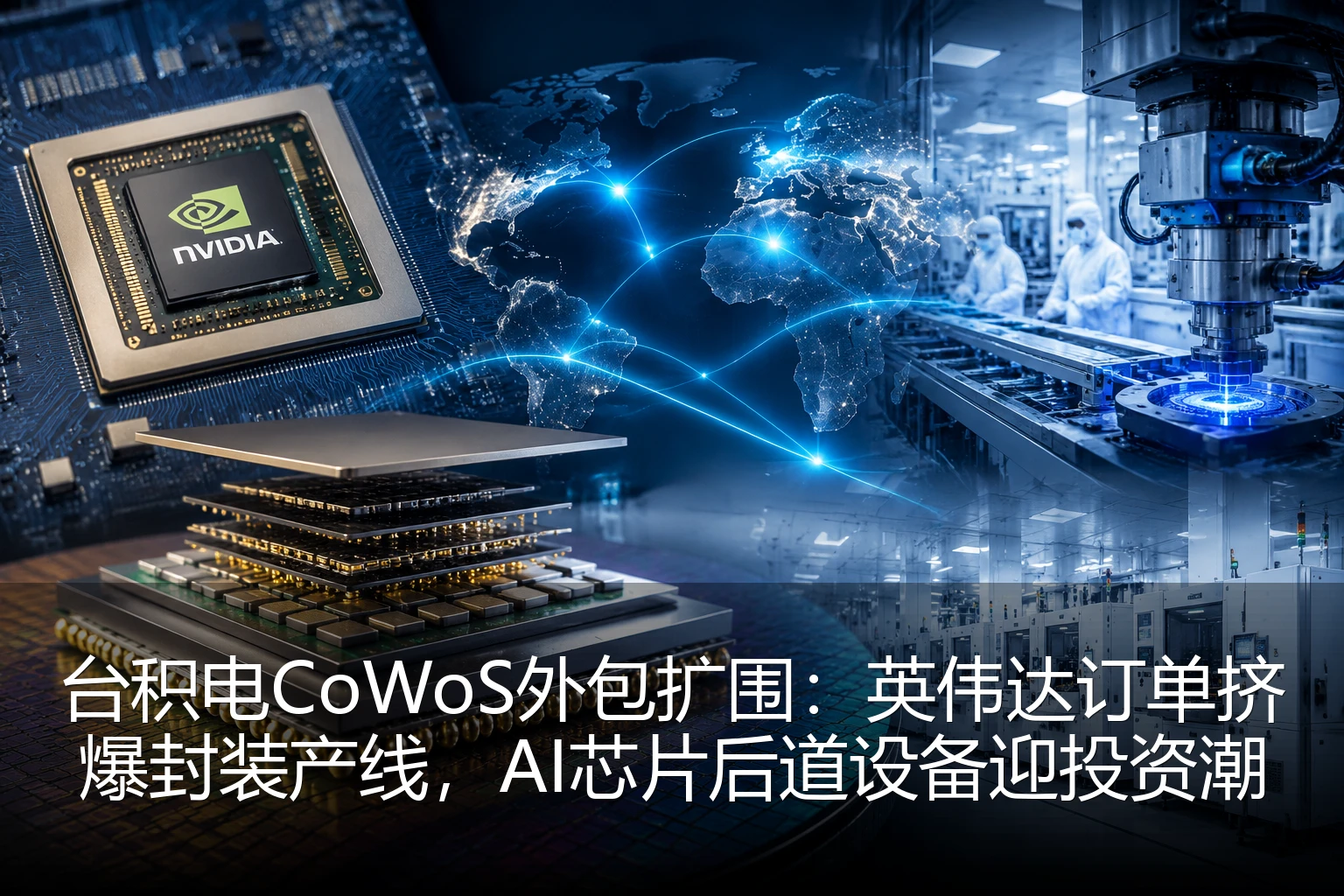
In the advanced packaging sector, Singaporean companies are actively deploying advanced technologies such as 2.5D/3D packaging and Through-Silicon Vias (TSV) to meet the high bandwidth and low latency requirements of AI chips. Packaging and testing enterprises like STATS ChipPAC have already mass-produced AI chip packaging solutions based on CoWoS technology, becoming important partners for foundries like TSMC and Samsung.
In the optoelectronic integration sector, silicon photonic chip technology developed by Singaporean companies provides high-speed optical interconnect solutions for AI chips, effectively addressing the bandwidth bottleneck issues of traditional electrical interconnects. This technology has been applied in high-performance computing and data center fields, showing broad market prospects.
IV. Investment Value and Risk Analysis
From an investment perspective, Singapore's AI chip stocks have multiple value supports. First, the industry is in a period of rapid growth, with the global AI chip market expected to reach $150 billion by 2026, with a compound annual growth rate exceeding 25%. Second, Singaporean companies have distinctive technological features and competitive advantages in niche sectors. Third, valuations are relatively reasonable, offering valuation advantages compared to similar US companies. Finally, there is strong policy support and a favorable industrial development environment.
However, investing in Singapore's AI chip stocks also faces certain risks. First, there is technological iteration risk, as the semiconductor industry undergoes rapid technological updates, requiring companies to continuously invest in R&D to maintain competitiveness. Second, there is market competition risk, as more players enter the market, industry competition will intensify. Third, there is geopolitical risk, as changes in international relations may affect supply chain stability. Finally, there is valuation fluctuation risk, as tech stock valuations are significantly influenced by market sentiment.
From a financial indicators perspective, Singapore Main Board AI chip companies generally have high R&D investment ratios, with most companies allocating over 20% of their revenue to R&D, reflecting their emphasis on technological innovation. In terms of profitability, as economies of scale emerge, leading companies' gross profit margins are gradually improving, with some companies already achieving stable profitability.
V. Future Outlook and Investment Strategy
Looking ahead, Singapore's AI chip industry will usher in more development opportunities. On one hand, global AI application scenarios continue to expand, extending from data centers and cloud computing to edge computing and end devices, creating larger market space for AI chips. On the other hand, the Singaporean government plans to further increase support for the semiconductor industry, including initiatives such as establishing advanced packaging centers and cultivating professional talent.
From an investment strategy perspective, investors are advised to focus on the following types of Singaporean AI chip companies: first, technology-leading companies with unique advantages in niche sectors; second, companies with complete industrial chain layouts that can provide one-stop solutions; third, companies actively exploring emerging markets to reduce dependence on a single market; fourth, companies with healthy financial conditions and abundant cash flow that can support long-term R&D investments.
In terms of risk control, investors should adopt a diversified investment strategy to avoid excessive concentration; focus on companies' technological iteration capabilities and R&D investment efficiency; closely track changes in industry policies and geopolitical dynamics; reasonably position sizing to avoid chasing highs and selling lows.