


Hailunsi Chinese Trademark Invalidated in Final Appeal, Market Value Plunges 90%
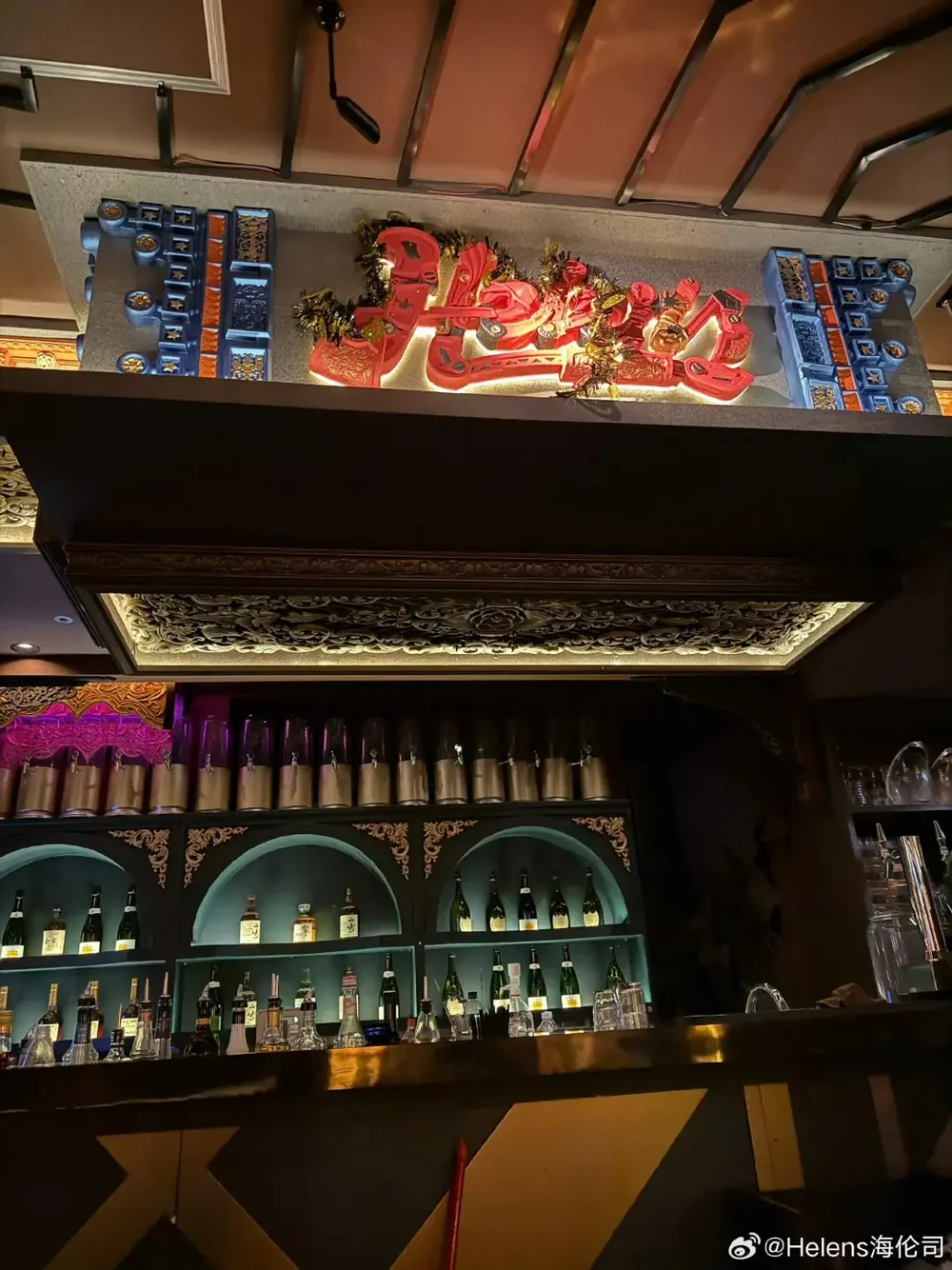
Have you been to Helen's? Hailunsi Bistro recently lost its "Chinese name," with three Chinese trademarks—"Hailunsi," "Hailunsi Bistro," and "Hailunsi Yue Dapaidang"—ruled invalid by the court in a final appeal.
According to the announcement, the assessment concluded that the dispute has no material impact on the group's overall business, daily operations, or financial condition, and the group may continue to use undisputed trademarks in its daily operations. However, after the news was released, the capital market reacted significantly.
Origin of Hailunsi Trademark Dispute: Late Filing of Core Chinese Trademarks
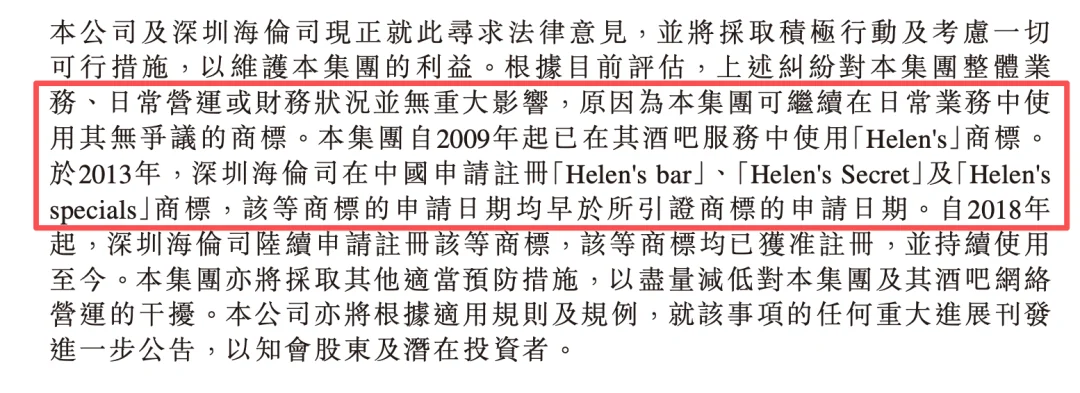
Founded in 2009, Hailunsi initially opened in Wudaokou, Beijing. Founder Xu Bingzhong primarily targeted the foreign market in the early days, including overseas students. Under this strategy, Hailunsi initially used English trademarks such as "Helen's" and applied for the corresponding English trademark in 2013, while its core Chinese trademarks were not registered until 2018.
According to Interface News, the dispute mainly involved Chengdu Hailun Binbin Hotel Co., Ltd. and Hailunsi. The former successfully registered two "Hailun" trademarks in Class 43 (hotel and bar services) in 2016, and on May 23, 2023, and August 7, 2024, respectively, filed invalidation requests with the China National Intellectual Property Administration against the "Hailunsi," "Hailunsi Bistro," and "Hailunsi Yue Dapaidang" trademarks, claiming that the disputed trademarks were similar to the cited trademarks in terms of services, potentially causing confusion or misidentification of service sources.
Final Appeal Ruling of Invalidity: Undisputed Trademarks Can Still Be Used, but Stock Price Fell First
After a back-and-forth lasting three years, Hailunsi announced on the evening of June 25 that the three Chinese trademarks had been ruled invalid by the court in a final appeal. The announcement stated that, based on the current assessment, the dispute has no material impact on the group's overall business, daily operations, or financial condition.
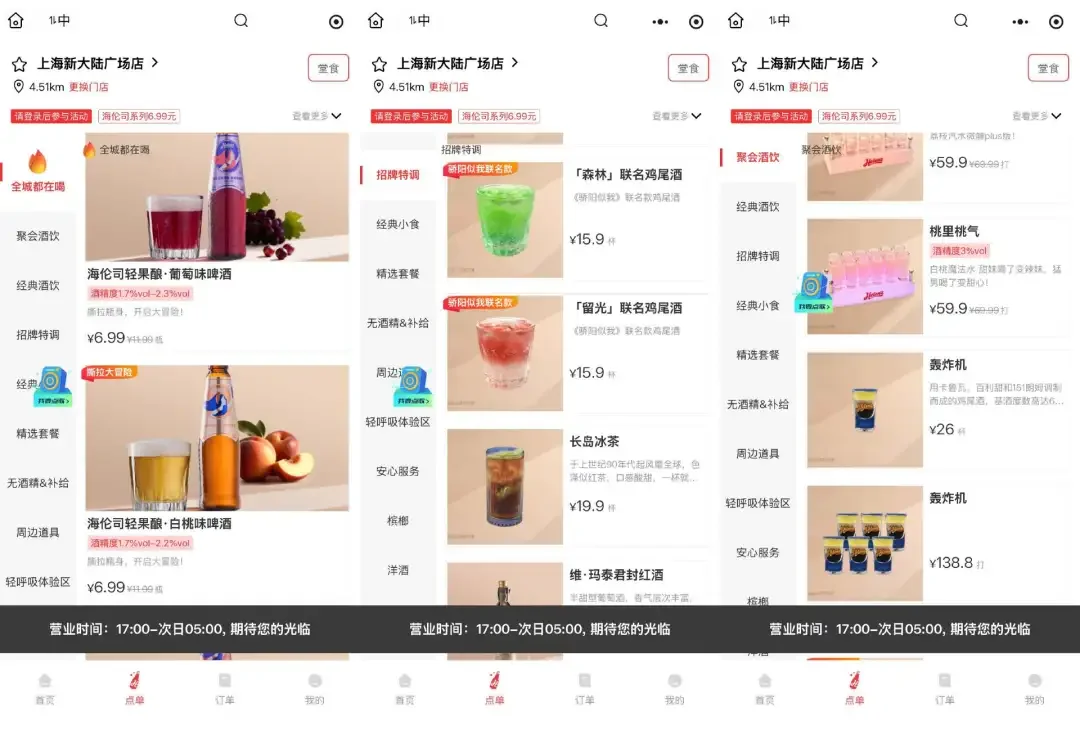
According to a Blue Whale News reporter, as of now, Hailunsi's offline stores and online communications still use the Chinese name "Hailunsi" and related expressions. The impact has not yet been felt at the store level, but the capital market is more sensitive.
After the news was released, the stock price opened lower on June 26, falling over 6% at one point during trading. By the close of that day, Hailunsi's stock price had dropped to HKD 1.58. Hailunsi's market value once reached HKD 30 billion in the year of its listing, but now stands at only HKD 2 billion, a decline of over 90%.
"Young People's First Tavern" No Longer Young: Expansion Leads to Cost and Loss Pressure
Hailunsi's earliest stores were located near university campuses, primarily serving foreigners and international students. Later, founder Xu Bingzhong changed the strategy, positioning Hailunsi as a "space for young people to freely socialize offline" and opening the market with "extreme cost-effectiveness": bottled beer is priced under RMB 10, while cocktails are slightly more expensive but mostly around RMB 20.
The model of "young people + cost-effectiveness" was replicated. By the end of 2021, Hailunsi had 782 stores and was listed on the Hong Kong stock exchange that same year under the title of "China's largest chain of taverns."
According to Hailunsi's prospectus submitted in 2021, revenue from 2018 to 2020 was RMB 115 million, RMB 565 million, and RMB 818 million, respectively; net profit was RMB 9.734 million, RMB 79.136 million, and RMB 70.072 million, respectively. The prospectus showed that self-owned alcoholic beverages contributed over 60% of beverage revenue, with gross margins above 70%; meanwhile, Hailunsi obtained relatively favorable wholesale prices for third-party brand beverages through direct factory procurement and economies of scale.
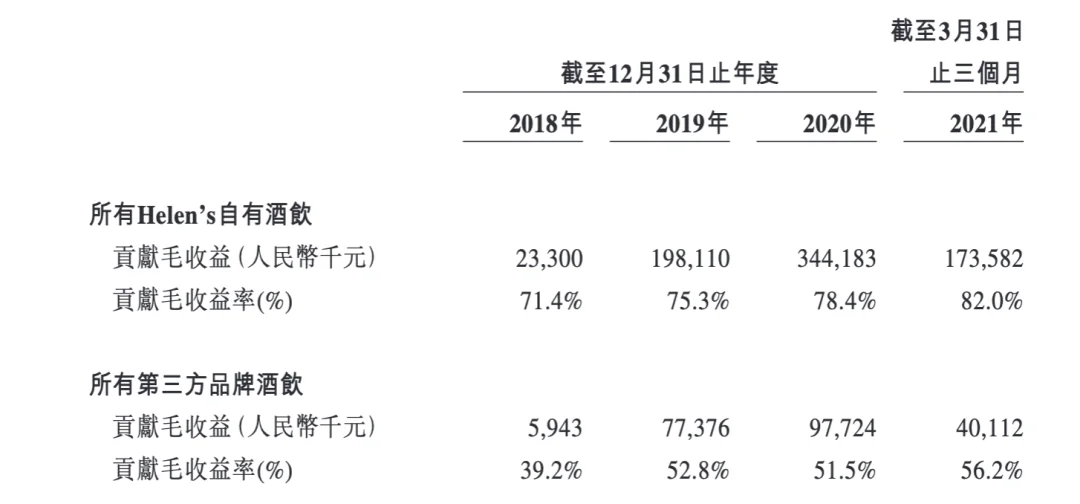
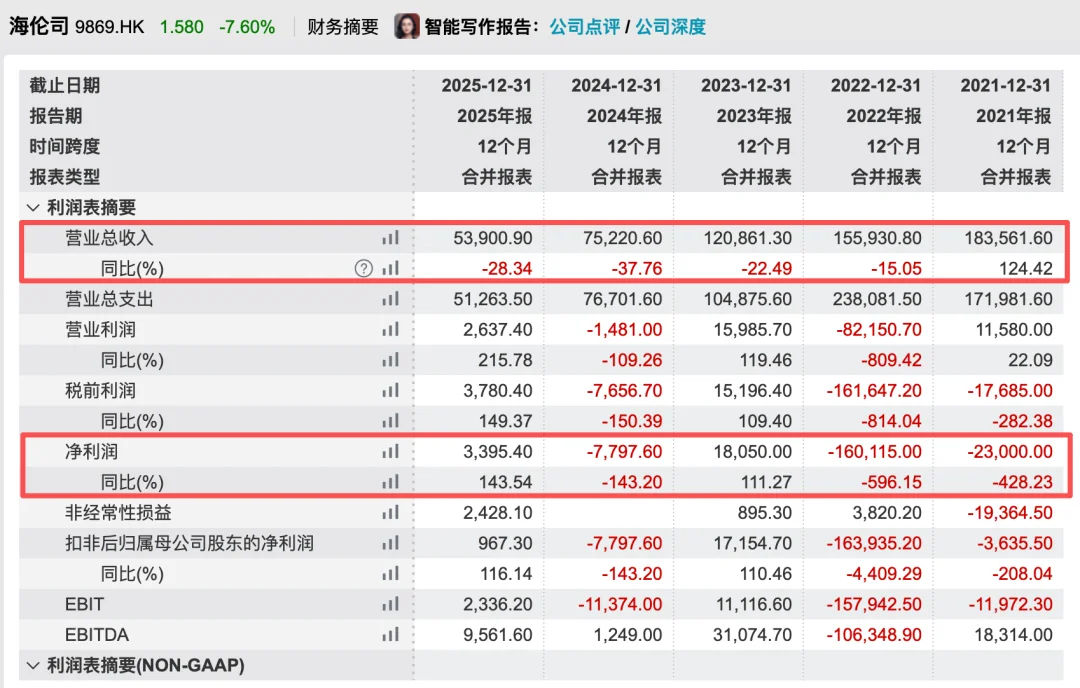
Thus, one of its advantages was scale. However, during the aggressive expansion, store opening costs surged, and combined with factors such as the pandemic, the net loss in 2021 was RMB 230 million, expanding to RMB 1.601 billion the following year. After cumulative losses exceeding RMB 1.8 billion, Hailunsi began closing stores to save itself: financial data shows that by the end of 2023, the number of stores was 479, a decrease of 288 from a year earlier, and over 40% fewer than the peak of more than 850 stores.
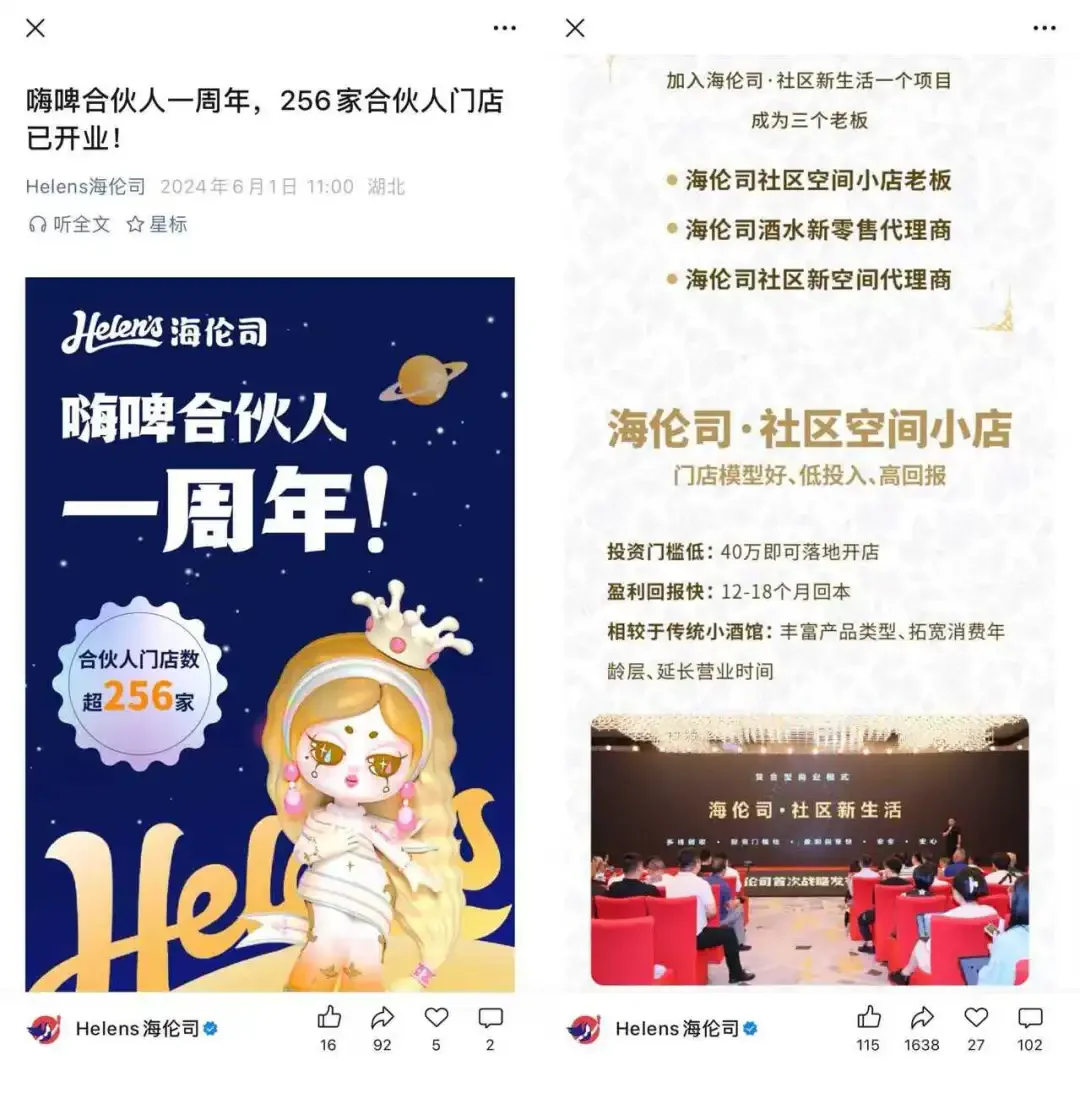
At the same time, Hailunsi initiated a strategic transformation, shifting from a fully direct-operated model to opening franchising, launching the "Hi Beer Partner" plan. The initial investment threshold for this plan started at approximately RMB 600,000, and in 2024, the investment threshold for new store types was further reduced to around RMB 400,000, reflecting the pressure to expand and improve operating conditions.
Intensified Industry Competition: Same-Store Sales Decline and Weakened Low-Price Appeal
According to the 2025 financial report, Hailunsi's full-year revenue was RMB 540 million, a year-on-year decrease of 28.3%; net profit attributable to shareholders was RMB 33.954 million, turning a profit. The share of self-owned beverage revenue and gross margin improved year-on-year, with store-level contribution gross margin rising to 73.77%, indicating improved overall operations compared to the previous year.
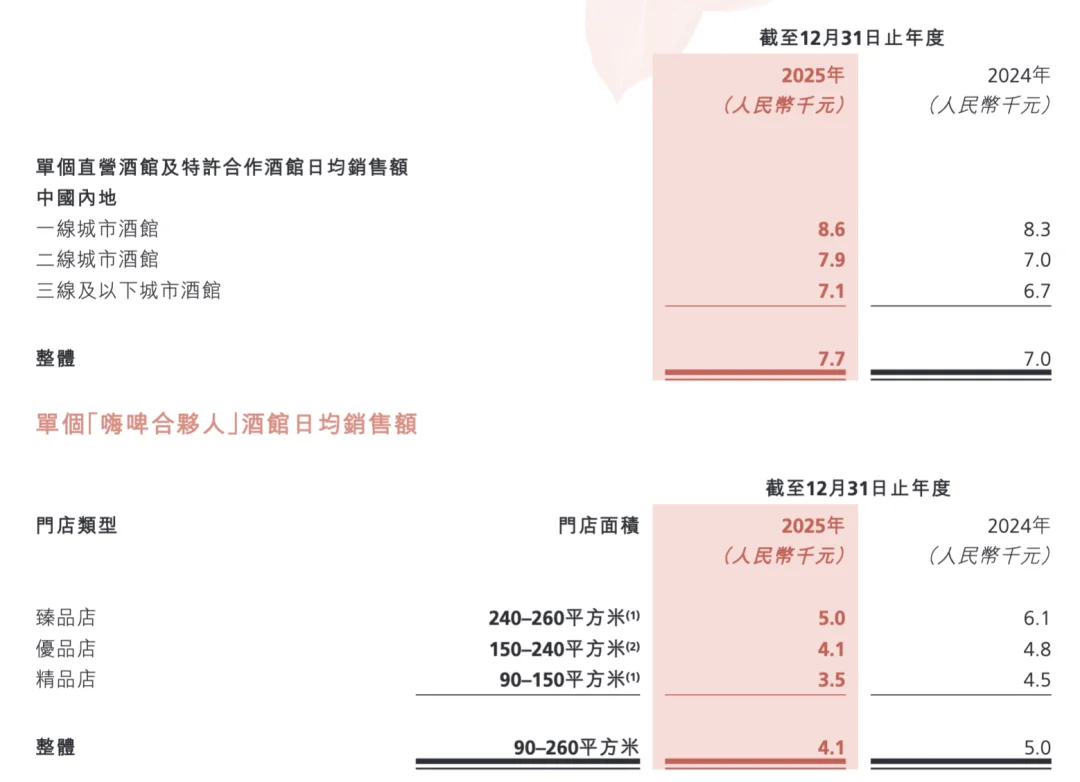
However, the decline in average daily sales per store remains a real pressure. In 2025, the average daily sales per same-store for Hailunsi's directly-operated and franchise-partner stores was RMB 8,500, a year-on-year decline of over 18%; the overall average daily sales per single partner store was only RMB 4,100, with average daily sales across all store types declining across the board. In the catering sector, where average daily revenue per store often exceeds ten thousand yuan, Hailunsi's main franchise store types earn relatively little, and with nearly 70% of its stores located in third-tier cities and below, profitability is under pressure.
On the other hand, young people have more drinking venues to choose from, and the appeal of low prices is waning. Data show that over the past year, as many as 38,000 new taverns have opened, ranging from home bars, craft beer pubs, livehouse-style taverns, to various bistros, with consumption scenarios becoming increasingly diversified.
Among them, bistros operating a "food + drink" model have risen strongly in recent years. In this segment, the brand Huanshi, which operates a "food + drink" model, has been growing aggressively. Its parent company, Jiwu Thinking, submitted a prospectus to the Hong Kong Stock Exchange in January this year. Huanshi has over 100 stores in China, and in 2024, the company's revenue exceeded RMB 1 billion.
Unlike Hailunsi, which relies on low prices and scale to open the market, Huanshi focuses more on ambiance and higher pricing, with per capita consumption exceeding RMB 100. According to its prospectus, in the first nine months of 2025, its average daily sales per store were RMB 29,880. By offering brunch, afternoon tea, dinner, and nighttime bar service, it extends operating hours to over 18 hours, improving store utilization efficiency and operating profitability. During the same period, alcoholic beverages and drinks contributed approximately 45% of operating revenue, with 85% being alcoholic drinks; overall gross margin remained stable at 68.7%, above the industry average.
However, Huanshi also faces pressure from store costs squeezing profits, and consumer complaints about dish taste and quality affecting its reputation.
Zhu Danpeng, a food industry analyst in China, believes that, like the coffee sector, brands at low, medium, and high price points each have their market. For taverns, because the tavern format is popular with the new generation, the industry is in a period of rapid expansion, but overall concentration is low; perhaps after another five years, driven by capital and consumption dividends, leading brands and a clearer competitive landscape will emerge.
He also noted that key factors determining the future development of taverns include brand effect, scale effect, fan effect, supply chain completeness, and single-store operational capability. Since store locations vary, strategies should be differentiated. For Hailunsi, how to run each store well may be the biggest challenge.