


Capital Continues to Pour In: ChiNext AI ETF Fullgoal Leads the New Tech Wave
Abstract
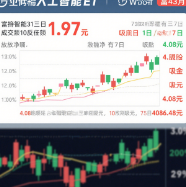
With the rapid development of AI technology and accelerating industrialization, capital market attention on the AI track is heating up. As of July 13, 2026, the ChiNext AI ETF Fullgoal had an average daily turnover of 197 million yuan in the past month, with net capital inflows on 7 of the past 10 trading days, accumulating a total of 409 million yuan and an average daily net inflow of 40.8841 million yuan. These impressive figures not only reflect high market recognition of the AI sector but also reveal that institutional capital is accelerating its deployment into this strategically emerging field. This article will deeply analyze the latest dynamics of the ChiNext AI ETF Fullgoal from four dimensions: market performance, capital flows, industry logic, and investment value.
1. Market Performance: Significantly Increased Trading Activity
The ChiNext AI ETF Fullgoal has recently shown strong market attention. As of July 13, the ETF had an average daily turnover of 197 million yuan in the past month, a leading level among similar products. High turnover indicates strong trading willingness among market participants and ample liquidity.
From a trading structure perspective, the continuous expansion of the ETF's average daily turnover reflects both frequent entries and exits by short-term traders and steady position-building by medium- to long-term investors. This multi-participant trading pattern allows the ETF's price discovery function to be fully realized while providing investors with a good entry and exit channel. For institutional investors, an average daily turnover of 197 million yuan means low cost and low liquidity risk for large capital flows.
Notably, the high average daily turnover in the past month is not an isolated phenomenon but shows continuity and trendiness, reflecting long-term recognition of the AI theme rather than short-term speculative sentiment.
2. Capital Flows: Continuous Net Inflows Reflect Market Consensus
Capital flow is an important indicator for judging market sentiment and investment direction. Data shows that over the past 10 trading days, the ChiNext AI ETF Fullgoal had net capital inflows on 7 days, with a cumulative net purchase amount of 409 million yuan and an average daily net inflow of 40.8841 million yuan. Such concentrated capital influx is rare in the A-share ETF market.
From the rhythm of net inflows, capital exhibited a "small-step fast-run" characteristic. The daily net inflow of over 40 million yuan is neither a sudden large-scale purchase nor an ambiguous tentative position-building but reflects a steady and firm allocation logic. This capital behavior typically implies that institutional investors, after careful analysis, find current valuation levels attractive and choose to deploy in batches.
Further analyzing the nature of the capital, the 409 million yuan net inflow is likely dominated by institutional funds. Long-term funds such as insurance companies, pension funds, and bank wealth management products often prefer to allocate index constituent stocks via ETF tools rather than individual stocks. The continued inflow of such funds provides stable incremental capital supply to the AI sector, helping to reduce market volatility.
3. Market Signals: Multiple Interpretations of Continuous Inflows
Behind the sustained net capital inflows are multiple market signals. First, it indicates optimism about the medium- to long-term prospects of the AI industry. Although some AI concept stocks experienced price fluctuations in the short term, institutional investors did not exit but instead increased positions against the trend. This contrarian deployment strategy suggests that professional investors believe the current valuation bubble in the AI track is not serious and that high-quality targets still have investment value.
Second, the continuous net capital inflows imply the efficiency of the ETF as an investment tool. Compared to directly buying individual stocks, investors can allocate leading AI companies on the STAR and ChiNext markets in one click via ETFs, diversifying stock-specific risk and reducing research costs. This advantage is particularly prominent in the context of the AI industry still undergoing rapid change.
Finally, the 409 million yuan net inflow scale also reflects market confidence in the overall ChiNext market. As an important component of ChiNext, the strength of the AI sector often drives the entire ChiNext index upward. Therefore, capital inflows into this ETF are, to some extent, a prediction of a structural ChiNext market trend.
4. Industry Ecosystem: AI Enters Accelerated Industrialization Phase
The sustained capital inflow into the ChiNext AI ETF Fullgoal is backed by solid fundamentals. Currently, the AI industry is moving from the "technical verification period" to the "industrial implementation period." Breakthroughs in large model technology, declining AI chip costs, and expanding application scenarios collectively drive the reconstruction of industry chain value.
At the policy level, national support for the AI industry continues to intensify. Multiple regions have introduced special support policies, comprehensively supporting AI enterprise development from computing power infrastructure construction to application scenario opening. These policy dividends provide a favorable development environment for relevant listed companies.
At the enterprise level, the constituent companies covered by the ChiNext AI ETF Fullgoal have core competitiveness in areas such as computer vision, natural language processing, intelligent driving, and robotics. Most of these companies are in rapid growth stages, with revenue growth rates significantly higher than traditional industries. As business models mature, their profitability is expected to improve.
5. ChiNext Attributes: Balancing Tech Innovation and Growth
The ChiNext AI ETF Fullgoal focuses on AI enterprises listed on ChiNext, a positioning with deep implications. ChiNext, as an important platform serving growth-oriented innovative and entrepreneurial companies, has gathered a large number of "hard tech" firms with core technologies in recent years. Compared to the main board, ChiNext companies have higher R&D investment ratios, greater growth elasticity, and stronger sensitivity to technological iterations.
In the AI field, ChiNext-listed companies often occupy leading positions in specific sub-sectors. They may be providers of underlying algorithms, solution providers for vertical scenarios, or designers of AI chips. This diversified business layout gives the ETF's holdings a natural diversification advantage, avoiding over-reliance on a single company.
6. ETF Deployment: Advantages of Passive Investing Become Prominent
In AI theme investing, the advantages of ETF tools have become increasingly obvious. First, ETF fees are usually lower than actively managed funds, reducing long-term investment costs. Second, ETF holdings are transparent, allowing investors to clearly understand which targets are allocated for better risk control. Third, ETFs can be traded in real-time on the secondary market, with liquidity far exceeding regular open-end funds.
The ChiNext AI ETF Fullgoal stands out among similar products. Its asset growth and sustained capital inflow are market manifestations of these advantages. For investors who wish to share in the development dividends of the AI industry but lack the ability to select individual stocks, ETFs are undoubtedly the best choice.
7. Outlook and Recommendations
Looking ahead, the AI industry remains in a golden period of rapid development. With the continuous evolution of large model technology, the improvement of edge computing capabilities, and the broadening of AI application scenarios, the performance of relevant listed companies is expected to exceed expectations. The ChiNext AI ETF Fullgoal, as a core tool tracking this track, is likely to continue attracting capital inflows.
For investors, the value of focusing on this ETF at the current time lies in: first, sustained net capital inflows provide price support; second, high average daily turnover ensures trading convenience; third, industry fundamentals are sound and long-term logic is clear. Of course, all investments carry risks. The high growth of the AI sector comes with high volatility, and investors should allocate reasonably based on their risk tolerance.
8. Conclusion
As of July 13, the ChiNext AI ETF Fullgoal had an average daily turnover of 197 million yuan in the past month, with net inflows on 7 of the past 10 trading days totaling 409 million yuan and average daily inflows of 40.8841 million yuan. These data collectively point to one fact: capital is accelerating its deployment into the AI track. Driven by both industrial policy and market demand, the investment value of the AI sector is being redefined by the market. For the vast number of investors, using the ETF tool to participate in AI industry investment opportunities with a long-term perspective may be the wise choice at present.