


AI Demand Fuels Semiconductor Orders, Singapore Emerges as Key Hub
On July 27, 2026, artificial intelligence hardware demand sent a strong signal. US chip giant NVIDIA rose 3% in pre-Asian trading after confirming a multi-billion dollar order from a Southeast Asian hyperscale cloud operator for its next-generation Blackwell architecture GPUs. Concurrently, TSMC's advanced packaging and mature process fabs in Singapore officially entered mass production, primarily serving the automotive and AI edge computing chip sectors. This dual positive news directly boosted semiconductor-related stocks listed on the Singapore Exchange (SGX), with UMS Holdings and AEM Holdings both rising by over 5% during the trading day.
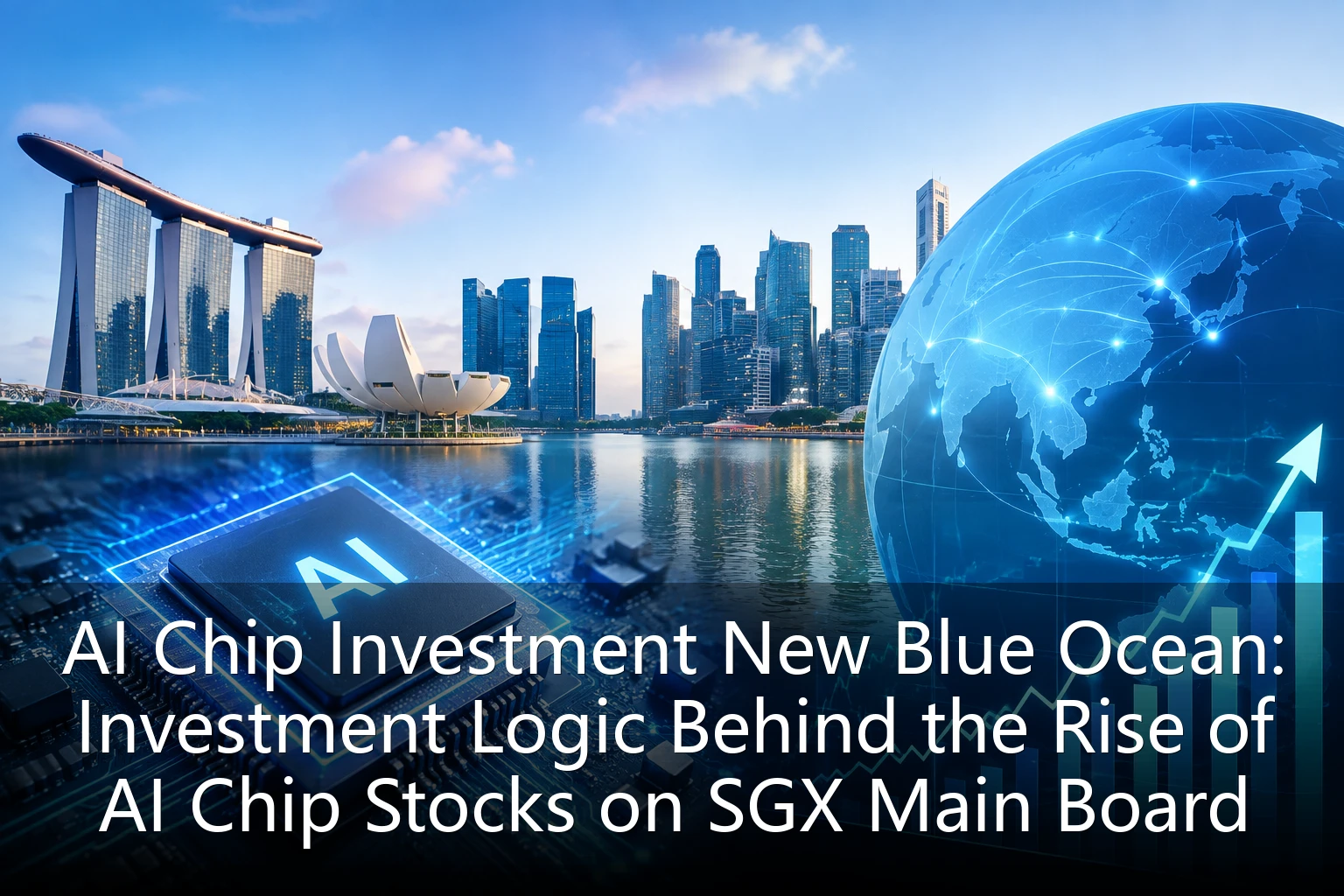
In fact, Singapore plays an increasingly vital role in the global semiconductor supply chain. According to data from the Economic Development Board (EDB), the semiconductor industry accounts for nearly 30% of the nation's manufacturing output, and approximately 10% of global finished chips are assembled, tested, or packaged in Singapore. As AI inference demands shift toward the edge, Singapore attracts more chip design, equipment manufacturing, and testing enterprises due to its stable political environment, robust infrastructure, and free trade agreements.
The AI Investment Logic Behind NVIDIA's Orders
NVIDIA's recent order came from a local Southeast Asian cloud giant planning to triple its AI computing power within the next two years. Analysts point out that the Southeast Asian region is undergoing accelerated digital transformation, with governments in countries like Malaysia, Indonesia, and Vietnam launching national AI strategies that are driving a boom in data center construction. NVIDIA CEO Jensen Huang reaffirmed in a recent conference call, "Global AI infrastructure investment still has immense growth potential, especially in the Asia-Pacific region." This view is corroborated by the continuous net inflows into multiple AI-themed ETFs listed on the SGX—which surpassed S$5 billion in assets under management as of July 26.
For investors, the core logic of AI investment can be summarized in three points: first, the large model race drives inelastic growth in computing power demand, with a chip supply shortage expected to last at least until 2028; second, AI applications are beginning to penetrate enterprise and consumer sectors, with inference chip demand growth rates even exceeding those of training chips; and third, the hardware supply chain is showing a trend of regional dispersion, with Southeast Asia absorbing some capacity shifts from China. Singapore, as a regional financial and logistics hub, naturally benefits from this.
Noteworthy AI-Related Stocks on SGX
Besides US and Taiwan ADRs directly linked to NVIDIA, AMD, and TSMC, the SGX mainboard offers numerous local AI concept stocks:
- UMS Holdings: Provides precision components to top global semiconductor equipment manufacturers, with about 70% of revenue derived from front-end wafer manufacturing equipment, benefiting from capital expenditures by TSMC and Samsung.
- AEM Holdings: Focuses on testing and sorting machines and system-level testing solutions, serving clients such as NVIDIA and Intel, with order growth driven by high demand for AI chip testing.
- Frencken Group: A supplier of mechanical and mechatronic solutions, involved in medical devices and semiconductors, recently securing prototyping contracts from several AI chip startups. Micro-Mechanics: A supplier of precision molds and spare parts for semiconductors, characterized by high technical barriers and strong customer stickiness, with factories located in Singapore, China, and the United States.
Furthermore, investors can diversify their holdings through the FTSE Singapore Technology Index ETF (SGX code: FTEC) or structured products offered by private banks.
Industry Insight: Beware of Cyclical and Geopolitical Risks
Despite the bright prospects of AI, the inherent cyclical nature of the semiconductor industry requires caution. Global chip inventory levels have declined from the high point in 2024, but corporate IT spending may contract if the global economy slows down. Additionally, US export restrictions to China are intensifying, and some SGX-listed companies reliant on the Chinese market may face order volatility. The Singapore Exchange recently relaxed its second listing rules, attracting more overseas technology companies to list in Singapore. While this has enriched investment options, it has also increased the complexity of valuation comparisons.
Overall, AI investment remains one of the most certain growth trajectories for the next five to ten years. Singapore, with its unique geographical advantage and mature capital market, provides investors with convenient channels to participate in the upgrading of the AI industry chain. When making specific investments, it is recommended that investors diversify their allocations based on their own risk tolerance and continuously track key corporate financial reports and industry health indicators.
Conclusion
Market movements on July 27, 2026, once again confirmed the pull effect of AI on the real economy. From Nvidia's orders to TSMC's mass production, and the active performance of the SGX semiconductor sector, investors have ample reason to examine the investment potential of the AI theme in this hub, Singapore. Only by seizing the right moment and making rational allocations can one share in the technological dividends of the AI era.