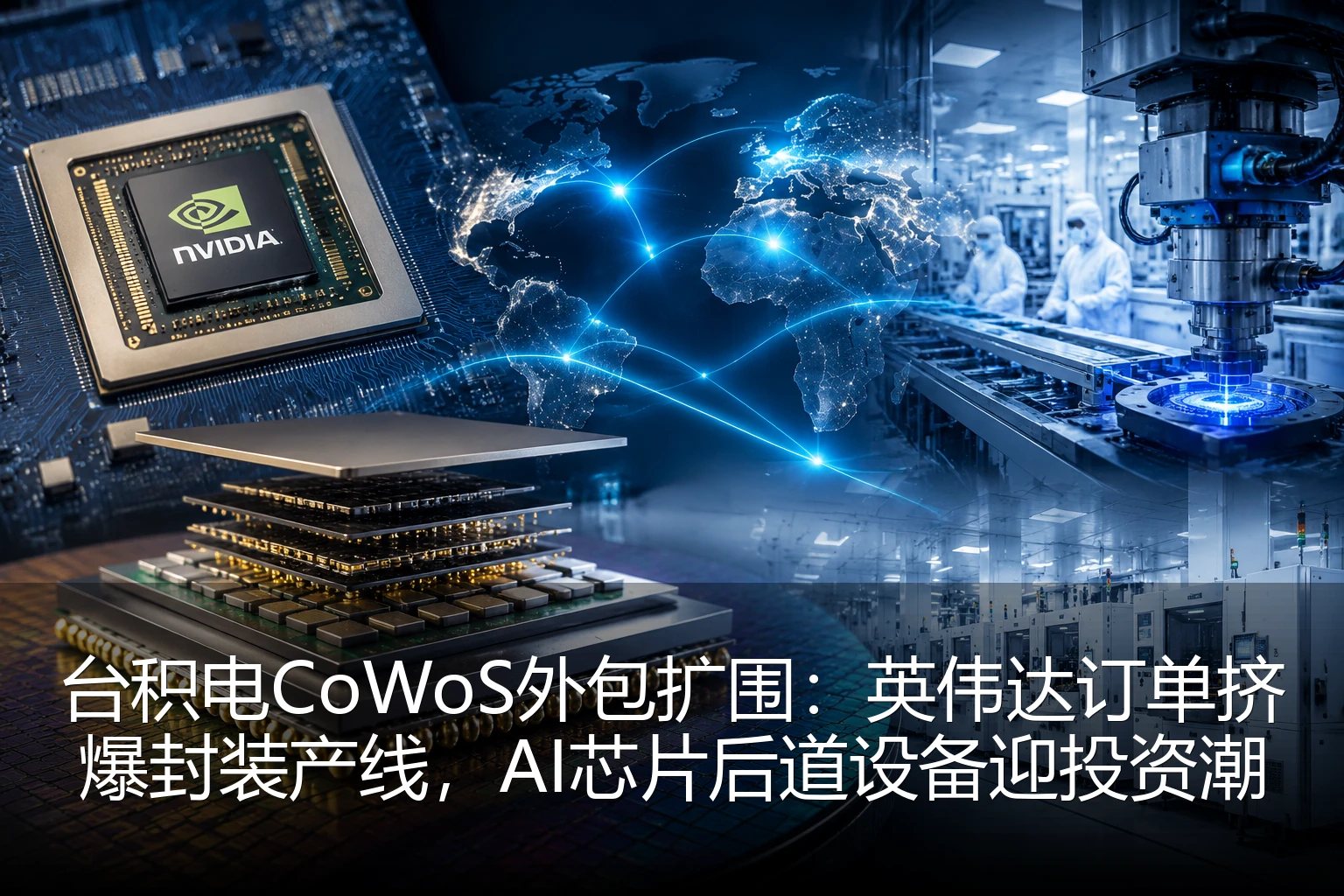



UMS Holdings (SGX: 558), a leading semiconductor equipment provider on the Singapore mainboard, released its Q2 earnings for the period ending June 30 on July 28, 2026, after market close. Key metrics surpassed expectations, with both revenue and net profit hitting all-time highs. Amid the explosive global demand for AI chips, UMS, as a core equipment supplier in the advanced packaging segment, fully benefited from the industry expansion wave, driving strong quarterly growth.
Performance Highlights: Record Revenue and Net Profit
The earnings report showed UMS Holdings achieved Q2 revenue of S$185 million, up 28% YoY and 12% QoQ, exceeding the analyst consensus of S$172 million. Net profit reached S$41.2 million, soaring 45% YoY, with net profit margin rising from 19.4% in the same period last year to 22.3%. Earnings per share (EPS) stood at S$0.058, up 46% YoY. The company also declared an interim dividend of S$0.015 per share, a 25% increase YoY.
By business segment, core precision semiconductor equipment and components revenue grew 32% YoY, contributing 78% of total revenue. Among these, customized equipment for advanced packaging (e.g., 2.5D\/3D packaging, fan-out packaging) saw the highest sales growth at 43% YoY. Company management stated during the earnings call that order visibility from AI chip customers (including global IDMs and foundries) extends into 2027, with some long-term orders locking in capacity for the next 18 months.
Growth Driver: AI Chip Packaging Capacity Shortage
Currently, demand for high-performance packaging (CoWoS, InFO, SoIC, etc.) from AI accelerators (e.g., GPUs, ASICs, HBM) is growing exponentially, while global advanced packaging capacity expansion lags far behind design requirements, leading to prolonged equipment lead times. As one of the few semiconductor equipment suppliers in Singapore with advanced precision machining capabilities, UMS holds exclusive or priority supply positions in key components for lithography machines, wafer transport, and inspection equipment.
According to industry research firm SEMI, the global semiconductor packaging equipment market is expected to grow 18% in 2026, with advanced packaging equipment growing over 25%. UMS benefits from deep ties with major customers like TSMC and Intel. The company CEO emphasized in the earnings report: "We are accelerating the expansion of our new Singapore factory, with new production lines expected to contribute approximately 30% additional capacity by early 2027 to address the backlog of AI packaging equipment orders."
Orders and Capacity Outlook: Full-Year Guidance Raised
Based on strong H1 performance and on-hand orders, UMS Holdings raised its full-year 2026 revenue guidance from 15-20% YoY growth to 22-26% YoY growth. The CFO revealed that the backlog at end-Q2 reached S$360 million, a record high, equivalent to about five months of revenue. Management stated they will continue to increase capital expenditure, investing S$80 million in the current fiscal year to build new factories in Singapore and Penang, Malaysia.
Notably, UMS's performance is also influenced by geopolitical factors. With the US, Japan, and Europe increasing investments in domestic semiconductor manufacturing, equipment localization demand presents additional opportunities for UMS. The company has received equipment procurement intentions related to the US CHIPS Act projects.
Industry Background: Dense Asian Semiconductor Event Calendar
UMS's earnings release coincides with a dense calendar of Asian semiconductor events. Since July, major players such as TSMC, SMIC, and SK Hynix have reported earnings, generally signaling strong AI demand but a slow recovery in non-AI chips—a "divergence" signal. Meanwhile, multiple foundries announced expansion plans, e.g., TSMC's Kumamoto plant in Japan and Arizona plant in the US are accelerating equipment installation. These events directly benefit upstream equipment suppliers like UMS.
From an industry chain perspective, Singapore is becoming a key manufacturing hub for global semiconductor equipment and precision components. Besides UMS, companies like AEM Holdings (SGX: V74) and Frencken Group (SGX: E28) will report earnings in the coming weeks. Investors should closely monitor these companies' earnings and order guidance to capture the AI-driven equipment bull market.
Investment Strategy: Event-Driven Trading Layout Suggestions
UMS Holdings, as a tech blue chip on the Singapore mainboard, has seen its share price rise 68% over the past 12 months, with a current P\/E of about 22x, slightly above the industry average. Considering high order visibility, clear capacity expansion path, and sustained AI packaging demand likely to outstrip supply until 2027, institutions generally favor its outlook. Multiple brokerages, including JPMorgan and DBS, have raised target prices post-earnings, with average target price implying 12% upside from the current share price.
For event-driven traders, key milestones to watch:
- Mid-August: UMS ex-dividend date (interim dividend S$0.015), monitor post-ex rights trend
- September: SEMICON Taiwan 2026, UMS may exhibit and disclose new technologies and partnerships
- Late October: Q3 earnings release, verify order delivery pace and gross margin changes
- Early 2027: New factory commissioning, capacity release driving revenue growth
Additionally, investors should be mindful of risks: a slowdown in AI chip demand or customer order cuts could impact order visibility; intensified international competition and currency fluctuations also pose potential pressure on profits.
Conclusion
UMS Holdings' Q2 earnings once again confirm AI's disruptive impact on the semiconductor industry, particularly making advanced packaging a "seller's market." As a core Singapore mainboard stock, UMS enjoys benefits from the industry upcycle due to its technological barriers and strategic customer ties. This earnings beat further elevates market attention on the Asian semiconductor equipment sector, offering event-driven investment opportunities worth seizing.
(Note: This article is compiled based on public information as of July 28, 2026, and does not constitute investment advice. Market risks exist; invest cautiously.)