


On August 4, 2026, global semiconductor manufacturing leader TSMC announced at its latest investor conference that its 3-nanometer (N3) process capacity is scheduled through 2027, running at full load year-round. This news not only reaffirms the sustained explosion in AI chip demand but also brings clear growth expectations for semiconductor equipment, packaging and testing, and material suppliers listed on the Singapore Mainboard.
3nm Process Fully Loaded: AI Chip Demand is the Core Driver
TSMC management stated that 3nm process orders mainly come from AI accelerators, high-performance computing (HPC), and high-end smartphone chips. Among them, AI chip customers include NVIDIA, AMD, Broadcom, and others, which are accelerating the launch of next-generation AI processors to meet the explosive growth of cloud and edge AI applications. According to TSMC's official data, in the second quarter of 2026, AI-related orders accounted for over 35% of the company's revenue, while the 3nm process capacity utilization rate rose from 95% at the beginning of the year to 100%, and is expected to remain fully loaded for the next 18 months.
TSMC's capacity planning shows that its 3nm wafer fab in Taiwan (Fab 18) is accelerating expansion, while the 3nm production line at its Arizona, USA plant will also commence production in 2027 to meet the geopolitical demands of North American customers. This expansion plan will directly drive demand for high-end semiconductor equipment, advanced packaging materials, and testing services.
The Beneficiary Logic for Singapore's Semiconductor Industry Chain
For Singapore Main board investors, TSMC's fully loaded 3nm process is not an isolated event but a microcosm of the global AI chip industry chain linkage effect. As a crucial global hub for semiconductor packaging, testing, and equipment manufacturing, Singapore's listed companies will benefit from the following three aspects:
1. Surging Demand for Advanced Packaging
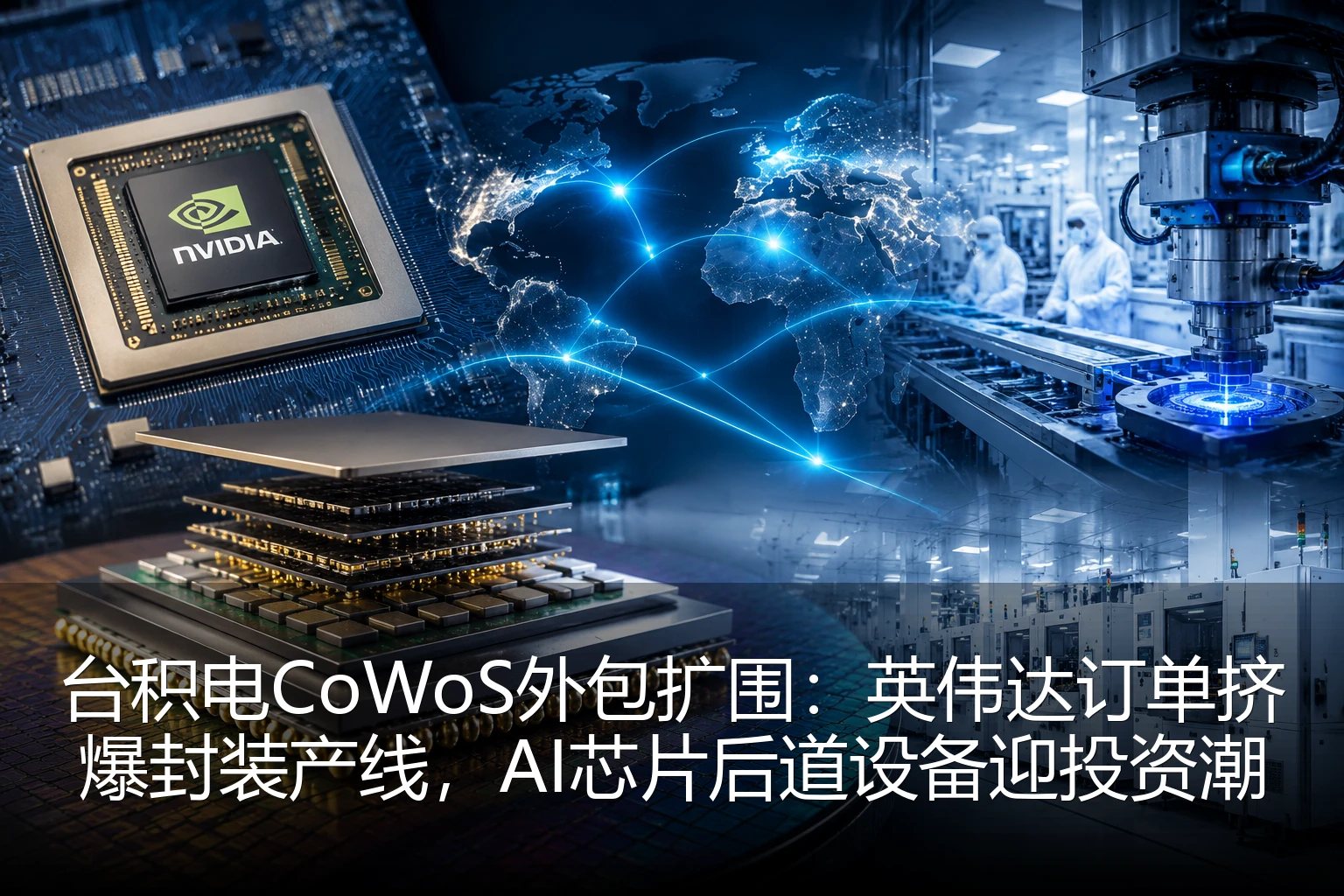
The complex architecture of AI chips (such as Chiplet design) relies heavily on advanced packaging technologies (like CoWoS, InFO). TSMC itself is also significantly expanding its advanced packaging capacity, but the proportion outsourced to third-party packaging and testing vendors is rising. Singapore's packaging and testing companies, especially those with long-term partnerships with TSMC, are expected to secure more orders. Furthermore, the Singapore government has vigorously promoted the semiconductor industry cluster in recent years, attracting many international packaging and testing giants to set up facilities, which will indirectly benefit local equipment vendors.
2. Order Growth for Equipment and Material Suppliers
TSMC's expansion plan requires substantial procurement of wafer fabrication equipment, inspection equipment, as well as specialty gases, photoresists, and other materials. Singapore's semiconductor equipment manufacturers, such as UMS Holdings (UMS.SI) and AEM Holdings (AEM.SI) listed on the SGX Main board, are key participants in the global semiconductor equipment supply chain. UMS Holdings primarily provides vacuum valves, precision components, etc., with customers including equipment giants like Applied Materials; AEM Holdings focuses on semiconductor testing solutions, directly benefiting from the surge in AI chip testing demand.
3. Spillover Demand from Data Centers and AI Servers
The fully loaded 3nm process means AI chip shipments will continue to climb, thereby driving data center construction and AI server shipment growth. As a Southeast Asian data center hub, Singapore is attracting major cloud computing giants (such as AWS, Google, Microsoft) to build new data center clusters. This will indirectly boost demand for local power, cooling systems, and related infrastructure services in Singapore, benefiting telecommunications, energy, and infrastructure stocks listed on the Singapore Main board.
Tracking SGX-Related Targets and Investment Strategy
Based on the above logic, investors can focus on the following Singapore Main board targets:
- UMS Holdings (UMS.SI): A key supplier of precision components for global semiconductor equipment. Its Q2 2026 financial report showed a 28% year-on-year revenue increase and a 35% net profit increase, mainly driven by AI chip equipment orders. With TSMC's 3nm capacity expansion, UMS is expected to continue securing large orders.
- AEM Holdings (AEM.SI): As a semiconductor testing solutions provider, AEM delivered strong performance in the first half of 2026, with net profit doubling. Its testing equipment is widely used in the final testing stage of AI chips, and TSMC's full capacity will directly drive AEM's order growth.
- Singtel (STI.SI): The data center business is a transformation focus for Singtel, and its Nxera data center brand is expanding across Southeast Asia. AI chip demand driving data center construction is expected to benefit Singtel's Nxera business.
- Keppel DC REIT (KDCREIT.SI): As a leading data center REIT in Asia, Keppel DC REIT owns a large portfolio of data center assets in Singapore and Southeast Asia. Rising AI computing power demand will enhance its property occupancy rates and rental levels.
Industry Interpretation: Deepening AI Chip Investment Logic
From a broader perspective, TSMC's fully loaded 3nm process signifies that AI chip investment has moved from 'concept hype' to a 'performance verification phase'. Investors need to pay attention to the following trends:
- Intensifying Process Competition: After TSMC's 3nm is fully loaded, its 2nm process will also begin trial production in the second half of 2026, with mass production expected in 2027. This will continuously drive demand for equipment upgrades and replacements.
- Geopolitical Risks: US chip export controls on China may affect orders from some AI chip customers, but Singapore, as a neutral trade hub, will see relatively less impact on its supply chain enterprises, and may even benefit from order diversion effects.
- Valuation and Performance Alignment: Current valuations of Singapore semiconductor-related stocks have risen, but if performance continues to exceed expectations, there is still upside potential. Investors should focus on the upcoming Q3 2026 financial reports to verify the growth trend.
Conclusion
The news of TSMC's 3nm process being fully loaded through 2027 injects strong confidence into the AI chip industry chain. For Singapore Main board investors, this is not only an opportunity to track TSMC's developments but also a window to deeply explore local semiconductor equipment, packaging and testing, and data center-related targets. In the AI-driven semiconductor super cycle, Singapore, with its unique industry chain position and policy support, is poised to become an important market for global investors allocating to the AI theme.