In 2026, the iterative upgrades of Artificial Intelligence (AI) technology are reshaping the global industrial landscape at an unprecedented speed, with computing power, as the core support for AI development, showing exponential growth in demand. Industry research institutions predict that the global AI chip market size will exceed $300 billion in 2026, with High-Performance Computing (HPC) chips accounting for over 60%. Against this backdrop, the semiconductor industry is entering a "super cycle," and Singapore, with its long-term presence and supply chain advantages in the semiconductor sector, is becoming a critical node in the AI computing power industry chain in Asia and globally.
I. The Explosion of AI Computing Power Demand: The Core Driving Force of Singapore's Semiconductor Industry Chain
The surge in demand for AI computing power stems from multiple factors: first, the increasing complexity of large model training and inference requires higher-performance chips; second, the proliferation of edge AI is driving chips toward low power consumption and high integration; and third, the iteration of storage technologies such as HBM (High Bandwidth Memory) supports the performance enhancement of AI chips. These demands are directly transmitted to all segments of the semiconductor industry chain, including wafer manufacturing, packaging and testing, and equipment materials.
Singapore's semiconductor industry chain is characterized by "full-chain coverage," encompassing multiple segments such as wafer manufacturing, packaging and testing, and equipment materials. In wafer manufacturing, Singapore hosts GlobalFoundries' 12-inch fabrication plants, focusing on advanced processes (such as 3nm and 5nm). In packaging and testing, STATS ChipPAC is a leading packaging and testing enterprise in Asia, providing advanced packaging services like CoWoS (chip-level packaging) for AI chips. In equipment and materials, companies like UMS Holdings provide critical equipment for semiconductor production lines, meeting the high-precision manufacturing requirements of AI chips.
1.1 Wafer Manufacturing: Expansion of Advanced Process Capacity Secures AI Orders
GlobalFoundries, as a core enterprise in Singapore's semiconductor industry chain, achieved a 99% yield breakthrough in its 12-inch fabrication plant in 2026, far exceeding the industry average (which is typically 95%). This achievement is attributed to its technological accumulation in 3nm GAA (Gate-All-Around) processes, which is the mainstream process for AI chips (such as NVIDIA H100 and AMD MI300). GlobalFoundries disclosed that its 3nm capacity is fully booked until 2027, with orders primarily from AI chip manufacturers, including NVIDIA and AMD. Furthermore, GlobalFoundries plans to launch a 5nm process expansion in 2027 to further meet the capacity needs of AI chips.
Besides GlobalFoundries, United Microelectronics Corporation has also established silicon photonics wafer fabrication plants in Singapore, focusing on the R&D of AI optical interconnect technology. Silicon photonics technology enhances the data transmission speed of AI chips by combining optical and electrical signals, and it is an important support for future AI computing power. United Microelectronics Corporation's silicon photonics wafer fabrication plants are expected to enter mass production in the second half of 2026, providing new technological solutions for AI chips.
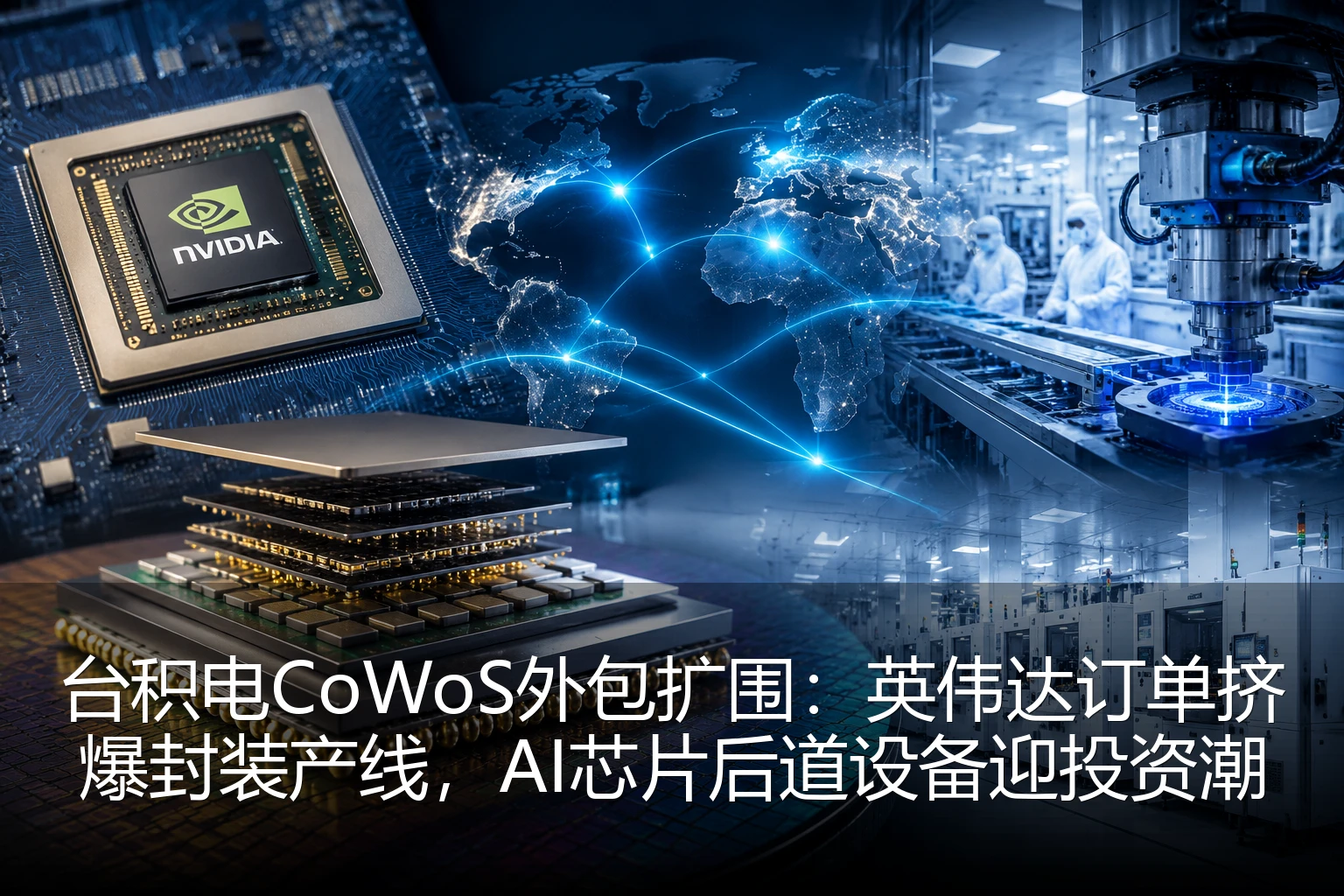
1.2 Packaging and Testing: Boom in Advanced Packaging Demand, STATS ChipPAC Responds with Price Adjustments AI chip's high-performance requirements have driven the development of advanced packaging technologies, with CoWoS packaging being the mainstream method for AI chips. StarKey Semiconductor, a leading enterprise in the Singapore packaging and testing sector, has its CoWoS capacity operating at full load, with orders coming from clients such as Nvidia and AMD. To meet growing demand, StarKey Semiconductor announced a significant price adjustment in the second half of 2026, increasing packaging and testing service prices by 10%-15% to cover the costs of capacity expansion.
In addition to CoWoS, StarKey Semiconductor is also developing Silicon Bridge packaging technology, which is suitable for high-density AI chip packaging and is expected to reach mass production in 2027. The introduction of Silicon Bridge packaging will further solidify StarKey Semiconductor's leading position in the AI packaging field, attracting more cooperation from AI chip manufacturers.
1.3 Equipment Materials: Surging Demand for AI Chip Equipment, UMS Holdings Shows Strong Performance
The manufacturing of AI chips requires high-precision equipment, including lithography machines, etching machines, and thin-film deposition equipment. UMS Holdings, a Singapore-based equipment materials company, has its products widely used in semiconductor production lines. In the second quarter of 2026, UMS Holdings' net profit increased by 100% year-on-year, mainly due to the surge in demand for AI chip equipment. According to the company's financial reports, its orders for AI chip equipment increased by 80% year-on-year, with lithography equipment accounting for over 50% of the orders.
Furthermore, UMS Holdings is developing new equipment, such as equipment for HBM production, to meet the high-bandwidth memory requirements of AI chips. HBM is a critical component of AI chips, and its production requires high-precision equipment; UMS Holdings' strategic positioning will help it seize the growth opportunities in the HBM market.
II. Policy Support: Long-Term Benefits of Singapore's AI National Strategy 2.0
The Singapore government places great importance on the development of the AI industry and released the "AI National Strategy 2.0" in 2026, with the goal of "building an Asian AI innovation hub." This strategy includes multiple support measures, such as providing R&D subsidies, tax incentives, and talent cultivation, aimed at upgrading Singapore's semiconductor industry chain.
With policy support, Singaporean semiconductor companies have obtained more R&D funding. For example, World Advanced received a $100 million R&D subsidy from the Singapore government for further R&D in 3nm processes; StarKey Semiconductor received a $50 million subsidy for R&D in advanced packaging technology. These subsidies help companies reduce R&D costs and accelerate technological iteration.
In addition, the Singapore government has promoted the "Semiconductor Talent Program" to attract global semiconductor talent to work in Singapore. This program includes providing housing subsidies and tax incentives, solving the talent shortage problem for semiconductor companies. Talent is the core of the semiconductor industry chain, and Singapore's talent program will provide support for the long-term development of the industry chain.
III. Investment Opportunities: Allocation Value of SGX Mainboard Semiconductor Stocks
Based on the explosive demand for AI computing power, policy support, and the expansion of the industry chain's capacity, SGX mainboard semiconductor stocks have significant allocation value. The following is an analysis of several key stocks:
- GlobalFoundries: As a core wafer fabrication enterprise in Singapore, its 3nm capacity is fully utilized until 2027, with orders locked in from AI chip manufacturers. With the continuous growth in AI chip demand, GlobalFoundries' revenue and profit are expected to maintain stable growth. Furthermore, its 5nm expansion plan will further enhance its competitiveness, attracting more investors.
- STATS ChipPAC: As a leader in advanced packaging, its CoWoS capacity is operating at full load, and price adjustment measures are increasing profit margins. The launch of silicon bridge packaging technology will further solidify its market position, with revenue expected to grow by over 20% in 2027.
- UMS Holdings: As an equipment materials company, its AI chip equipment orders have surged, doubling net profit. With the growth of the HBM market, the equipment demand for UMS Holdings is expected to increase further, with revenue projected to grow by over 30% in 2027.
- Enbloc: As the first AI chip stock in Singapore without a fab, it focuses on R&D for edge AI chips. Edge AI is the next growth point for AI applications, and Enbloc's technological advantages will help it seize this opportunity. Revenue is expected to grow by over 50% in 2026.
IV. Risk Warning: Industry Chain Challenges and Responses
Although the Singapore semiconductor industry chain faces good development opportunities, there are also some risks:
- Technology Iteration Risk: The pace of semiconductor technology iteration is fast; if companies fail to keep up with technological advancements, they may be eliminated by the market. For example, Samsung Electronics' 3nm GAA yield once encountered bottlenecks, leading to orders shifting to TSMC. Singaporean companies need to continuously invest in R&D to maintain technological leadership.
- Supply Chain Risk: The global semiconductor supply chain is heavily influenced by geopolitics; supply chain disruptions could affect corporate production. Singaporean companies need to strengthen supply chain diversification to reduce reliance on single suppliers.
- Market Competition Risk: The global semiconductor market is highly competitive; if companies fail to stand out in the competition, they may face the risk of declining market share. Singaporean companies need to enhance product competitiveness and expand their customer base.
V. Conclusion
In 2026, the explosion in AI computing power demand has brought new development opportunities to the Singapore semiconductor industry chain. With policy support, technological accumulation, and supply chain advantages, Singaporean semiconductor companies are accelerating the layout of AI chip-related capacity. For investors, SGX mainboard semiconductor stocks have significant allocation value, but risks such as technological iteration, supply chain, and market competition must be monitored. As the AI industry continues to develop, the Singapore semiconductor industry chain is expected to become an important support for AI computing in Asia and globally, bringing long-term returns to investors.
Disclaimer: This content is for reference only and does not constitute investment advice. Investment involves risks, please proceed with caution.