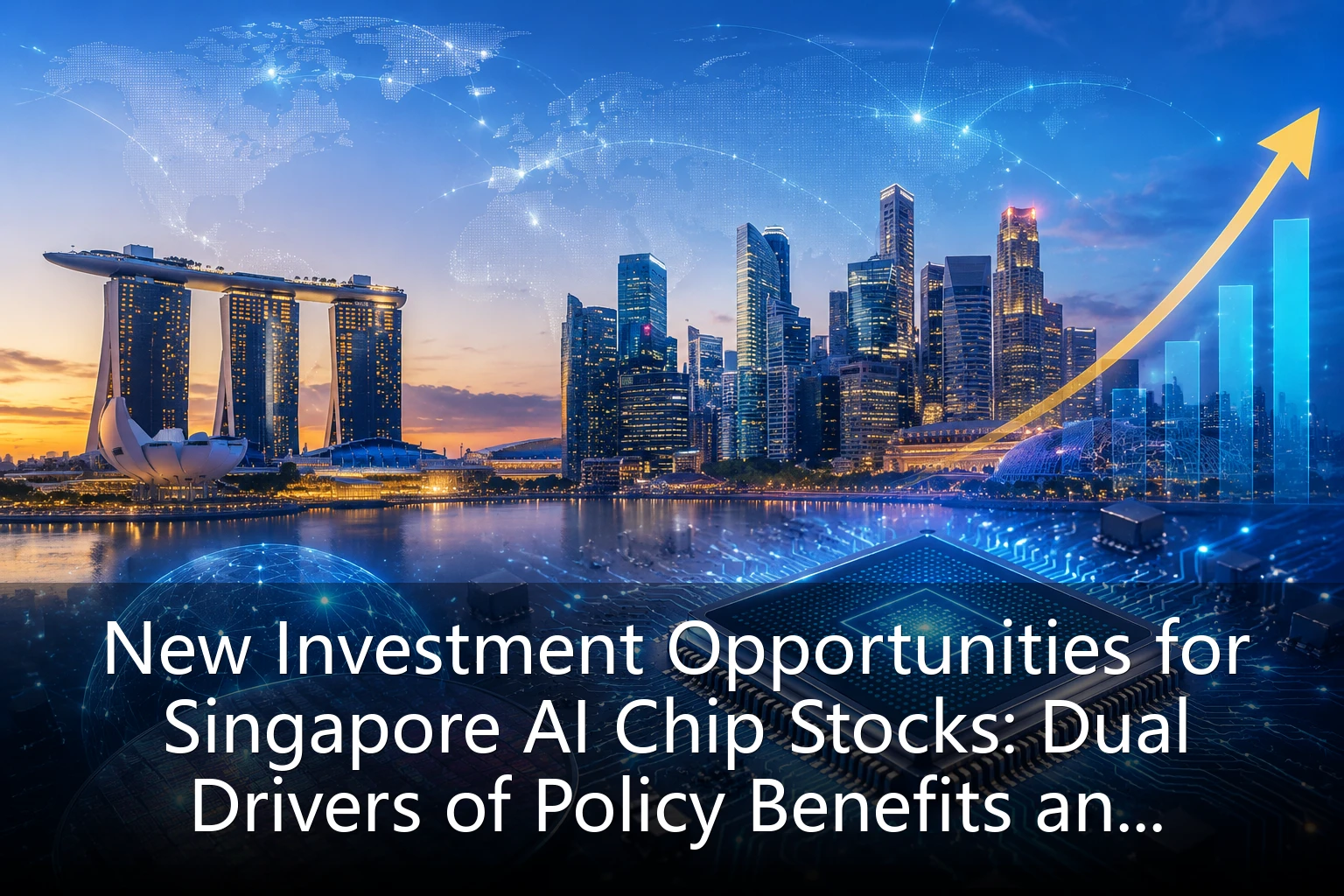



With the rapid development of artificial intelligence technology, global AI computing power demand is experiencing explosive growth, and the semiconductor industry is entering an unprecedented super cycle. As an important part of the global semiconductor industry chain, Singapore is playing an increasingly important role in this AI computing power revolution with its unique geographical location, policy support, and industrial ecosystem. This article will deeply analyze the industrial upgrading path, technological breakthrough direction, and investment value of Singapore's semiconductor industry chain under the AI computing power super cycle.
Explosive Growth in Global AI Computing Power Demand Creates New Opportunities for Singapore's Semiconductor Industry Chain
Since 2026, global AI computing power demand has shown explosive growth. From large language model training to edge computing applications, from data center construction to autonomous driving technology, all fields of AI technology have unprecedented demand for high-performance chips. According to data from industry analysis institutions, the global AI chip market size is expected to reach $500 billion in 2026, with a compound annual growth rate exceeding 40%. This trend has brought huge opportunities to the global semiconductor industry and has also provided unprecedented development space for Singapore's semiconductor industry chain.
As an important hub for the global semiconductor industry, Singapore has a complete industry chain layout and advanced technical level. From chip design, manufacturing to packaging and testing, all aspects of Singapore's semiconductor industry chain have international competitiveness. Especially in fields such as advanced packaging, testing, and silicon photonics technology, Singaporean companies have reached a global leading level. With the explosion of AI computing power demand, Singapore's semiconductor industry chain is ushering in a new round of growth cycle.
Analysis of the Current Situation and Advantages of Singapore's Semiconductor Industry Chain
Singapore's semiconductor industry chain has the following significant advantages:
- Complete Industrial Ecosystem: Singapore has a complete semiconductor industry chain from design, manufacturing to packaging and testing, with obvious synergistic effects between various links.
- Advanced Technical Level: In fields such as advanced packaging, testing, and silicon photonics technology, Singaporean companies have reached a global leading level.
- Strong Policy Support: The Singaporean government lists the semiconductor industry as a national strategic industry, providing comprehensive policy support and financial support.
- Rich Talent Reserve: Singapore has a world-class higher education system and a large number of semiconductor professionals.
- Superior Geographical Location: Located in the core area of Asia, it is convenient to connect with global markets and supply chains.
Against the background of the explosion in AI computing power demand, Singapore's semiconductor industry chain is ushering in new development opportunities. On the one hand, global AI chip manufacturers are increasing their investment in Singapore and expanding production capacity; on the other hand, Singapore's local semiconductor companies are also actively deploying in AI-related fields to seize market opportunities.
Upgrading of Singapore's Semiconductor Industry under the Explosion of AI Computing Power Demand
Breakthroughs in Advanced Packaging and Testing Technologies
As AI chips develop towards higher performance and lower power consumption, the importance of advanced packaging and testing technologies is increasingly prominent. Singapore has obvious advantages in the field of advanced packaging, especially in 2.5D/3D packaging, silicon interposers, and fan-out packaging, which are in a globally leading position.
Taking Singapore's STATS ChipPAC as an example, the company is a globally leading semiconductor packaging and testing service provider. In recent years, it has made major breakthroughs in the field of AI chip packaging. The company's advanced packaging technology can meet the demand for high bandwidth and low latency of AI chips, and has become an important partner for leading global AI chip suppliers such as NVIDIA and AMD.
With the continuous growth of AI computing power demand, Singapore's semiconductor companies are accelerating the research, development, and application of advanced packaging technologies. It is expected that by the end of 2026, Singapore's advanced packaging capacity will increase by 30%, becoming an important base for global AI chip packaging.
Silicon Photonics Technology Leading New Tracks
Silicon photonics technology is one of the key technologies to solve the bandwidth bottleneck of AI chips, and it is also an important development direction of Singapore's semiconductor industry chain. UMC's Singapore plant recently announced the successful mass production of silicon photonics wafers, marking an important breakthrough for Singapore in the field of AI optical interconnection.
Silicon photonics technology can replace traditional electrical signal transmission with optical signal transmission, greatly improving the bandwidth and energy efficiency ratio between chips. This technology is particularly suitable for AI data centers and high-performance computing applications, and is expected to become a key technology for the next generation of AI chips.
The layout of Singaporean enterprises in the field of silicon photonics technology has begun to show results. Many companies have started mass production of related products and have established cooperative relationships with leading global AI chip manufacturers. It is expected that in the coming years, Singapore will become an important R&D and production base for global silicon photonics technology.
Continuous Improvement of Wafer Manufacturing Capability
Wafer manufacturing is the core link of the semiconductor industry chain and is also an important advantage area of Singapore's semiconductor industry. World Advanced's 12-inch wafer factory in Singapore has achieved a 99% yield rate, far exceeding the industry average, marking that Singapore has reached an internationally leading level in the field of advanced wafer manufacturing.
With the growth of AI computing power demand, Singapore's wafer factories are actively expanding production to meet the market demand for AI chips. It is expected that by the end of 2026, Singapore's wafer capacity will increase by 25%, with advanced process capacity growth reaching 30%.
Driven by Both Policy Dividends and Market Demand
Increased Government Policy Support
The Singaporean government attaches great importance to the development of the semiconductor industry and lists it as a national strategic industry. In recent years, the government has introduced a series of policy measures to increase support for the semiconductor industry. These policies include:
- R&D Funding Support: The government has established special funds to support semiconductor companies in technology research and development and innovation.
- Tax Incentives: Implement tax reduction policies for semiconductor companies to reduce operating costs.
- Talent Training Programs: Increase the cultivation of semiconductor professionals to provide talent support for enterprises.
- Infrastructure Construction: Invest in the construction of semiconductor industrial parks to improve the supporting facilities of the industry chain.
The implementation of these policy measures has provided strong support for the development of Singapore's semiconductor industry and has also created a favorable policy environment for enterprises to deploy in the field of AI computing power.
Continuously Strong Market Demand
The continuous growth of AI computing power demand has brought huge market opportunities to Singapore's semiconductor industry chain. From data center construction to autonomous driving, from smart healthcare to industrial internet, all application scenarios of AI technology have urgent demands for high-performance chips.
According to industry analysis, the global AI chip market is expected to reach $500 billion by 2026, with data center AI chips accounting for over 60% of the market. This market demand will continue to drive the development of Singapore's semiconductor industry chain, bringing substantial returns to enterprises.
Investment Value Analysis
Investment Opportunities Across the Industry Chain
All segments of Singapore's semiconductor industry chain offer good investment value:
- Chip Design: As the complexity of AI algorithms increases, the demand for specialized AI chips continues to grow, creating more opportunities in the chip design sector.
- Wafer Manufacturing: Advanced process wafer manufacturing is a critical link in AI chip production, featuring high technical barriers and profitability.
- Packaging and Testing: Advanced packaging technology is key to enhancing AI chip performance, and related companies will benefit from industry growth.
- Equipment and Materials: With the expansion of semiconductor production capacity, equipment and material suppliers will face growth opportunities.
Key Company Analysis
There are several quality companies in Singapore's semiconductor industry chain worth attention:
- STATS ChipPAC: A globally leading semiconductor packaging and testing service provider with significant advantages in AI chip packaging.
- UMC Singapore Plant: Has made significant breakthroughs in silicon photonics technology and is an important participant in the AI optical interconnect field.
- World Advanced: Achieves a 99% yield rate for 12-inch wafers, making it a leading enterprise in advanced wafer manufacturing.
- Enpocket: The first fabless AI chip company listed on the SGX Main Board, focusing on edge AI chip design.
Investment Strategy Recommendations
Based on the analysis of Singapore's semiconductor industry chain, we propose the following investment strategy recommendations:
- Long-term holding of quality enterprises: Select leading companies with core technical advantages and market competitiveness for long-term investment.
- Focus on breakthrough technology areas: Pay special attention to companies that have made breakthroughs in areas such as advanced packaging and silicon photonics technology.
- Diversify investment risks: By investing in companies across different segments of the industry chain, diversify risks associated with a single segment.
- Capture policy dividends: Focus on companies that benefit from government policy support to share in policy dividends.
Risks and Challenges
Despite the favorable development opportunities, Singapore's semiconductor industry chain also faces some risks and challenges:
- Technology iteration risk: Semiconductor technology updates and iterations are rapid, requiring companies to continuously invest in R&D to maintain competitiveness.
- Intensifying market competition: As global semiconductor manufacturers increase their investment in the Singapore market, market competition will become more intense.
- Geopolitical risks: The global semiconductor industry faces geopolitical uncertainties that may affect industry chain layout.
- Talent shortage risk: With rapid industry development, high-end semiconductor talent may become scarce.
Conclusion and Outlook
Against the backdrop of surging global AI computing power demand, Singapore's semiconductor industry chain is unprecedented development opportunities. With a complete industrial ecosystem, advanced technical capabilities, strong policy support, and advantageous geographical location, Singapore is poised to become an important hub for the global AI chip industry.
In the coming years, with continuous breakthroughs in areas such as advanced packaging, silicon photonics technology, and advanced wafer manufacturing, Singapore's semiconductor industry chain will further enhance its position in the global semiconductor industry. Meanwhile, the dual drivers of policy dividends and market demand will bring substantial returns to companies in the industry chain.
For investors, Singapore's semiconductor industry chain offers abundant investment opportunities. By thoroughly researching development trends and competitive advantages across various segments of the industry chain, and seizing investment opportunities brought by technological breakthroughs and policy dividends, investors can expect considerable returns in this AI computing power super cycle.
Overall, Singapore's semiconductor industry chain is at a critical stage of transformation and upgrading. The explosion in AI computing power demand provides strong momentum for industrial upgrading. Against the backdrop of reshaping the global semiconductor industry landscape, Singapore is expected to become a new engine for Asia's semiconductor industry with its unique advantages, making significant contributions to the development of global AI technology.