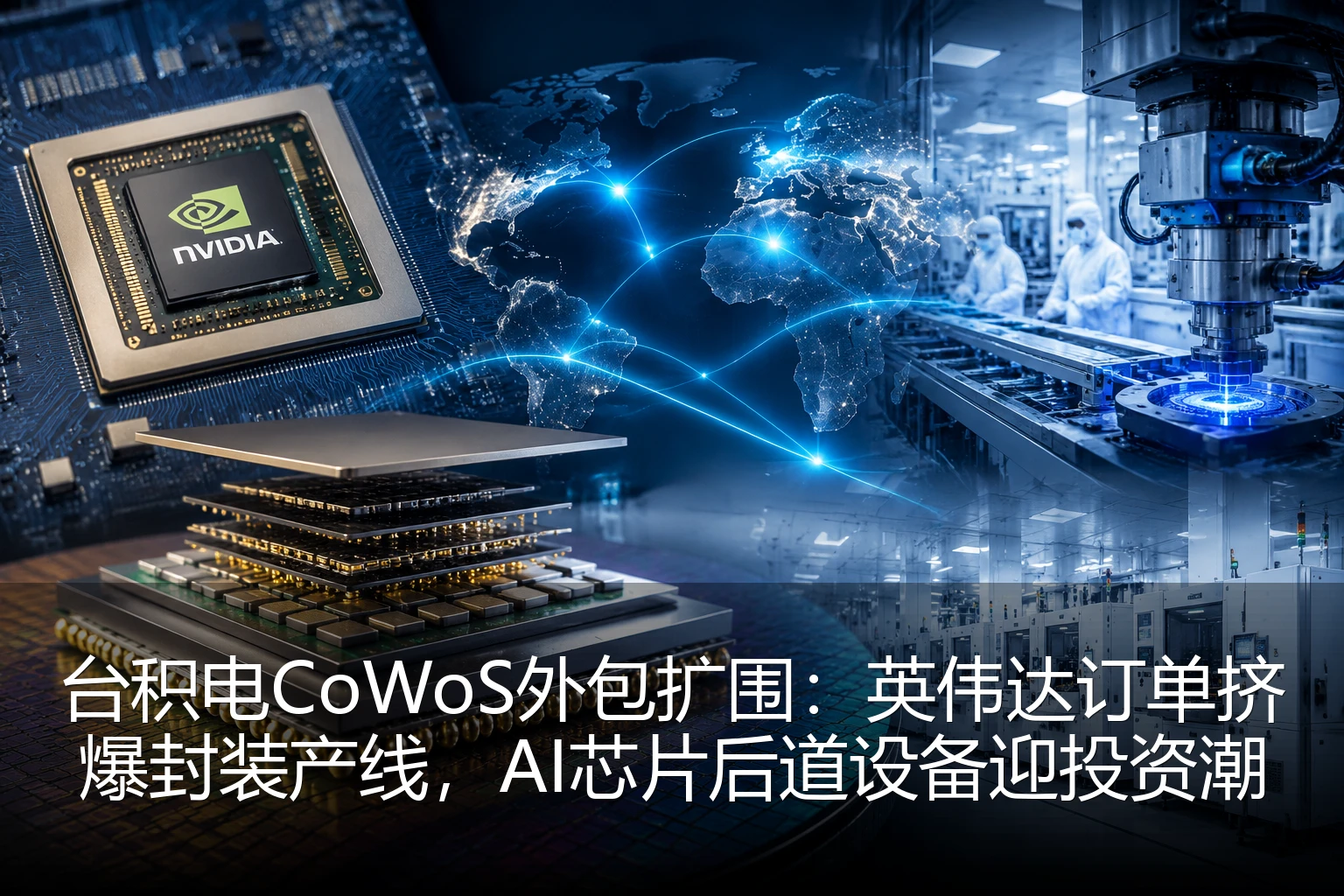
As global artificial intelligence technology rapidly advances, the demand for AI chips is experiencing explosive growth. Singapore, as a vital hub in the global semiconductor industry, is witnessing unprecedented development opportunities in its semiconductor supply chain. This article will deeply analyze the latest developments, policy support, industrial layout, and investment opportunities within the Singaporean semiconductor supply chain to provide investors with comprehensive market insights.
Global Standing of Singapore's Semiconductor Industry
Although Singapore is a city-state, it is a crucial component of the global semiconductor industry, possessing a complete semiconductor supply chain that covers all stages, including chip design, wafer fabrication, and packaging and testing. According to data from the Economic Development Board (EDB), the value of Singapore's semiconductor industry accounts for approximately 10% of the global semiconductor market, making it the third-largest semiconductor export center globally, after South Korea and Taiwan.
In recent years, the semiconductor industry has entered a new growth cycle due to the rapid development of emerging technologies such as AI, 5G, and the Internet of Things (IoT). Particularly in the AI chip sector, Singapore has become a significant base for AI chip manufacturing globally, leveraging its advanced production capabilities and technological innovation. The Singaporean semiconductor industry not only serves local market needs but also radiates globally, acting as a vital hub connecting the Asian and global semiconductor industries.
Overview of the Singaporean Semiconductor Supply Chain
The Singaporean semiconductor supply chain covers all stages from upstream raw materials to downstream applications, forming a complete industrial ecosystem. Specifically, the Singaporean semiconductor supply chain mainly includes the following segments:
Chip Design: Singapore hosts several internationally renowned chip design companies, such as ARM and Broadcom, which have established R&D centers in Singapore focusing on the design of high-performance and AI chips.
Wafer Fabrication: Singapore is a major global wafer fabrication base, home to leading international wafer manufacturers like TSMC, GlobalFoundries, and SMIC. These companies operate advanced process production lines in Singapore, manufacturing various semiconductor products such as logic chips and memory chips.
Packaging and Testing: Singapore holds a leading global position in advanced packaging, boasting world-class packaging and testing companies such as STATS ChipPAC. These companies provide advanced packaging solutions to meet the demands of high-performance chips like AI chips.
Semiconductor Equipment and Materials: Singapore also has a semiconductor equipment and materials industry, including manufacturing bases established by international giants like Applied Materials and Tokyo Electron in Singapore, as well as local enterprises such as UMS Holdings.
This complete supply chain layout gives Singapore a unique advantage in the semiconductor industry, enabling it to offer one-stop services from design to manufacturing for its customers, thereby enhancing its competitiveness in the global semiconductor market.
New Opportunities in Singapore's Semiconductor Industry Driven by AI Chips
Wafer Fabrication Capacity Expansion As the demand for AI chips rapidly grows, semiconductor manufacturing companies in Singapore are expanding capacity. Since 2026, TSMC Singapore has announced a $14 billion investment to expand its 3nm and 2nm process production lines, with an expected 30% capacity increase by 2028. GlobalFoundries has also announced a $12 billion investment in Singapore to build a new wafer fabrication plant, focusing on advanced process chip production.
These capacity expansions not only meet the growing demand for AI chips but also drive the Singapore semiconductor industry toward higher technology levels. According to the Economic Development Board of Singapore, wafer manufacturing capacity in Singapore is projected to grow by 50% by 2028, with AI chip-related capacity accounting for over 40%.
Advanced Process Technology Breakthroughs
In the field of AI chips, the advancement of process technology directly affects chip performance and power consumption. Semiconductor manufacturing companies in Singapore are actively developing and producing advanced process technologies, including 3nm, 2nm, and even smaller nodes.
TSMC Singapore has achieved mass production of 3nm processes and plans to begin pilot production of 2nm processes in 2027. These breakthroughs in advanced process technology establish Singapore as a vital base for global AI chip manufacturing. Singaporean-made chips hold a significant position in the global market, particularly in high-performance computing chips and AI training chips.
Packaging and Testing Innovations
As AI chips evolve toward higher performance and lower power consumption, packaging and testing technologies face new challenges and opportunities. Semiconductor packaging and testing companies in Singapore are actively researching advanced packaging technologies, including 2.5D packaging, 3D packaging, and Through-Silicon Vias (TSV).
STATS ChipPAC, a leading packaging and testing company in Singapore, has successfully developed advanced packaging solutions for AI chips, including High Bandwidth Memory (HBM) packaging and Chiplet packaging. These advanced packaging technologies effectively enhance the performance and energy efficiency of AI chips, meeting the demand for high-performance chips in AI applications.
Policy Support and Industrial Layout
The Singapore government places high importance on the development of the semiconductor industry and has introduced a series of policy measures to support the improvement and upgrading of the semiconductor industry chain. In 2026, the Singapore government released the Semiconductor Industry Development Strategy 2.0, which clearly sets the goal of establishing Singapore as a global center for semiconductor innovation and manufacturing.
Specifically, the support measures from the Singapore government include:
Fiscal Support: Providing financial assistance, such as tax incentives and R&D subsidies, to semiconductor companies to reduce operating costs.
Talent Cultivation: Strengthening talent development in the semiconductor field by collaborating with universities to establish semiconductor majors and cultivate specialized technical talent.
Infrastructure Development: Investing in and building semiconductor industrial parks and improving supporting facilities to enhance industrial agglomeration effects.
International Cooperation: Strengthening cooperation with international semiconductor companies to attract leading global enterprises to establish R&D centers and production bases in Singapore. The implementation of these policies provides strong support for the development of Singapore's semiconductor industry and enhances Singapore's competitiveness in the global semiconductor market.
Key Company Analysis
TSMC Singapore Plant
The TSMC Singapore Plant is a leading enterprise in Singapore's semiconductor industry, focusing on advanced process chip manufacturing. The plant has achieved mass production of 3nm processes and plans to begin pilot production of 2nm processes in 2027. The TSMC Singapore Plant primarily produces high-performance computing chips and AI training chips, with clients including international chip giants such as Nvidia and AMD.
In terms of financial performance, the TSMC Singapore Plant showed strong performance with a 35% year-on-year revenue increase and a 42% net profit increase in the first half of 2026. With the continuous growth in demand for AI chips, the TSMC Singapore Plant is expected to maintain a rapid growth trajectory.
STATS ChipPAC
STATS ChipPAC is a leading packaging and testing company in Singapore, focusing on the research and application of advanced packaging technologies. The company has a leading advantage in the field of AI chip packaging, providing advanced packaging solutions such as HBM packaging and Chiplet packaging to its clients.
In the first half of 2026, STATS ChipPAC showed outstanding performance with a 28% year-on-year revenue increase and a 35% net profit increase. With the continuous growth in demand for AI chips, STATS ChipPAC is expected to maintain a rapid growth trajectory.
UMS Holdings
UMS Holdings is a leading semiconductor equipment supplier in Singapore, focusing on the research, development, and manufacturing of semiconductor packaging and testing equipment. The company's products are widely used in semiconductor packaging and testing processes, including wire bonding equipment and flip-chip equipment.
In the first half of 2026, UMS Holdings showed strong performance with a 40% year-on-year revenue increase and a 55% net profit increase. With the growing demand for AI chip packaging, UMS Holdings is expected to maintain a rapid growth trajectory.
Risks and Challenges
Although the outlook for Singapore's semiconductor industry is broad, it also faces some risks and challenges:
* Global Semiconductor Cycle Fluctuations: The semiconductor industry has distinct cyclical characteristics, and fluctuations in the global semiconductor market may affect the development of Singapore's semiconductor industry.
* Geopolitical Risks: Global geopolitical tensions may affect the global layout of the semiconductor industry, increasing uncertainty for Singapore's semiconductor industry.
* Intensifying Technological Competition: With the intensification of global semiconductor technology competition, Singaporean semiconductor companies need to continuously invest in R&D to maintain a technological leading edge.
* Talent Shortage: As the semiconductor industry rapidly develops, the demand for specialized technical talent is constantly increasing, and talent shortages may become a bottleneck constraining the development of Singapore's semiconductor industry.
Investment Strategy
Based on the analysis of the Singaporean semiconductor industry chain, we propose the following investment strategies:
- Focus on Leading Companies: Invest in industry leaders such as TSMC Singapore, SK Hynix, and UMS Holdings. These companies hold leading advantages in their respective fields and are expected to benefit from the growth of the semiconductor industry.
- Seize Niche Opportunities: Pay attention to investment opportunities in specialized areas like AI chips, advanced packaging, and semiconductor equipment, as these sectors possess high growth potential.
- Long-Term Holding: The semiconductor industry has long-term growth potential. Investors are advised to adopt a long-term holding strategy to avoid the impact of short-term market fluctuations.
- Diversified Investment: Diversify investments across different segments of the industry chain to mitigate risks associated with a single segment and capture the benefits of overall industry growth.
Conclusion
Driven by the AI chip supercycle, the semiconductor industry chain in Singapore is experiencing unprecedented development opportunities. From wafer fabrication to packaging and testing, and from advanced processes to innovative technologies, every link in the Singapore semiconductor supply chain shows strong growth momentum. With policy support and industrial planning, Singapore is poised to become a vital hub in the global semiconductor industry, offering substantial returns to investors.
Despite facing certain risks and challenges, the investment value of the Singapore semiconductor industry chain remains promising in the long run. Investors can focus on leading companies, seize niche opportunities, and adopt a long-term investment strategy to share in the dividends generated by the growth of the Singapore semiconductor industry.
Disclaimer: This content is for reference only and does not constitute investment advice. Investment involves risks, please proceed with caution.