



Why Did Singapore Become the World's Most Crypto-Friendly City? Asia-Pacific Is Quietly Reshaping the Map
Keywords: Singapore, cryptocurrency, global city index, stablecoin, virtual asset, Asia-Pacific financial center, regulatory clarity
Introduction: Cryptocurrency City Competition Is No Longer About "Who Dares More"
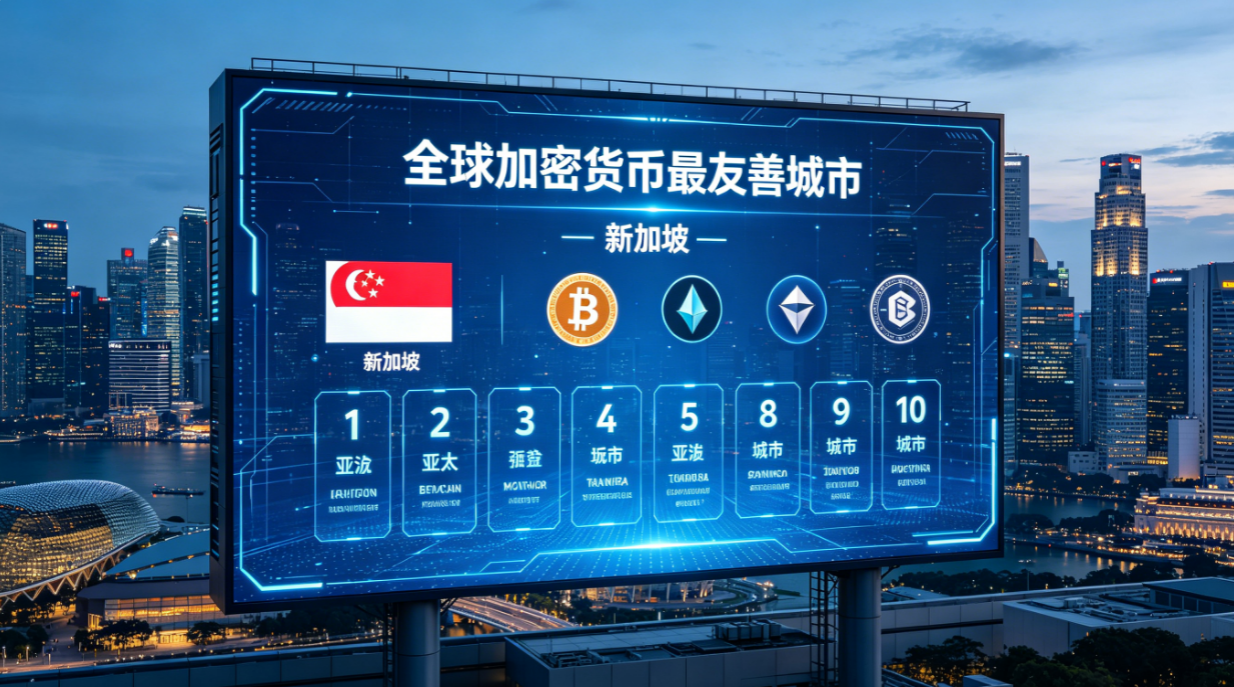
Recently, Multipolitan, a platform focusing on cross-border flows, released the "2026 Global Crypto-Friendly City Index," and Singapore took the top spot globally, ahead of traditional financial hubs like London and New York. This result is not entirely surprising, but it sufficiently indicates a trend: in the world of cryptocurrency, the logic of competition between cities has changed.
In the past, when people talked about cryptocurrency, they most easily thought of price volatility, hype, and wealth myths; but now, what really determines whether a city can become a digital asset hub is no longer just "how hot it is," but whether regulation is clear, taxes are convenient, infrastructure is strong, and ordinary people can actually use it.
Why Did Singapore Rank First?
Multipolitan's assessment is straightforward: Singapore's advantage is not just "friendliness," but "stability and predictability." It performs prominently in multiple dimensions including regulatory clarity, tax efficiency, institutional infrastructure, and actual adoption, forming a distinctive "low-tax, high-credibility" model.
The core of this model is not simply tax reduction, but letting enterprises and investors know: the rules here are clear, the path is unambiguous, supporting facilities are mature, projects can be legally and compliantly implemented, and there is no need to worry about sudden policy shifts every day. For the cryptocurrency industry, such certainty is more valuable than short-term stimulus.
Notably, Singapore has not packaged itself as "laissez-faire friendly." On the contrary, it promotes innovation while continuously strengthening risk control. The Monetary Authority of Singapore (MAS) early announced a local stablecoin regulatory framework, although not yet formal law, the direction is very clear: development is possible, but only if issuers are sufficiently transparent and stable, and financial stability cannot be compromised.
Asia-Pacific Rise: Not Just Singapore, the Whole Region Is Accelerating
This index also has a striking signal: the Asia-Pacific region performed very strongly, occupying six of the top ten positions, namely Singapore, Hong Kong, Bangkok, Seoul, Kuala Lumpur, and Taipei. In other words, the center of gravity of global cryptocurrency is quietly shifting towards Asia.
Hong Kong continues to consolidate its position through exchange licenses and institutional product expansion; Thailand is gradually building its appeal through regulatory sandboxes and tax exemptions; Dubai, with zero personal income tax and relatively clear virtual asset regulation, has also become a popular choice. They collectively illustrate one thing: today's digital asset capital and entrepreneurs are not only looking at "how big the market is," but also "whether we can do business long-term."
Multipolitan CEO Handa put it well: cryptocurrency competitiveness is increasingly determined not by speculation, but by regulatory predictability, operational infrastructure, and capital efficiency. This judgment also reveals the essence of the industry: those that truly stay are not necessarily the cities that tell the best stories, but the cities most suitable for turning stories into business.
Why Are Traditional Financial Centers Being Overtaken?
Cities like London and New York are still powerful, but the more mature their traditional financial systems, the more complex their compliance processes often are, and the higher the cost of innovation. For the fast-changing, rapidly iterating cryptocurrency industry, too high a threshold can sometimes slow down ecosystem growth.
In contrast, the new generation of digital asset hubs are more like places that "explain the rules in advance." They may not immediately surpass established financial centers in scale, but they have more flexibility in key areas such as project implementation, institutional entry, and product innovation. For this reason, more and more companies are treating these cities as regional headquarters, testing grounds, and financing springboards.
Conclusion: Singapore Wins Not Just a Ranking, But a Sense of the Future
Singapore's top ranking this time may appear as a city ranking victory, but it actually reflects the global cryptocurrency industry entering a new phase of "compliance, institutionalization, and application." It leads not because it is the most radical, but because it is the most balanced: giving room for innovation while holding the risk line; welcoming capital while not relaxing regulation.
And such balance is precisely the scarcest resource today. For enterprises and investors wanting long-term development in the cryptocurrency field, Singapore provides not just a place of registration, but sustainable confidence. In the future, who can become a true digital asset center will likely depend not on slogans, but on who can build trust into infrastructure.