


New Cycle of Singapore's AI Chip Stocks: Investment Opportunities Driven by Policy Dividends and Technological Breakthroughs
Driven by the dual forces of continuous iteration of AI technology and global digital transformation, Singapore's AI chip stocks are facing unprecedented development opportunities. With the explosive growth of AI computing power demand, Singapore's semiconductor industry chain, leveraging its unique geographical advantages, policy support, and technological accumulation, is gradually becoming an important participant in the global AI chip industry. This article will deeply analyze the investment logic of Singapore's AI chip stocks and explore how policy dividends and technological breakthroughs jointly drive the long-term value of this emerging track.
I. Explosive Demand for AI Computing Power: The Golden Age of Singapore's Semiconductor Industry Chain
In recent years, the rapid development of AI technology has posed unprecedented demands on computing power. From large language models to autonomous driving, from smart healthcare to fintech, the continuous expansion of AI application scenarios is driving a surge in global demand for high-performance computing chips. According to forecasts by industry analysis institutions, the global AI chip market size will exceed $200 billion by 2027, with a compound annual growth rate exceeding 30%.
In this wave of AI computing power, Singapore, with its mature semiconductor industry foundation and forward-looking industrial policies, is gradually building a complete AI chip industry chain. As early as 2019, the Singapore government released the "National AI Strategy", listing the semiconductor industry as a key development area, and supporting the development of local AI chip enterprises through various means such as tax incentives and R&D subsidies. This policy dividend has laid a solid foundation for the rise of Singapore's AI chip stocks.
From the perspective of industry chain layout, Singapore has layouts in AI chip design, manufacturing, packaging and testing. Especially in the field of advanced packaging technology, Singaporean enterprises, leveraging their technological accumulation and cost advantages, are becoming an important part of the global AI chip supply chain. For example, STATS ChipPAC, as a leading global semiconductor packaging and testing service provider, its Singapore factory is providing advanced packaging solutions for many international AI chip giants.
II. Policy Dividends: Singapore Government's Strategic Layout and Support Measures
The Singapore government attaches great importance to the development of the semiconductor industry, viewing it as a key to national economic transformation and enhancing international competitiveness. In recent years, Singapore has introduced a series of policy measures to provide all-round support for AI chip enterprises.
- Tax Incentive Policies: Singapore offers a 15% corporate income tax incentive for semiconductor enterprises, far below the global average. In addition, eligible R&D expenditures can enjoy additional tax credits, up to 400%.
- R&D Funding Support: The Singapore government provides substantial R&D funds through the National Research Foundation (NRF) and the Economic Development Board (EDB) to support innovation in AI chip technology. For example, the Agency for Science, Technology and Research (A*STAR) collaborates with multiple enterprises to jointly carry out R&D on key AI chip technologies.
- Talent Recruitment Programs: Singapore attracts international semiconductor experts through the Global Tech Talent Programme, providing high-end talent for local AI chip enterprises.
- Industrial Park Construction
The Singapore government is building multiple semiconductor industrial parks, such as One-North and JTC, to provide AI chip enterprises with complete supporting facilities and an industrial ecosystem. These parks not only offer modern production facilities but also gather upstream and downstream enterprises, forming a good industrial synergy effect.
III. Technological Breakthroughs: The Innovation Path of Singapore's AI Chip Enterprises
Driven by policy dividends, Singapore's AI chip enterprises are accelerating technological innovation and making breakthrough progress in multiple fields.
In the chip design field, Singaporean enterprises are developing AI chip architectures with independent intellectual property rights. For example, some local startups are developing AI chips for edge computing, which have the characteristics of low power consumption and high efficiency, suitable for scenarios such as the Internet of Things and smart homes. These innovations not only enhance Singapore's competitiveness in the global AI chip market but also provide rich investment opportunities for investors.
In terms of manufacturing processes, Singaporean enterprises are actively laying out advanced process technologies. Although Singapore has no wafer fabs locally, through cooperation with international foundries, Singaporean enterprises can obtain the latest manufacturing process support. For example, some Singaporean AI chip design companies are cooperating with foundries such as TSMC and Samsung to produce chips using advanced processes like 3nm and 2nm.
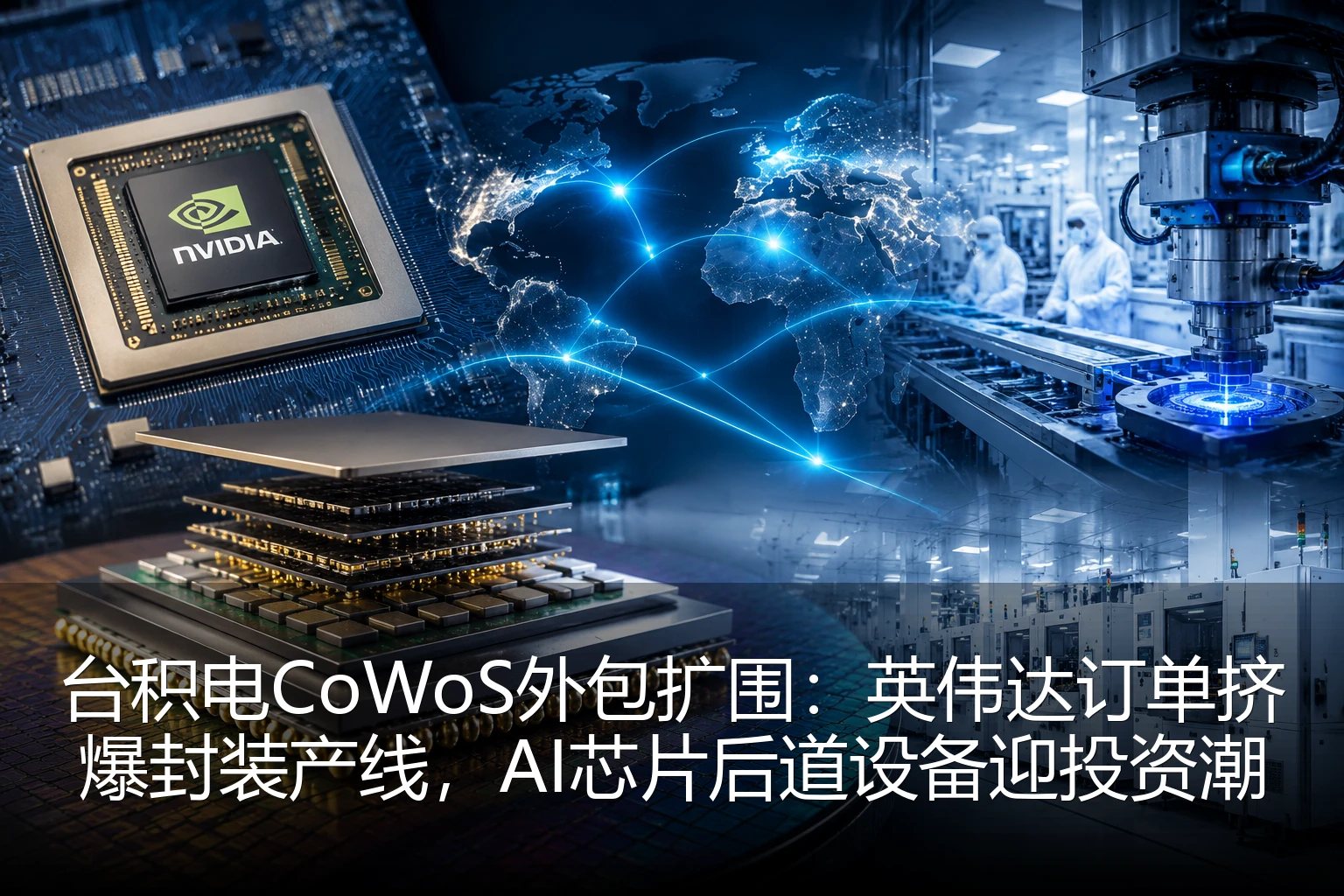
In the packaging and testing field, Singaporean enterprises, leveraging their technological accumulation and cost advantages, are becoming an important part of the global AI chip supply chain. Enterprises like STATS ChipPAC are developing advanced packaging technologies such as CoWoS (Chip-on-Wafer-on-Substrate) and InFO (Integrated Fan-Out), which can improve chip performance, reduce power consumption, and meet the high requirements of AI chips.
IV. Investment Logic: Value Analysis of Singapore's AI Chip Stocks
For investors, Singapore's AI chip stocks have unique investment value. Firstly, Singapore's AI chip enterprises benefit from policy dividends and can obtain stable government support, reducing operational risks. Secondly, the completeness of Singapore's semiconductor industry chain provides a good industrial ecosystem for AI chip enterprises, which is conducive to their long-term development. Thirdly, many Singaporean AI chip enterprises cooperate with international giants, enabling them to obtain the latest technical information and market opportunities in a timely manner.
From a valuation perspective, Singapore's AI chip stocks are still at a relatively low level and have good investment value. With the continuous growth of AI computing power demand, the performance of these enterprises is expected to achieve rapid growth, driving up stock prices. In addition, the high degree of internationalization of Singapore's AI chip stocks can diversify risks in a single market and provide stable returns for investors.
However, investors also need to pay attention to risk factors. Firstly, the AI chip industry has fast technological updates, and enterprises need to continuously invest in R&D, otherwise they may be eliminated by the market. Secondly, the global semiconductor industry is highly competitive, and Singaporean enterprises face competitive pressure from countries such as the United States, China, and South Korea. Thirdly, geopolitical factors may affect the global supply chain, causing adverse impacts on Singapore's AI chip enterprises.
V. Future Outlook: Long-term Opportunities for Singapore's AI Chip Stocks
Looking to the future, Singapore's AI chip stocks are expected to迎来 long-term growth opportunities. As AI technology continues to mature and application scenarios expand, the demand for AI chips will maintain high-speed growth. The Singapore government will continue to increase support for the semiconductor industry, providing a good development environment for enterprises. At the same time, Singaporean enterprises are also actively expanding into the international market to enhance their global competitiveness.
In terms of technology, Singaporean enterprises are expected to make breakthroughs in multiple sub-fields of AI chips, such as edge computing chips, autonomous driving chips, and AIoT chips. These fields have broad market prospects and can bring continuous revenue growth for enterprises. In addition, Singaporean enterprises are also actively exploring new business models, such as providing AI chip solutions and chip design services, to expand revenue sources.
For investors, focusing on Singaporean AI chip enterprises with core technologies, good performance, and clear growth prospects will be an important opportunity to grasp this wave of AI computing power. At the same time, investors also need to pay attention to industry dynamics and policy changes, and adjust investment strategies in a timely manner to achieve long-term and stable returns.
VI. Conclusion
Singapore's AI chip stocks are entering a new cycle driven by dual forces of policy dividends and technological breakthroughs. Against the backdrop of the global explosion of AI computing power demand, Singapore's semiconductor industry chain, leveraging its unique advantages, is becoming an important participant in the global AI chip industry. For investors, Singapore's AI chip stocks have good investment value, but they also need to pay attention to industry risks and challenges. By deeply analyzing the technical strength, market prospects, and financial conditions of enterprises, investors can better grasp the investment opportunities brought by this wave of AI computing power.