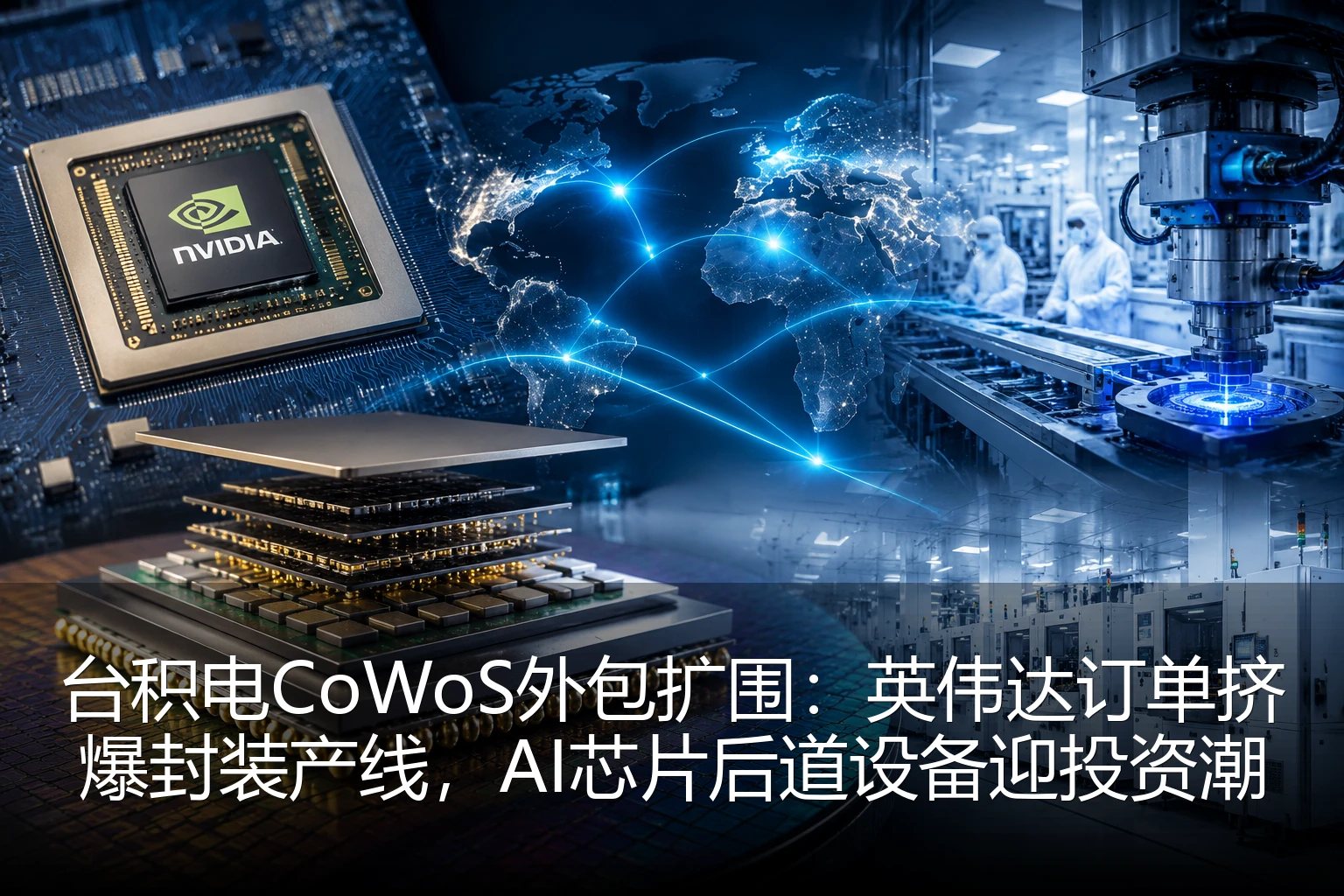



With the rapid development of artificial intelligence technology, AI chips have become the core driving force of the global technology industry. As an important hub for Asia's semiconductor industry, AI chip stocks on the Singapore Exchange (SGX) main board are facing unprecedented investment opportunities. This article will conduct an in-depth analysis of the investment value of Singapore's AI chip stocks from multiple dimensions, helping investors grasp the pulse of this emerging investment field.
Global AI Chip Market Landscape and Singapore's Strategic Position
Currently, the global AI chip market is experiencing an unprecedented growth wave. According to industry data, the global AI chip market size is expected to exceed $200 billion by 2026, with a compound annual growth rate maintained at over 30%. Against this backdrop, Singapore is rapidly emerging as a new highland for Asia's semiconductor industry, leveraging its unique geographical location, complete industrial chain, and policy support.
The Singapore government highly values the development of AI and semiconductor industries, listing them as national strategic priorities. Through the "Research, Innovation, Enterprise 2025" plan, the Singapore government has invested billions of Singapore dollars to support AI technology research and development and talent cultivation. Meanwhile, Singapore possesses world-class semiconductor manufacturing facilities, including advanced process factories from international giants like TSMC and GlobalFoundries, providing a solid foundation for the research, development, and production of AI chips.
The Rise Background of Singapore's AI Chip Stocks
In recent years, AI chip stocks on Singapore's main board have performed impressively, becoming the focus of investor attention. This phenomenon is driven by multiple factors:
- Surging Global AI Demand: The explosive growth of large language models like ChatGPT has driven strong demand for high-performance AI chips, providing broad market space for Singapore's semiconductor enterprises.
- Accelerating Technology Iteration: The maturity of advanced process technologies such as 3nm and below, as well as breakthroughs in advanced packaging technologies, have given Singapore enterprises a competitive advantage in the AI chip field.
- Industrial Chain Synergy: Singapore has formed a complete semiconductor industry chain from design, manufacturing to packaging and testing, with significant synergy among enterprises in various links, enhancing overall competitiveness.
- Continuous Release of Policy Dividends: The Singapore government has continuously strengthened support policies for the semiconductor industry, including tax incentives, R&D subsidies, and talent development programs.
Four Core Reasons for Investing in Singapore's AI Chip Stocks
1. Policy Dividends: Strong Government Support for Industry Development
The Singapore government's support for AI and semiconductor industries is at a leading position globally. In addition to the "Research, Innovation, Enterprise 2025" plan, Singapore has also launched policy documents such as the "AI Governance Framework" and "National AI Strategy 2.0", providing clear direction and institutional guarantees for AI industry development.
In terms of financial support, the Singapore government provides a series of incentives through the Enterprise Singapore (ESG), including tax reductions, R&D subsidies, and talent attraction programs. For example, companies conducting semiconductor R&D in Singapore can receive subsidies of up to 50% of costs, while AI-related companies can enjoy additional tax benefits. These policies significantly reduce operational costs and improve profitability.
2. Technological Advantages: World-Leading Semiconductor Manufacturing Capabilities
Singapore possesses world-leading technical strength in semiconductor manufacturing. TSMC's 3nm process factory in Singapore has achieved mass production with yield levels leading globally; GlobalFoundries' 22nm FD-SOI technology is also widely used in AI chip manufacturing. These advanced process technologies provide strong technical support for Singapore's AI chip enterprises.
In addition, Singapore is also at the forefront in advanced packaging technologies. Packaging and testing enterprises represented by STATS ChipPAC have made breakthrough progress in 2.5D and 3D packaging technologies, meeting the stringent requirements of high-performance AI chips for packaging efficiency and thermal performance.
3. Industrial Chain Completeness: Complete Ecosystem from Design to Application
The completeness of Singapore's semiconductor industry chain is one of its core competencies. From upstream IP core design, midstream wafer manufacturing, to downstream packaging, testing, and application, Singapore has formed a complete industrial ecosystem. This complete industrial chain not only improves production efficiency but also reduces transaction costs among enterprises, enhancing overall competitiveness.
It is particularly worth mentioning that Singapore has also emerged a group of excellent enterprises in AI chip design. These enterprises focus on the development of AI chips for specific fields, such as edge computing chips and neural network processors, forming differentiated competitive advantages. For example, Netronome focuses on high-performance network processors and has wide applications in data centers and cloud computing.
4. Market Demand: Continuous Expansion of Global AI Application Scenarios
AI technology application scenarios are rapidly expanding from data centers to edge computing, autonomous driving, healthcare, and other fields. This diversified development trend provides broad market space for AI chip enterprises. It is predicted that by 2030, the edge AI chip market size will account for over 40% of the entire AI chip market, and Singapore enterprises have already taken a first-mover advantage in this field.
In addition, with the development of the digital economy in Southeast Asia, Singapore, as a regional financial and technology center, has unique advantages in AI application implementation. The "Smart Nation" plan promoted by the Singapore government provides rich experimental scenarios for the application of AI technology in urban governance, healthcare, transportation, and other fields.
Risk Factors and Investment Strategy Recommendations
Main Risk Factors
Although Singapore's AI chip stocks have broad prospects, investors should pay attention to the following risk factors:
- Technology Iteration Risk: The semiconductor industry updates and replaces technologies quickly. Enterprises need to continuously invest in R&D to maintain competitiveness, otherwise they may face the risk of being eliminated.
- Geopolitical Risk: The intensifying technological competition between China and the United States may lead to the restructuring of the global semiconductor industry chain, and Singapore enterprises may face risks of supply chain disruption or limited market access.
- Intensifying Market Competition: As the AI chip market heats up, more competitors are entering, which may lead to price wars and declining profit margins.
- Valuation Bubble Risk: The valuations of some AI chip stocks are already at high levels. If performance growth does not meet expectations, they may face valuation adjustment risks.
Investment Strategy Recommendations
For investment in Singapore's AI chip stocks, we propose the following strategy recommendations:
- Focus on Leading Enterprises: Prioritize enterprises with leading positions in technology, market, and industrial chain, such as TSMC Singapore and STATS ChipPAC.
- Diversified Investment: Do not concentrate funds in a single enterprise or specific sector. Diversify risks through portfolio investment.
- Long-term Holding: The AI chip industry has broad development prospects, but short-term fluctuations may be significant. It is recommended to adopt a long-term investment strategy and avoid frequent trading.
- Focus on Technological Breakthroughs: Closely follow the R&D progress of enterprises in advanced processes and packaging technologies, and adjust the investment portfolio in a timely manner.
- Grasp Policy Trends: Pay attention to policy adjustments by the Singapore government for the semiconductor industry, as policy changes may have a significant impact on enterprise development.
Conclusion: Long-term Investment Value Outlook
Singapore's AI chip stocks are in a golden development period, and their investment value is mainly reflected in the following aspects: first, the policy support from the Singapore government for AI and semiconductor industries will continue to release dividends; second, Singapore's leading advantages in advanced processes and packaging technologies will be maintained; third, the complete industrial chain ecosystem will enhance synergy among enterprises; finally, the expansion of global AI application scenarios will provide broad market space for Singapore's enterprises.
In the long run, with the continuous maturation of AI technology and the ongoing expansion of application scenarios, Singapore's AI chip stocks are expected to maintain steady growth. While grasping the investment opportunities in this field, investors also need to pay attention to industry risks and adopt scientific investment strategies to achieve long-term stable returns.
Overall, Singapore's AI chip stocks represent an important direction for future technology investment. For investors seeking high growth potential, now is the right time to make a layout. By deeply understanding industry trends and corporate fundamentals, investors are expected to achieve generous returns in this emerging investment field.