



59 Yuan/Person Shrimp Paste Hot Pot Buffet: Can It Become the Next 'Beef Ribs Buffet'?
Recently, when visiting my hometown, I found that a small second-tier city in Hebei has actually opened several 'shrimp paste hot pot buffets.'
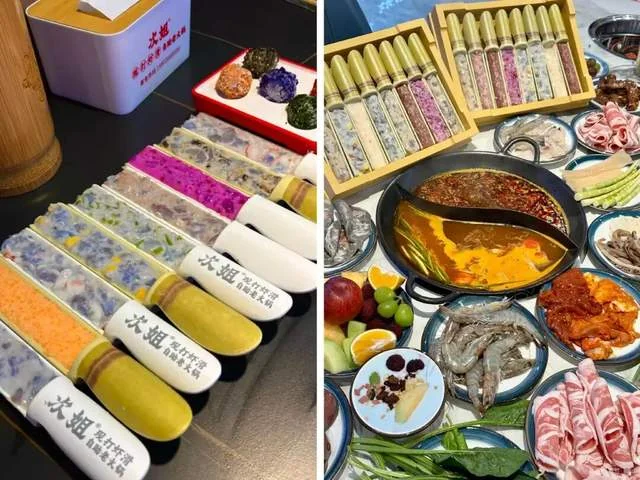
Compared to ordinary hot pot buffets, this place is practically a 'shrimp paste museum': from original shrimp paste to fish roe shrimp paste, mushroom shrimp paste, squid shrimp paste, and even dragon fruit shrimp paste, there are over a dozen varieties.

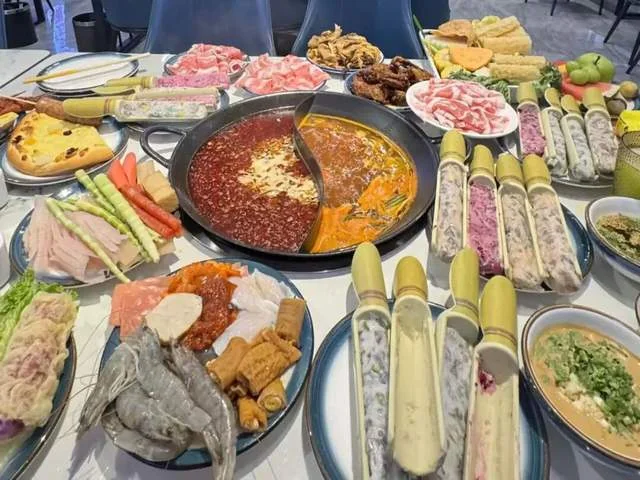
In addition to shrimp paste, the store also offers chicken paste, beef paste, fish paste, and other 'paste derivatives,' all uniformly packed in bamboo tube-shaped containers and arranged in several rows in the freezer, quite impressive.
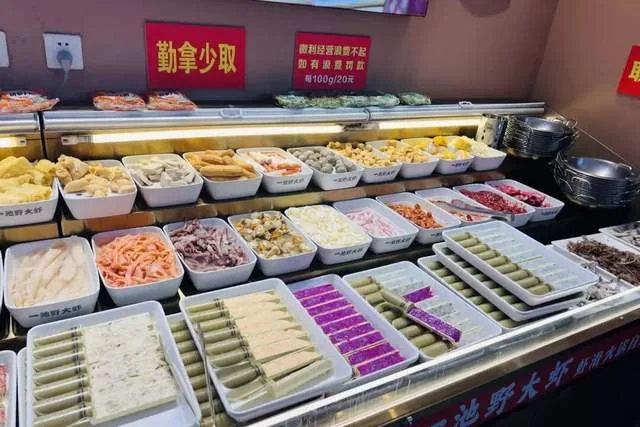
Besides shrimp paste, the store also has traditional hot pot items like beef, lamb, vegetables, and mushrooms, as well as desserts, drinks, and ice jelly commonly found in traditional hot pot buffets. Some stores even add pizza and other staples.
Of course, most consumers come for the 'shrimp paste freedom.'
In fact, over the past year, a number of chain shrimp paste hot pot buffet brands have emerged in Hebei alone, and some have even expanded to other provinces.
For example, Shijiazhuang's Cijie Freshly Made Shrimp Paste Hot Pot Buffet, established last year, has already opened 66 stores, reaching locations in Shandong, Jilin, Jiangsu, etc.; another brand from Hebei, Chengke North Shrimp Paste Hot Pot Buffet, established around the same time, has opened nearly 40 stores in four provinces: Hebei, Shanxi, Heilongjiang, and Jilin.
Jiang Laolao Shrimp Paste Seafood Hot Pot Buffet, which opened its first store in Zhejiang, now has a presence in 12 provinces across the country, with 20 new stores opened just this year. Established in 2018, Lao Xiaoxian Shrimp Paste Seafood Hot Pot Buffet has accelerated its expansion since last year, opening 40 new stores since 2025.
The category is so popular that it has even spread to South Korea. Recently, a netizen posted that South Korea also has shrimp paste hot pot buffets, with the 'bamboo tube + shrimp paste' configuration identical to that in China.

Why Shrimp Paste: Demand Growth and 'Break-even' Expectations
There are many reasons for the rise of shrimp paste hot pot buffets.
On one hand, shrimp paste is increasingly used in the catering industry and has long been a classic star product in the hot pot category.
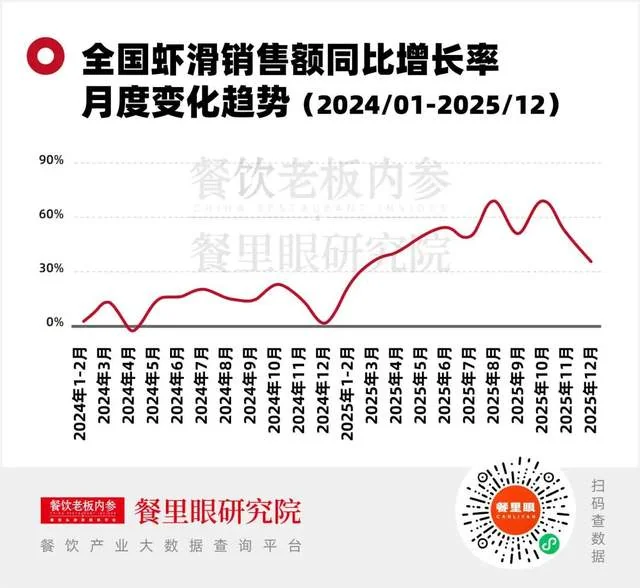
Data from Mashangying's offline retail monitoring network shows that in 2025, sales of the shrimp paste category increased by 56.9% year-on-year, with sales volume up 60.6%, ranking first in growth rate among all frozen food sub-categories.
In five provinces—Zhejiang, Jiangsu, Anhui, Hunan, and Guizhou—shrimp paste even 'overtook' beef balls to become the No.1 hot pot ball product category.
On the other hand, shrimp paste inherently conveys a premium quality, meeting consumers' expectations of 'getting their money's worth.'
Despite its popularity, this 'dark horse in frozen goods' is not cheap. For example, at Haidilao, a serving of flagship large-grain shrimp paste (about 140 grams) costs 74 yuan. Even in supermarkets, a pack of Anjoy shrimp paste can cost 16.5 yuan for 150g.
In a buffet hot pot restaurant, eating a few servings of shrimp paste can perfectly offset the 59-yuan ticket price, and adding a few other items can achieve a 'break-even,' which is quite enticing.
Supply Chain Strengthening: Standardization and Capacity Expansion Reinforce Growth
Most importantly, the upstream supply chain for shrimp paste is becoming stronger, with increasing production technology and output.
Take Daixiaji as an example; it focuses on the single shrimp paste category and led the drafting of the 'Shrimp Paste' group standard in 2023 and the 'Frozen Shrimp Paste' national standard in 2024. It has now achieved monthly sales of over 100 million yuan, with annual sales exceeding 1 billion yuan.
For the catering industry, especially the hot pot track, the upstream supply chain is the core lifeline for brands to reduce costs and improve efficiency and ensure quality. The rise of these shrimp paste supply chains has also brought opportunities for the emergence of shrimp paste hot pot buffets.

Will It Become the Next 'Beef Ribs'? Key: Differentiation and Repeat Purchases
Data from Chenzhi Big Data shows that in the past year, the number of shrimp paste buffet stores has rapidly grown from less than 10 to over 500, mainly distributed in lower-tier markets.
Using a large single-product buffet model to create differentiation and quickly opening stores inevitably reminds people of the similar 'beef ribs buffet.'
The latter rapidly emerged in the second half of 2024 but saw mass closures in early 2025, with some merchants losing over 2 million yuan in just three months.
However, unlike beef ribs buffets that thrived on falling beef prices and then closed as prices rose, the cost of shrimp paste is relatively controllable, and the development of the upstream supply chain has further strengthened the foundation for this category.
But it should be noted that ingredient cost is only the 'last straw' for beef rib buffets.
Another major reason for the decline of beef ribs is that most stores simply rode on the popular 'beef ribs' trend without converting the category's heat into brand repeat purchases, ultimately exiting the homogenized market regrettably.
For these emerging shrimp paste hot pot buffet brands, challenges such as brand differentiation, product innovation capability, and store operation management still exist. Whether they can achieve long-term scale remains to be observed.