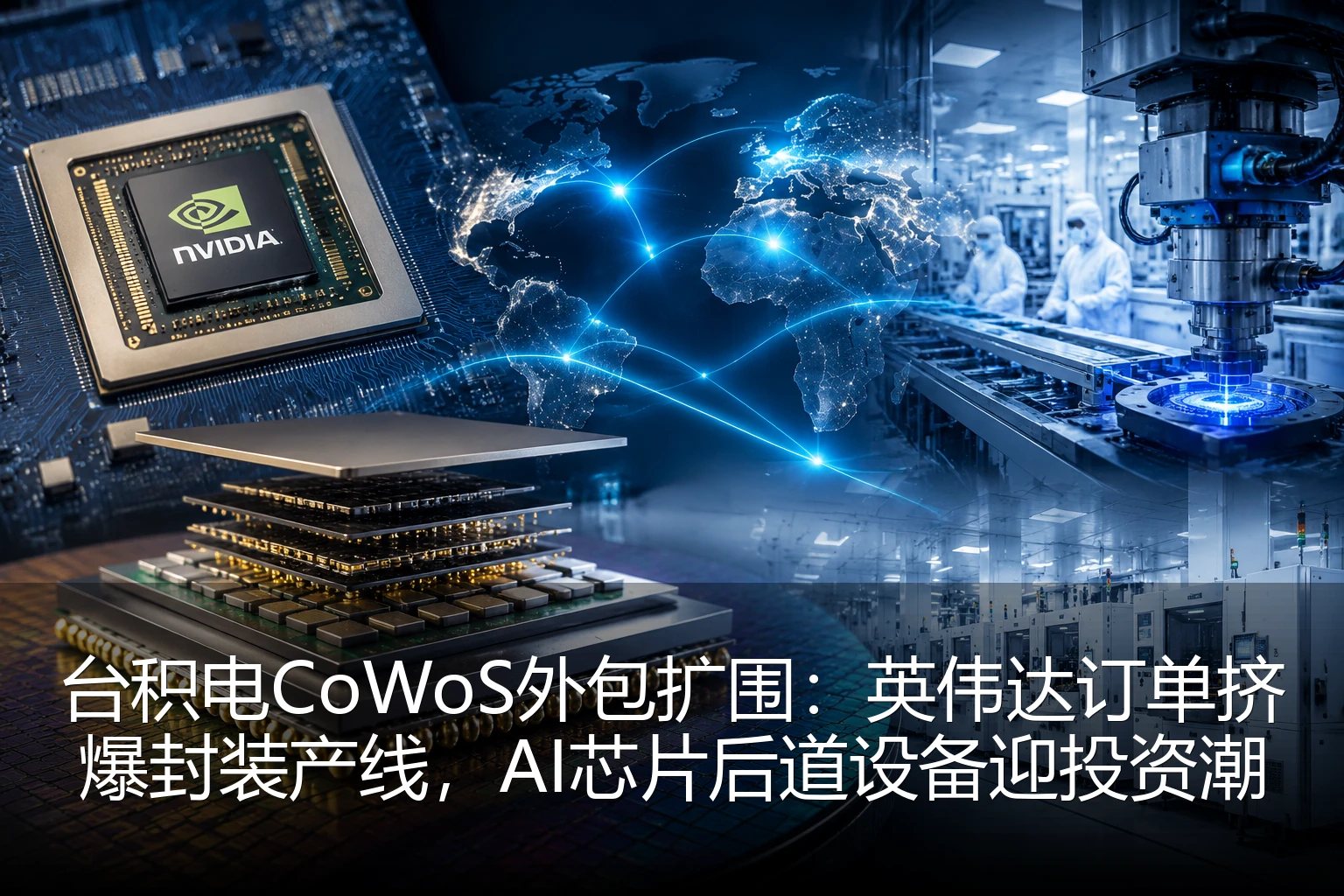



On July 27, 2026, Samsung Electronics officially announced plans to invest approximately 15 trillion won (about $11.2 billion) to expand its semiconductor plant in Pyeongtaek, South Korea, focusing on boosting high-bandwidth memory (HBM) capacity. This move highlights the structural transformation of the memory market driven by global AI chip demand and marks Samsung's accelerated push to capture HBM market share in competition with SK Hynix and Micron.
HBM Demand Surge: The 'Hidden Hero' Behind AI Computing Power
With the exponential increase in computing requirements for large model training and inference, HBM has become an indispensable component for high-end AI chips such as NVIDIA H200 and AMD MI300. By vertically stacking DRAM chips, HBM achieves ultra-high bandwidth and low power consumption, significantly improving data throughput efficiency for AI processors. According to the latest report from market research firm IDC, the global HBM market is expected to exceed $30 billion in 2026, growing over 60% year-on-year.
Samsung’s P3 line at the Pyeongtaek plant will be dedicated to producing fifth-generation HBM3E and sixth-generation HBM4 products. Jeong-bae Lee, President of Samsung Electronics’ Memory Business, stated: “AI-driven HBM demand has far exceeded expectations, so we must make decisive investments in capacity to meet customers’ long-term needs over the next 3-5 years.” The new line is expected to begin mass production in Q3 2027, tripling Samsung’s total HBM capacity compared to 2025.
Competitive Landscape: Samsung Chases SK Hynix, Technology Paths Diverge
In the HBM field, SK Hynix has long held a leading position, being the first to deeply partner with NVIDIA to supply HBM3 and HBM3E products. Samsung, leveraging its strengths in advanced packaging (e.g., TC-NCF solder bump technology) and memory manufacturing, is striving to catch up. This investment is not only aimed at closing the capacity gap but also at achieving a technological leap in the HBM4 era.
Notably, Samsung also announced it will introduce Hybrid Bonding technology for HBM4 mass production, which further reduces chip pitch and improves heat dissipation, a key process for next-generation HBM. In contrast, SK Hynix and Micron primarily rely on an improved MR-MUF process. The divergence in technology paths may lead to a multi-supplier landscape in the future HBM market, but also imposes higher requirements for cost control.
Industry Chain Impact: Asia’s Semiconductor Weight Increases Again
Samsung’s capacity expansion indirectly benefits semiconductor-related sectors of companies listed on the Singapore Exchange (SGX) mainboard. Although Samsung is listed in South Korea, its ADRs have been actively traded on SGX, especially as global investors’ attention on the AI supply chain grows. Singapore, as an Asian financial hub, has attracted significant capital flows into semiconductor ETFs and individual stocks.
SGX data shows that as of July 24, semiconductor-themed ETFs listed in Singapore (e.g., SSG Semiconductor Index Fund) saw net inflows of about S$230 million in the past month, hitting a new high for the year. Analysts believe Samsung’s capacity expansion will further consolidate Asia’s core position in the global AI hardware supply chain, and the Singapore market will continue to benefit from this trend due to its close ties with semiconductor companies in South Korea, Taiwan, and Japan.
Additionally, Samsung’s expansion will drive demand for upstream equipment and materials, including South Korean semiconductor equipment suppliers (e.g., SEMES) and global material companies (e.g., Merck of Germany, Shin-Etsu Chemical of Japan). These companies have regional headquarters or distribution centers in Singapore, indirectly strengthening Singapore’s role as a semiconductor trading hub.
Risks and Outlook: Overcapacity Concerns and Geopolitical Variables
Despite strong short-term demand, the semiconductor industry has historically experienced cycles of “expansion - overcapacity - downturn.” Samsung’s investment of up to $11.2 billion could lead to a sharp decline in HBM prices if AI demand growth slows. Meanwhile, U.S. export controls on China may restrict demand from some Chinese AI chip companies, impacting global HBM orders.
Domestic political factors in South Korea also cannot be ignored. The South Korean government recently enacted the “Semiconductor Special Act,” offering tax incentives and subsidies to encourage local companies to increase investment in response to the global chip race. Samsung’s expansion plan aligns with this policy. However, over the long term, HBM technology evolves rapidly (expected to enter HBM5 by 2028), and whether Samsung can sustain its technological lead remains uncertain.
For Singapore investors, holding Samsung ADRs or related chip ETFs requires close monitoring of HBM shipment volumes and gross margin indicators in quarterly earnings reports. Samsung Electronics is expected to release its Q2 2026 earnings on July 31, with market consensus predicting sequential revenue growth of over 25% from its HBM business, making it the main driver of overall performance.
Conclusion: Memory Reigns in the AI Era
Samsung’s large-scale investment once again confirms that the AI revolution is reshaping the underlying hardware logic—shifting from “computing power is king” to “memory synergy.” As HBM becomes a standard configuration for AI chips, companies with advanced packaging and memory stacking technologies will gain industry leverage. Singapore mainboard investors should closely track this trend and seek structural opportunities in semiconductor sub-sectors.