


In recent years, breakthroughs in artificial intelligence (AI) technology are reshaping the global tech landscape. From large language models to autonomous driving, from generative AI to edge computing, the demand for computing power from various AI applications is growing exponentially. According to industry research institutions, the global AI chip market size is projected to exceed $200 billion by 2026, with a compound annual growth rate (CAGR) of over 30%. Amid this wave of AI computing power, Singapore, with its unique position in the semiconductor industry chain, is witnessing unprecedented investment opportunities for its AI chip stocks. This article will deeply analyze the investment value of Singapore's AI chip stocks from aspects such as the background of AI computing power demand, Singapore's policy dividends, industrial chain layout, and investment logic.
I. AI Computing Power Demand Explosion: Driving the Semiconductor Industry Chain into a Super Cycle
The core of AI technology is computing power, and the carrier of computing power is chips. With the popularization of large language models like ChatGPT and the implementation of applications such as autonomous driving and smart healthcare, the demand for high-performance computing chips has surged. For example, training a large language model requires thousands of GPUs to work in coordination, and the inference stage also needs extensive chip support. Moreover, the rise of edge AI has made terminal devices (such as smartphones and IoT devices) require more efficient AI chips, further expanding market demand.
From the industry chain perspective, AI chips mainly include CPUs, GPUs, NPUs (Neural Processing Units), and memory chips (such as HBM). Among them, GPUs are the core for AI training, while NPUs are more suitable for inference scenarios. As AI applications diversify, higher requirements are placed on the performance, power consumption, and cost of chips, driving semiconductor manufacturers to continuously iterate their technologies.
Global semiconductor giants such as TSMC, Samsung Electronics, and NVIDIA are increasing their production capacity for AI chips. For instance, TSMC's 3nm process is fully utilized until 2027, mainly serving AI chip clients; Samsung Electronics is accelerating the development of its sixth-generation HBM (High Bandwidth Memory) to meet the storage bandwidth demands of AI chips. In this process, as an important part of the semiconductor industry chain, Singapore's manufacturers in packaging and testing, equipment manufacturing, and other segments are benefiting from the growing demand for AI chips.
II. Singapore's Policy Dividends: AI National Strategy 2.0 Driving Semiconductor Industry Upgrading
The Singapore government attaches great importance to the development of the semiconductor industry, viewing it as a key pillar of the national economy. In 2025, Singapore released the 'AI National Strategy 2.0', which clearly states that the semiconductor industry is the core support for AI development, and promotes the upgrading of the semiconductor industry through policy guidance, financial support, and talent cultivation.
Specifically, the Singapore government has introduced a series of preferential policies: first, tax incentives, providing corporate income tax reductions for semiconductor enterprises, up to 15%; second, R&D subsidies, offering 30% subsidies for enterprises' R&D investments to encourage technological innovation; third, talent cultivation, collaborating with universities to establish semiconductor majors to cultivate high-end talent; fourth, industrial park construction, such as the Jurong Island Semiconductor Park, providing complete industrial chain support.
Additionally, Singapore actively participates in international semiconductor cooperation, establishing partnerships with giants like TSMC and Samsung Electronics to attract them to set up production bases or R&D centers in Singapore. For example, TSMC's packaging plant in Singapore (STATS ChipPAC) has expanded its capacity to meet the packaging needs of AI chips; Samsung Electronics has invested in building an HBM production line in Singapore, further consolidating its position in the memory chip field.
These policy dividends not only attract investments from international semiconductor giants but also promote the development of local semiconductor enterprises. For example, UMS Holdings (an equipment manufacturer) in Singapore successfully developed equipment suitable for AI chip testing with the government's R&D subsidies. Its Q2 financial report shows that net profit increased by 100% year-on-year, mainly due to the surge in demand for AI chip testing.
III. Industrial Chain Layout: Singapore's Semiconductor Industry's 'AI Chip Ecosystem'
Singapore's semiconductor industry chain covers multiple segments such as wafer manufacturing, packaging and testing, equipment manufacturing, and material supply, forming a complete 'AI Chip Ecosystem'. Among them, the packaging and testing segment is Singapore's strength. STATS ChipPAC, as a globally leading packaging and testing manufacturer, mainly serves AI chip clients at its Singapore factory.
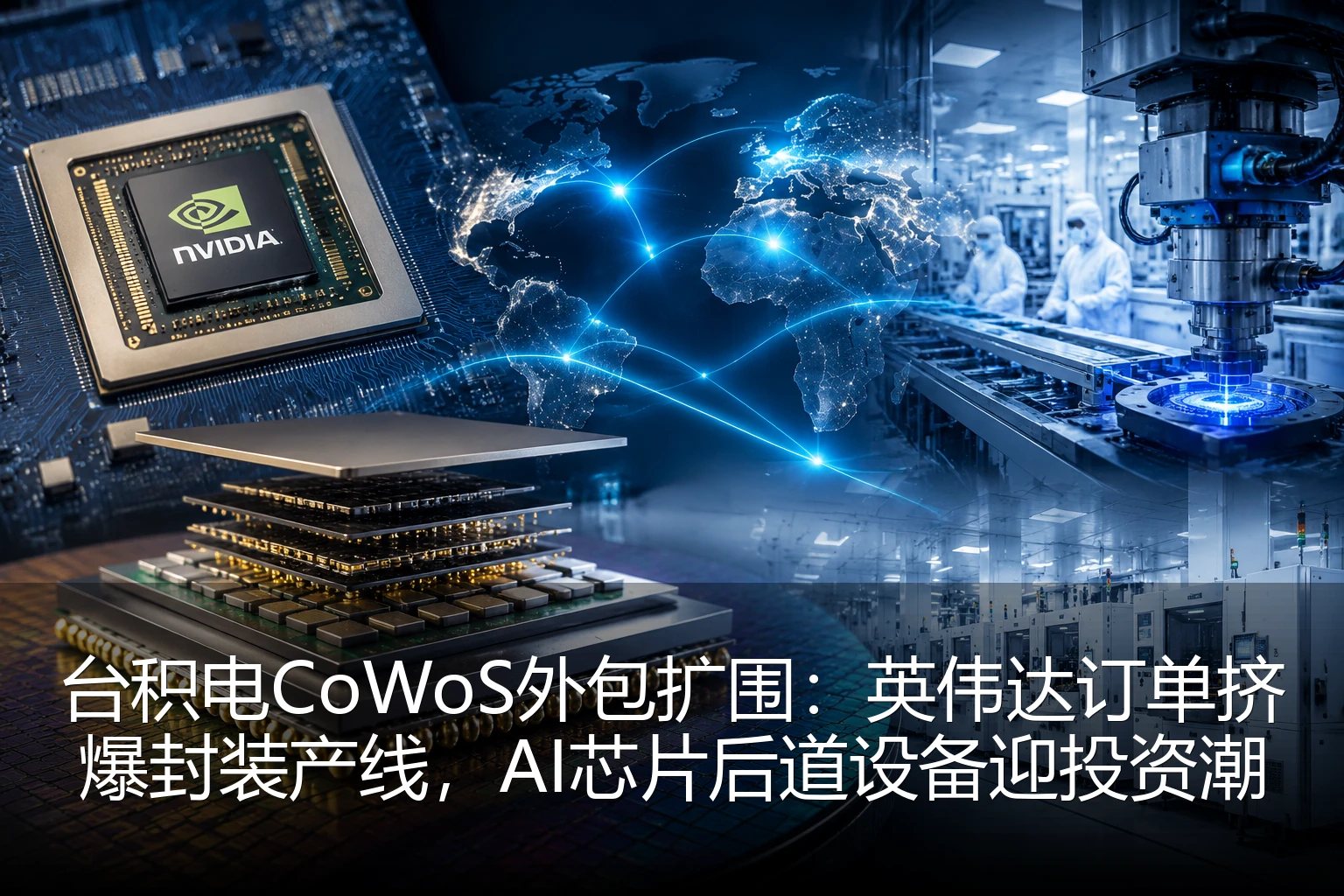
STATS ChipPAC's packaging technologies include CoWoS (Chip-on-Wafer-on-Substrate) and SiP (System-in-Package), which are suitable for the high-density packaging needs of AI chips. For example, NVIDIA's GPU chips use CoWoS packaging, and as a partner of TSMC, STATS ChipPAC has taken on some CoWoS packaging orders. As the demand for AI chips grows, STATS ChipPAC's capacity utilization continues to increase. In the first half of 2026, its packaging capacity utilization reached 95%, far higher than the industry average.
Besides packaging and testing, Singapore's equipment manufacturing segment also benefits from the demand for AI chips. UMS Holdings is a leading semiconductor equipment manufacturer in Singapore, with products including testing equipment and packaging equipment. With the surge in demand for AI chip testing, UMS Holdings' order volume has increased significantly. Its Q2 financial report shows that revenue increased by 40% year-on-year and net profit increased by 100%. Additionally, United Microelectronics (UMC) has started mass production of silicon photonics wafers at its Singapore factory. Silicon photonics technology is suitable for optical interconnects of AI chips and is expected to become a new growth point.
In terms of material supply, Singapore's semiconductor material enterprises such as Schott provide high-purity glass, ceramics, and other materials for AI chips, ensuring stable supply for the industry chain. The synergistic development of these enterprises has formed Singapore's semiconductor industry's 'AI Chip Ecosystem', providing a solid industrial foundation for the development of AI chip stocks.
IV. Investment Opportunities: Performance and Valuation Analysis of Singapore's AI Chip Stocks
From a performance perspective, Singapore's AI chip stocks generally exceed expectations. For example, UMS Holdings' Q2 financial report shows that net profit increased by 100% year-on-year, mainly due to the surge in demand for AI chip testing; STATS ChipPAC's Q2 revenue increased by 25% year-on-year, with packaging capacity utilization reaching 95%; UMC's Q2 revenue increased by 15% year-on-year, and silicon photonics wafer mass production went smoothly.
From a valuation perspective, the valuations of Singapore's AI chip stocks are relatively reasonable. Taking UMS Holdings as an example, its price-to-earnings (P/E) ratio is about 25 times, lower than the average P/E ratio of global semiconductor equipment manufacturers (30 times), but with high expected performance growth, it has valuation advantages. STATS ChipPAC's P/E ratio is about 20 times, and considering its continuously increasing capacity utilization, there is still room for valuation growth.
Additionally, the dividend policies of Singapore's AI chip stocks are relatively generous. For example, UMS Holdings has a dividend yield of about 3%, and STATS ChipPAC has a dividend yield of about 2.5%, providing investors with stable cash flow returns.
In the long run, the demand for AI computing power will continue to grow, and the advantages of Singapore's semiconductor industry chain will become more prominent. With the advancement of AI National Strategy 2.0, Singapore's AI chip stocks are expected to see dual improvements in performance and valuation, becoming important targets for investors to allocate to the AI track.
V. Risk Warning: Technical and Market Risks to Watch
Although Singapore's AI chip stocks have many investment opportunities, the following risks still need to be noted:
- Technical Iteration Risk: Semiconductor technology updates quickly. If enterprises cannot keep up with technological trends, they may face the risk of being eliminated. For example, if a new AI chip architecture emerges, existing chips may be replaced, affecting enterprise performance.
- Supply Chain Risk: The global semiconductor supply chain is affected by factors such as geopolitics and the pandemic, and supply disruptions may occur. For example, if TSMC's production capacity is limited, it may affect STATS ChipPAC's packaging orders.
- Intensified Competition Risk: As more enterprises enter the AI chip field, competition will intensify, potentially leading to price wars and compressing enterprise profit margins.
- Policy Change Risk: Singapore's government policies may change. If policies such as tax incentives and R&D subsidies are adjusted, it may affect enterprise profitability.
When investing in Singapore's AI chip stocks, investors need to comprehensively consider these risks and choose enterprises with technological advantages and stable industrial chain positions to reduce investment risks.
VI. Conclusion: Singapore's AI Chip Stocks Are High-Quality Targets in the AI Track
The explosion of AI computing power demand has brought a super cycle to the semiconductor industry chain. Singapore, with its policy dividends and industrial chain layout advantages, has made its AI chip stocks a focal point for investors. From aspects such as performance, valuation, and dividend policies, Singapore's AI chip stocks have high investment value. Although there are certain risks, in the long run, the continuous growth of AI computing power demand will drive the development of Singapore's semiconductor industry, bringing rich returns to investors.
For global Chinese-speaking investors, AI chip stocks on Singapore's main board (SGX) provide a diversified investment option, allowing them to share the dividends of AI technology development and diversify geopolitical risks. When allocating to the AI track, it is recommended to focus on enterprises with technological advantages and stable industrial chain positions, such as UMS Holdings and STATS ChipPAC, to obtain long-term returns.