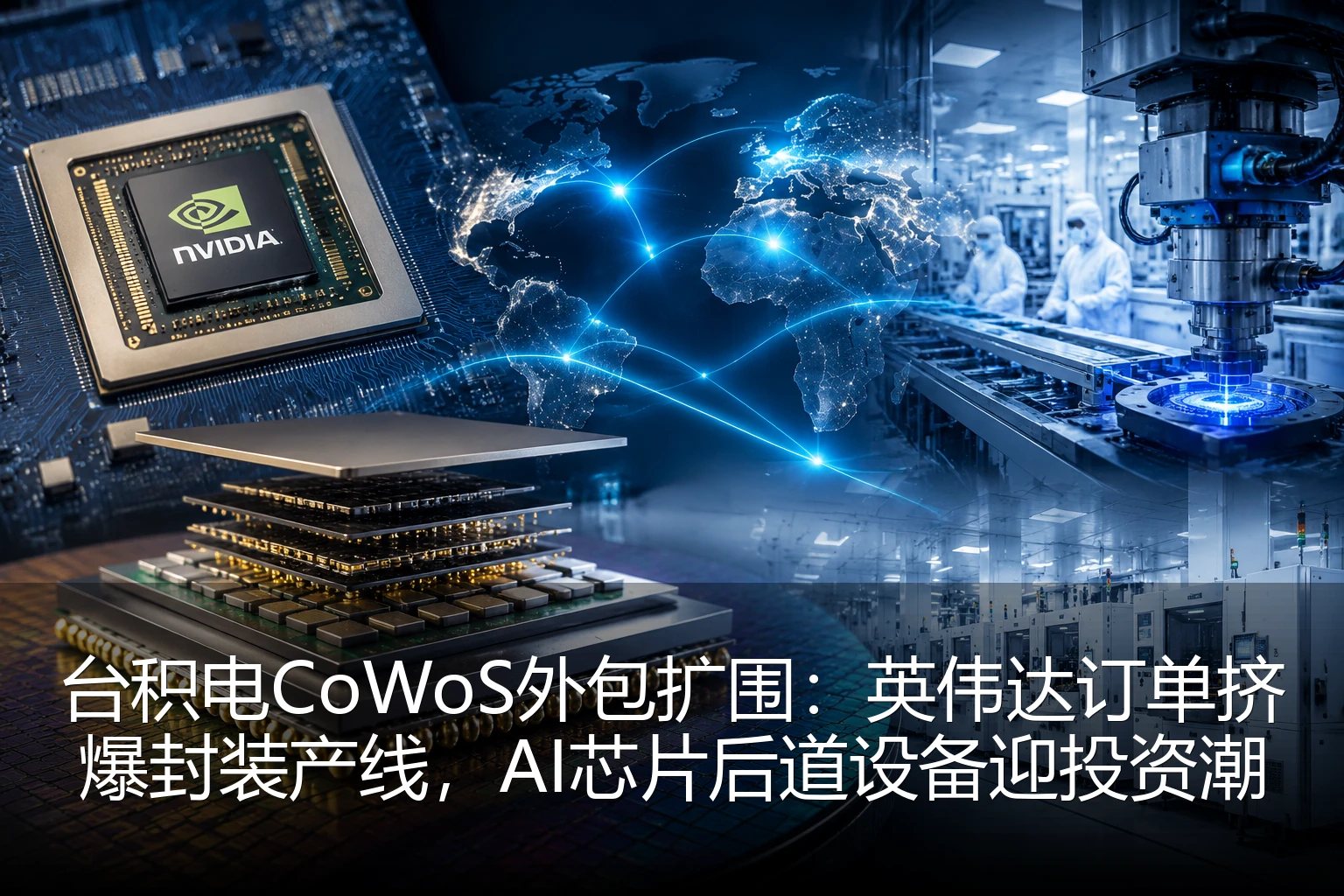



In the wave of rapid development of global artificial intelligence technology, AI chips, as the core hardware supporting AI applications, are unprecedented investment opportunities. AI chip stocks on the Singapore Exchange (SGX) main board, driven by multiple factors including policy support, technological innovation, and market demand, are gradually becoming the focus of investor attention. This article will conduct an in-depth analysis of the investment value of Singapore's AI chip stocks, interpret the logic behind their rise, and provide investors with forward-looking perspectives.
\n\nGlobal AI Chip Industry Landscape: The Rise of Asia and Singapore's Strategic Positioning
\n\nThe AI chip industry is undergoing unprecedented changes, with technology continuously evolving from traditional CPUs and GPUs to specialized ASICs and FPGAs, and then to emerging neuromorphic chips. According to market research data, the global AI chip market size is expected to exceed $500 billion by 2026, with a compound annual growth rate exceeding 30%. In this global landscape, Asia is gradually emerging as a new center for the AI chip industry, leveraging its strong semiconductor manufacturing capabilities and technological innovation.
\n\nAs an important financial and technology center in Asia, Singapore is gradually becoming a key hub for the AI chip industry, thanks to its advantageous geographical location, comprehensive legal system, and policy support. The Singapore government has listed AI and semiconductor industries as national strategic priorities, investing substantial funds through the "Research, Innovation and Enterprise 2025" plan to support related technology research and development, providing strong policy guarantees for the development of the AI chip industry.
\n\nPolicy Dividends in Singapore's AI Chip Industry
\n\nThe Singapore government has introduced multiple support policies in the AI chip field, including tax incentives, R&D subsidies, and talent development programs. According to data from the Singapore Economic Development Board (EDB), in the first half of 2026, the Singapore government has invested more than S$1 billion to support AI chip-related enterprises and research institutions. These policies have not only attracted leading global semiconductor companies to establish R&D centers in Singapore but have also cultivated a number of local AI chip innovation enterprises.
\n\nParticularly noteworthy is the "AI Chip Industry Support Plan" recently launched by the Singapore government, which provides subsidies of up to 30% of the investment amount for AI chip companies establishing headquarters or R&D centers in Singapore, as well as tax exemption policies up to 10 years. This policy has greatly enhanced Singapore's attractiveness to global AI chip companies and capital, laying a solid foundation for the long-term development of AI chip stocks on the Singapore main board.
\n\nSingapore Main Board AI Chip Stocks: Representative Enterprises and Competitive Advantages
\n\nAI chip stocks on the Singapore main board cover the complete industry chain from chip design, manufacturing to packaging and testing, forming a unique industrial cluster advantage. These companies, driven by multiple factors including technological innovation, policy support, and market demand, show strong growth potential.
\n\nNuvoton Technology: Innovator in Edge AI Chips
\n\nAs the first fabless AI chip stock on the Singapore main board, Nuvoton focuses on the research, development, and sales of edge AI chips. Its products are widely used in smart homes, IoT devices, autonomous driving, and other fields. Nuvoton's latest edge AI processor adopts a 5nm process, with 40% improved energy efficiency compared to the previous generation, and has been commercially applied in multiple smart home brands.
\n\nNuvoton's competitive advantage lies in its unique "software-hardware co-design" concept, achieving the optimal balance between performance and energy efficiency through deep optimization of self-developed AI algorithms and chip architecture. According to the company's Q2 2026 financial report, Nuvoton's edge AI chip shipments increased by 150% year-on-year, revenue increased by 85% year-on-year, and gross margin remained at a high level of 45%.
\n\nSTATS ChipPAC: Leader in Advanced Packaging
\n\nSTATS ChipPAC is a leading semiconductor packaging and testing company in Singapore with significant advantages in AI chip packaging. With the surge in demand for high-performance packaging for AI chips, STATS ChipPAC has become a core partner for global AI chip giants such as NVIDIA and AMD with its advanced 2.5D/3D packaging technology.
\n\nIn the first half of 2026, STATS ChipPAC announced an investment of S$1.5 billion to expand its advanced packaging capacity in Singapore, with the new capacity expected to meet 40% of AI chip packaging demand in the next three years. The company's latest "AI-Package" solution increases packaging density by 30% while reducing power consumption by 20%, receiving high market recognition.
\n\nUMS Holdings: Leader in AI Chip Testing Equipment
\n\nUMS Holdings is a global leading semiconductor testing equipment supplier, occupying an important position in the AI chip testing field. As the complexity of AI chips continues to increase, the demand for testing equipment is also growing. UMS Holdings' dedicated AI chip testing platform can achieve high-speed testing up to 10Gbps, greatly improving testing efficiency and accuracy.
\n\nAccording to the company's Q2 2026 financial report, UMS Holdings' net profit increased by 120% year-on-year, mainly benefiting from the explosive growth in demand for AI chip testing equipment. The company recently announced a collaboration with the National University of Singapore to establish the "Joint Research Center for AI Chip Testing Technology" to further consolidate its technological leadership.
\n\nValue Logic of AI Chip Investment: A Growth Engine Driven by Multiple Factors
\n\nThe investment value of Singapore main board AI chip stocks stems from the joint driving of multiple factors, including technological breakthroughs, policy dividends, market demand, and industrial ecosystem advantages. These factors interact to form a powerful growth engine, providing investors with the possibility of long-term returns.
\n\nTechnological Breakthroughs: The Performance Revolution of AI Chips
\n\nAI chip technology is in a rapid iteration stage, with breakthroughs in process technology, architecture design, and packaging technology continuously driving performance improvement and cost reduction. Singapore's AI chip companies are actively engaged in this technological revolution, continuously launching competitive products through independent innovation and collaborative R&D.
\n\nIn terms of process technology, Singapore's wafer fabs have achieved mass production of 3nm processes and are moving toward 2nm processes. In terms of architecture design, Singaporean companies are exploring cutting-edge technologies such as neuromorphic computing and in-memory computing, which are expected to break through the limitations of traditional von Neumann architecture. In terms of packaging technology, the application of advanced technologies such as 2.5D/3D packaging and Through-Silicon Vias (TSV) has significantly improved the performance and integration of AI chips.
\n\nMarket Demand: The Widespread Penetration of AI Applications
\n\nAI applications are expanding from the cloud to the edge, and from data centers to consumer electronics and industrial equipment, a trend that has created huge market demand for AI chips. According to market forecasts, by 2028, the edge AI chip market size will reach 35% of the global AI chip market, with a compound annual growth rate exceeding 40%.
\n\nSingapore's AI chip companies have keenly captured this market opportunity, actively deploying in edge AI, automotive AI, industrial AI and other细分领域. For example, Nuvoton's edge AI chips have been widely used in smart home devices, STATS ChipPAC's advanced packaging solutions support the mass production of multiple automotive AI chips, and UMS Holdings' testing equipment meets the high-precision testing needs of data center AI chips.
\n\nIndustrial Ecosystem: The Synergistic Advantages of Singapore's Semiconductor Industry Chain
\n\nSingapore has formed a complete semiconductor industry chain, with enterprises in various links from design, manufacturing to packaging and testing closely collaborating to form a strong industrial ecosystem. This ecosystem provides comprehensive support for AI chip companies, reducing R&D and production costs, and improving market response speed.
\n\nThe advantages of Singapore's semiconductor industry cluster are not only reflected in the completeness of the industry chain but also in the agglomeration effects of talent, capital, and markets. Singapore has many world-class science and technology universities, cultivating a large number of high-quality talents for the semiconductor industry; as an Asian financial center, Singapore provides abundant financing channels for semiconductor companies; located in the center of Southeast Asia, Singapore is a gateway to the Southeast Asian market.
\n\nRisk Analysis and Investment Recommendations: A Rational View of AI Chip Investment
\n\nAlthough Singapore main board AI chip stocks show huge investment potential, investors also need to clearly recognize the risks, including technology iteration risks, market competition risks, and policy change risks. Rational analysis of these risks helps investors formulate more scientific investment strategies.
\n\nTechnology Iteration Risks: The Challenge of Moore's Law
\n\nAs process technology approaches physical limits, the slowdown of Moore's Law has posed new challenges for AI chip companies. How to further improve performance under existing processes has become an important issue for AI chip companies. In addition, emerging technology routes such as quantum computing and photonic computing may disrupt traditional AI chip technology in the future, posing potential threats to existing companies.
\n\nInvestors should pay attention to companies' R&D investment and technological innovation capabilities, choosing those that can continuously launch innovative products and have core technology patents. At the same time, they should also pay attention to companies' layouts in emerging technology fields, evaluating their technology transformation capabilities and potential.
\n\nMarket Competition Risks: The Evolution of the Global Landscape
\n\nThe competition in the AI chip market is becoming increasingly fierce, with not only the strong participation of traditional semiconductor giants such as Intel, NVIDIA, and AMD, but also the rapid rise of many emerging startups. This competitive landscape may lead to intensified price wars, compressing profit margins for companies.
\n\nInvestors should pay attention to companies' market positioning and competitive advantages, choosing those with unique advantages in niche areas and the ability to differentiate competition. At the same time, they should also pay attention to companies' customer structure and order situation, evaluating the stability and sustainability of their business.
\n\nInvestment Strategy: Balancing Long-term Value and Short-term Fluctuations
\n\nFor AI chip stock investment, it is recommended that investors adopt a long-term value investment strategy, focusing on the company's fundamentals and long-term development prospects, rather than short-term stock price fluctuations. Specifically, the following aspects can be considered:
\n\n- \n
- Technology Strength Assessment: Focus on the company's R&D investment, number of patents, and technological innovation capabilities, evaluating its technological leadership and sustainability. \n
- Financial Health Analysis: Focus on the company's revenue growth, gross margin, cash flow and other financial indicators, evaluating its profitability and financial condition. \n
- Market Position Analysis: Focus on the company's market share, customer structure, and brand influence in the industry, evaluating its market competitiveness and development potential. \n
- Management Team Evaluation: Focus on the experience, background, and strategic vision of the company's management team, evaluating the company's governance capabilities and execution efficiency. \n
- Valuation Level Analysis: Combining the average industry valuation level and the company's own characteristics, evaluate whether the current stock price is reasonable, avoiding chasing highs and selling lows. \n
Conclusion: Seizing the Historic Opportunity of AI Chip Investment
\n\nAs the core hardware supporting artificial intelligence development, AI chips are facing unprecedented development opportunities. AI chip stocks on the Singapore main board, driven by multiple factors including policy support, technological innovation, and market demand, show strong growth potential, providing investors with abundant investment opportunities.
\n\nFor investors, seizing the historic opportunity of AI chip investment requires a deep understanding of industry trends, rational evaluation of corporate value, and balancing long-term investment with short-term fluctuations. Through scientific investment strategies and continuous market tracking, investors are expected to obtain generous returns in the wave of the AI chip industry.
\n\nLooking to the future, with continuous breakthroughs in AI technology and continuous expansion of application scenarios, Singapore's AI chip industry will usher in broader development space. Those companies that can continuously innovate and seize market opportunities are expected to become star stocks on the Singapore main board, bringing long-term value to investors.
\n\nIn this era when AI is changing the world, investing in AI chips is investing in the future. Singapore main board AI chip stocks are worthy of attention and allocation by global investors.